

Wednesday February 7th 2024
Dear Journal:
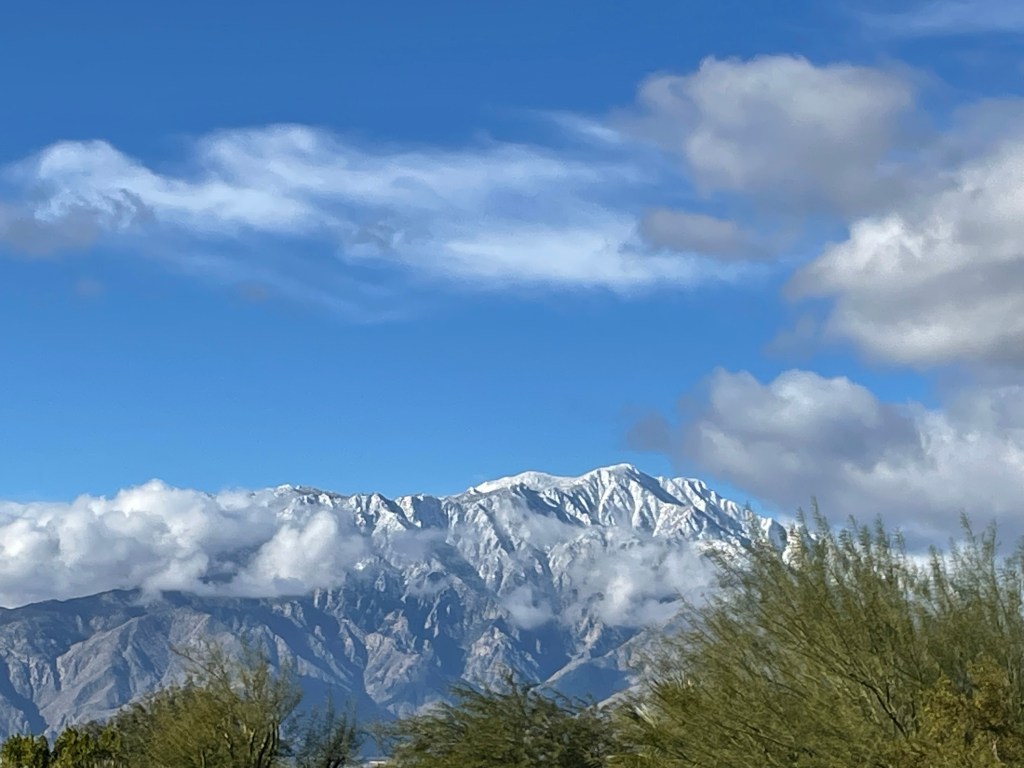
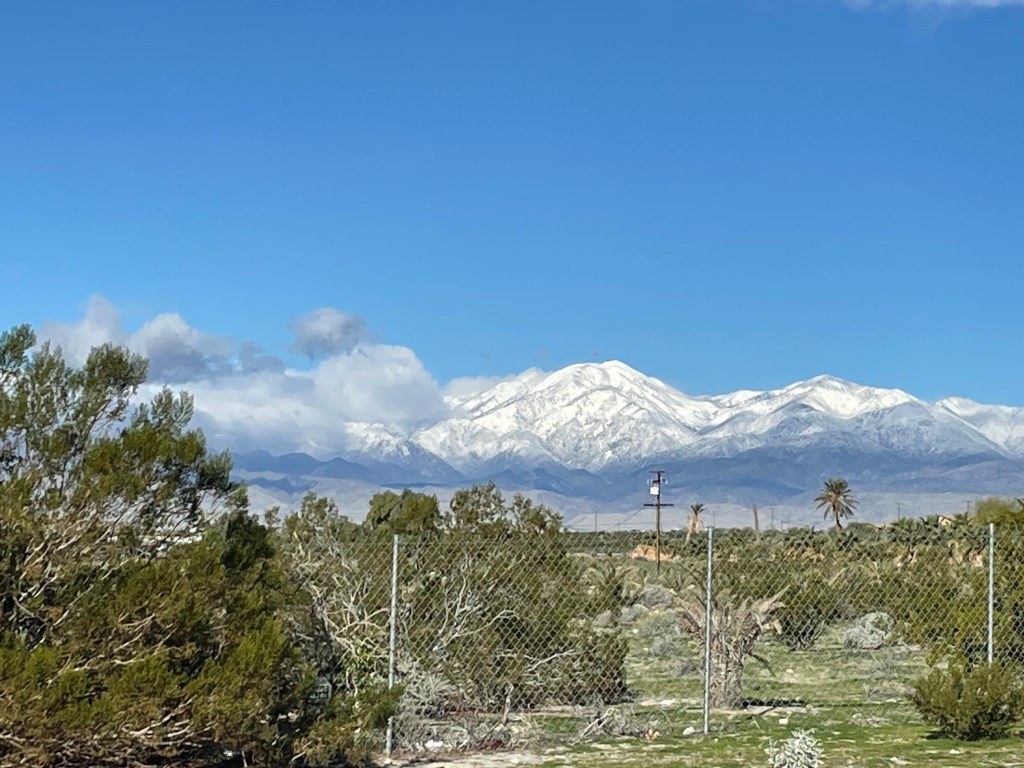
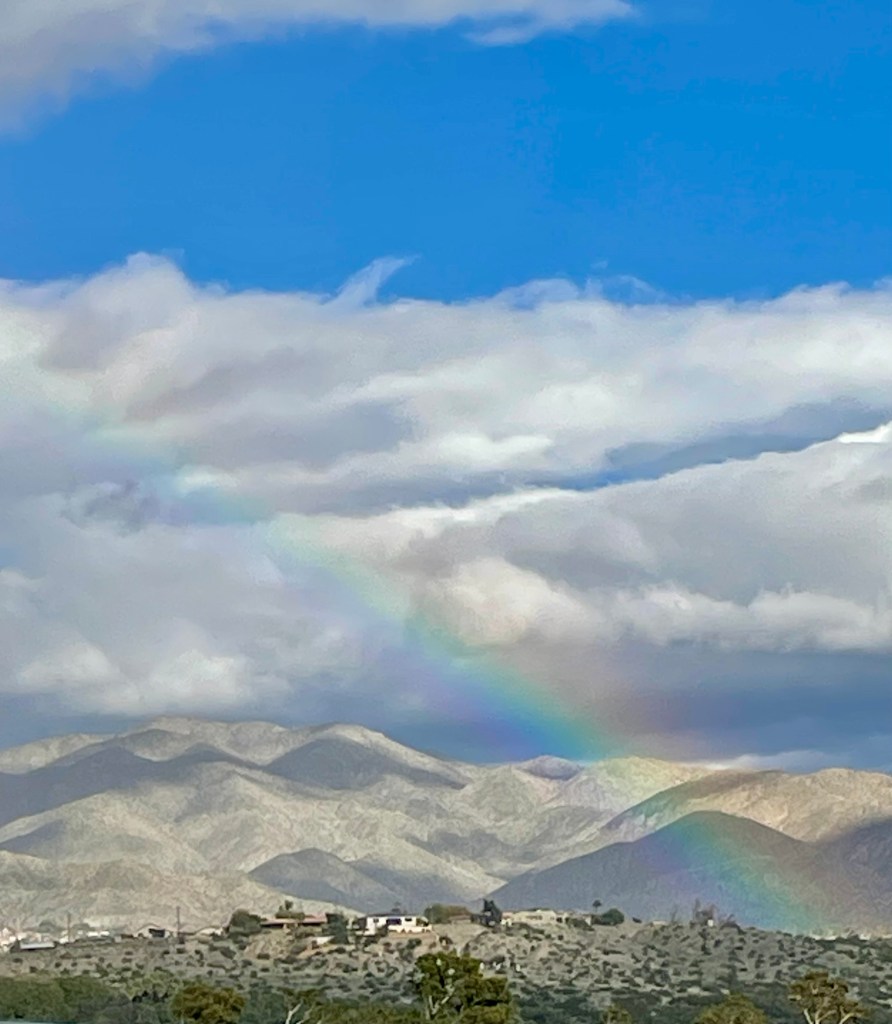
We were up early this morning, as we have moved into a different time zone at the California state line, and while we are still streaming Arizona television we are going to enjoy a cup of perked coffee and a wee Irish blessing, while we wait for the clock. As we closed in on the a lotted time Miss Laurie has gathered up everything required to make more omelets and some blessing for the coffees. We have a plan to explore some areas very close to the resort today, the resort actually sits on or very close to the San Andrea’s fault line which runs almost the total length of California. The line between the North American plate and the Pacific plate and along the actual fault line there are numerous oasis where water comes to the surface and forms small pockets supporting trees and wildlife, but first thing first and we walk across the park for breakfast with Mary & Julie. The clouds have given away to some blue skies this morning and here are the views from our campsite.
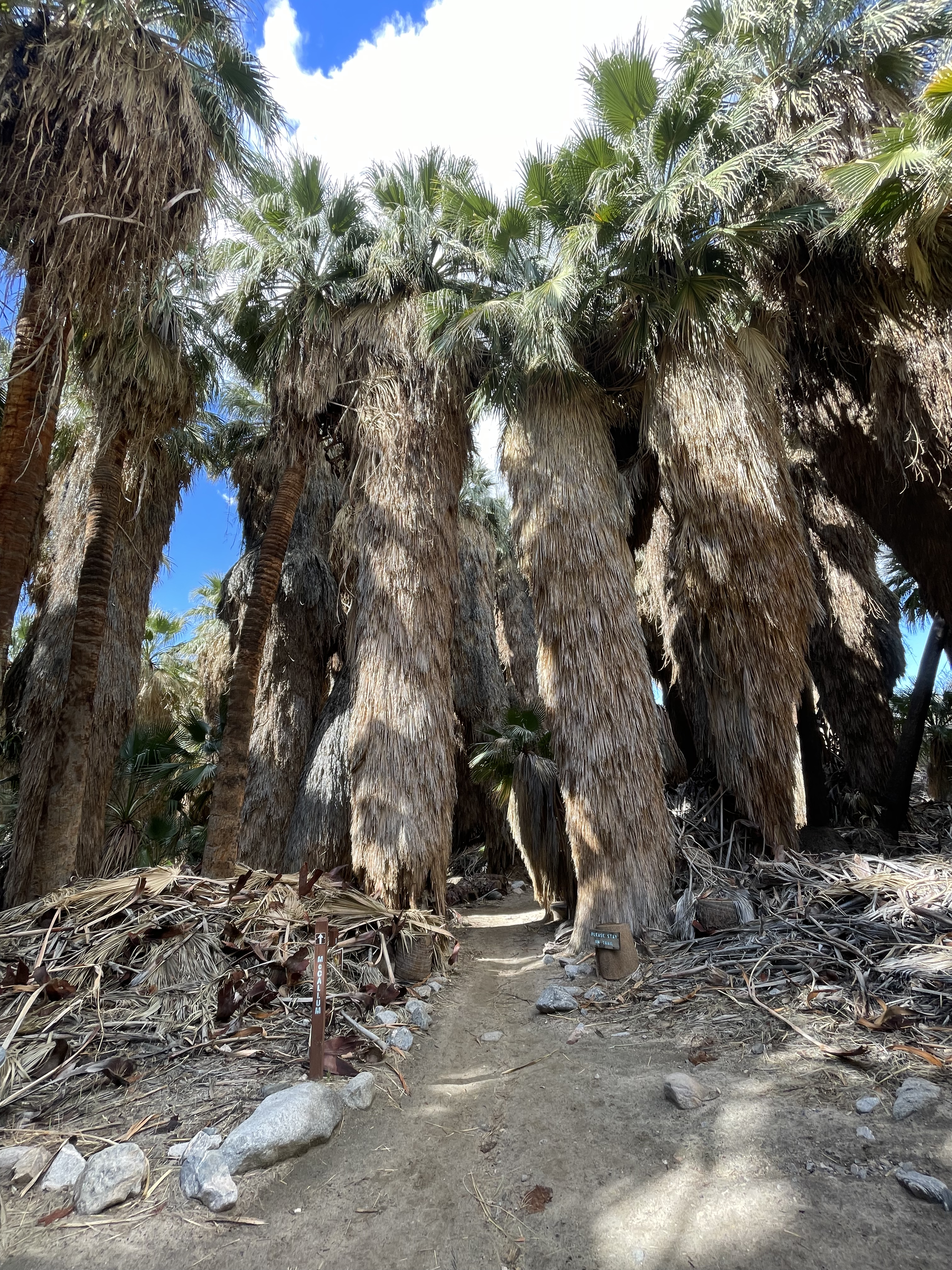
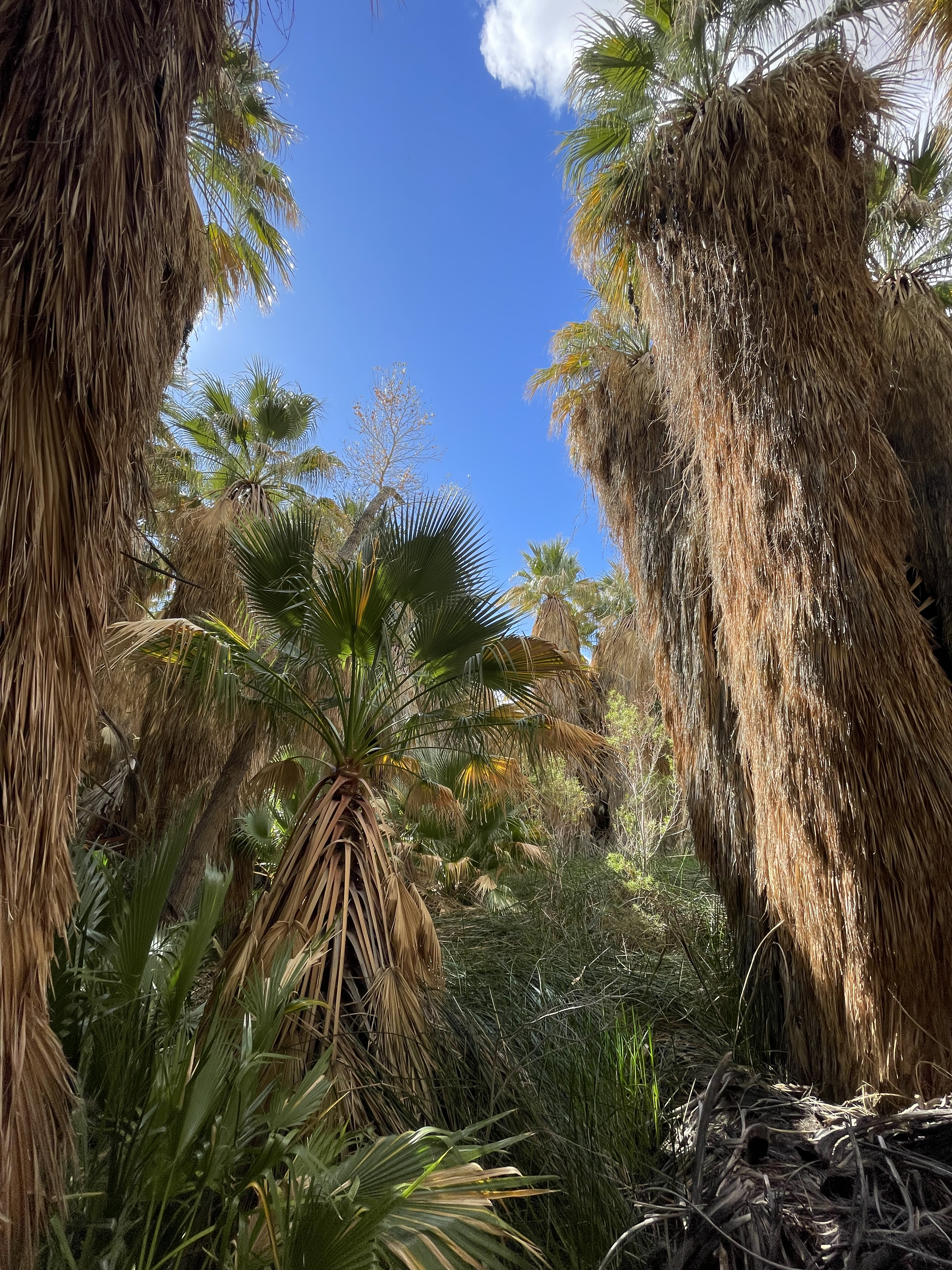
We are heading to an oasis just a few miles from the resort, and it is an amazing site to see, a huge cluster of palm trees growing in the middle of the desert, not common as palms need an abundance of moisture to grow and survive. This is a common sight along the San Andreas fault line that runs right through this area of California, it also explains all of the springs in the area both hot and cold. This particular oasis was damaged by the flooding that occurred the year before when California experienced excessive rainfall, so there were areas that were still closed to us, as the clean up is still underway
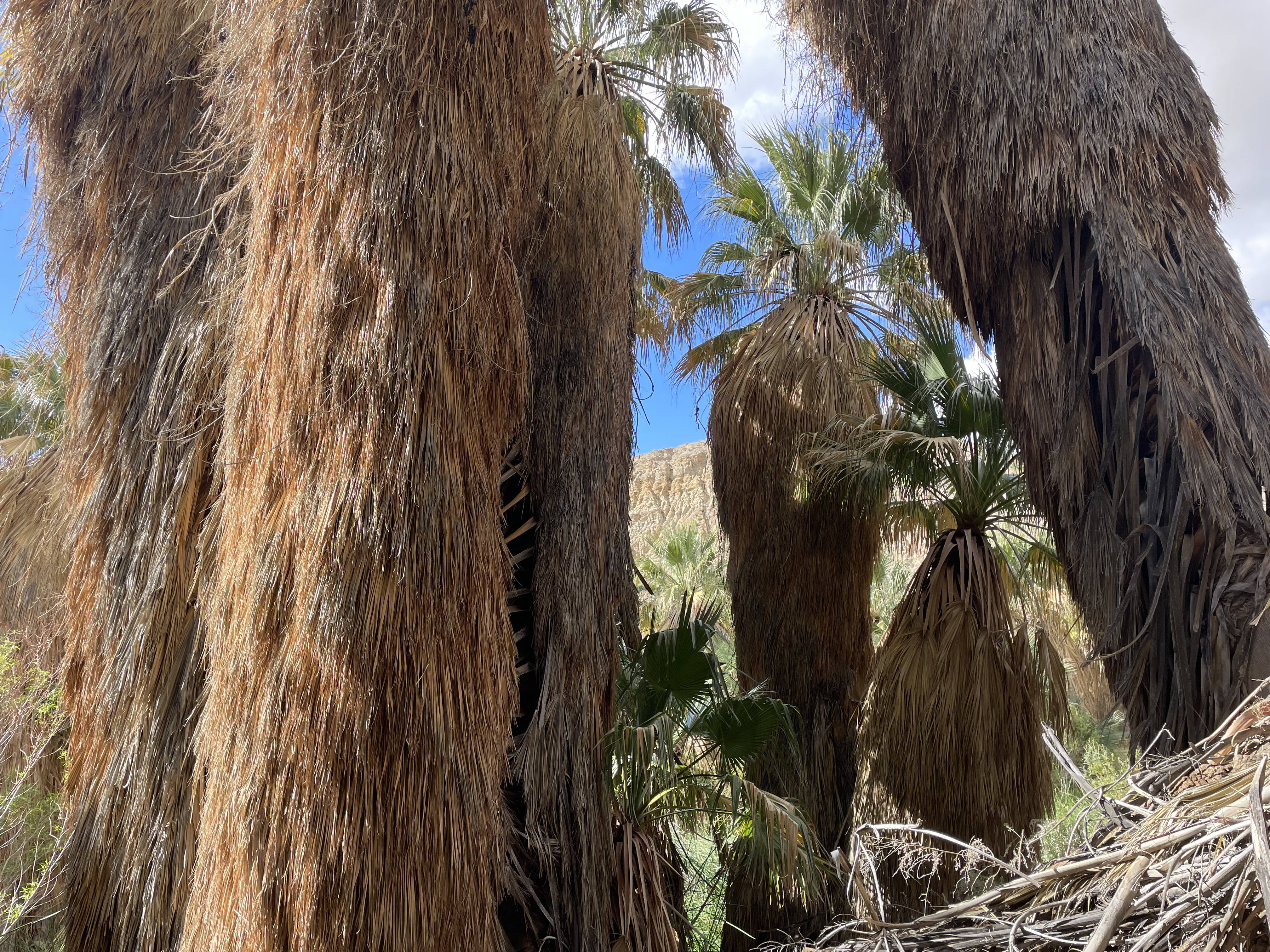
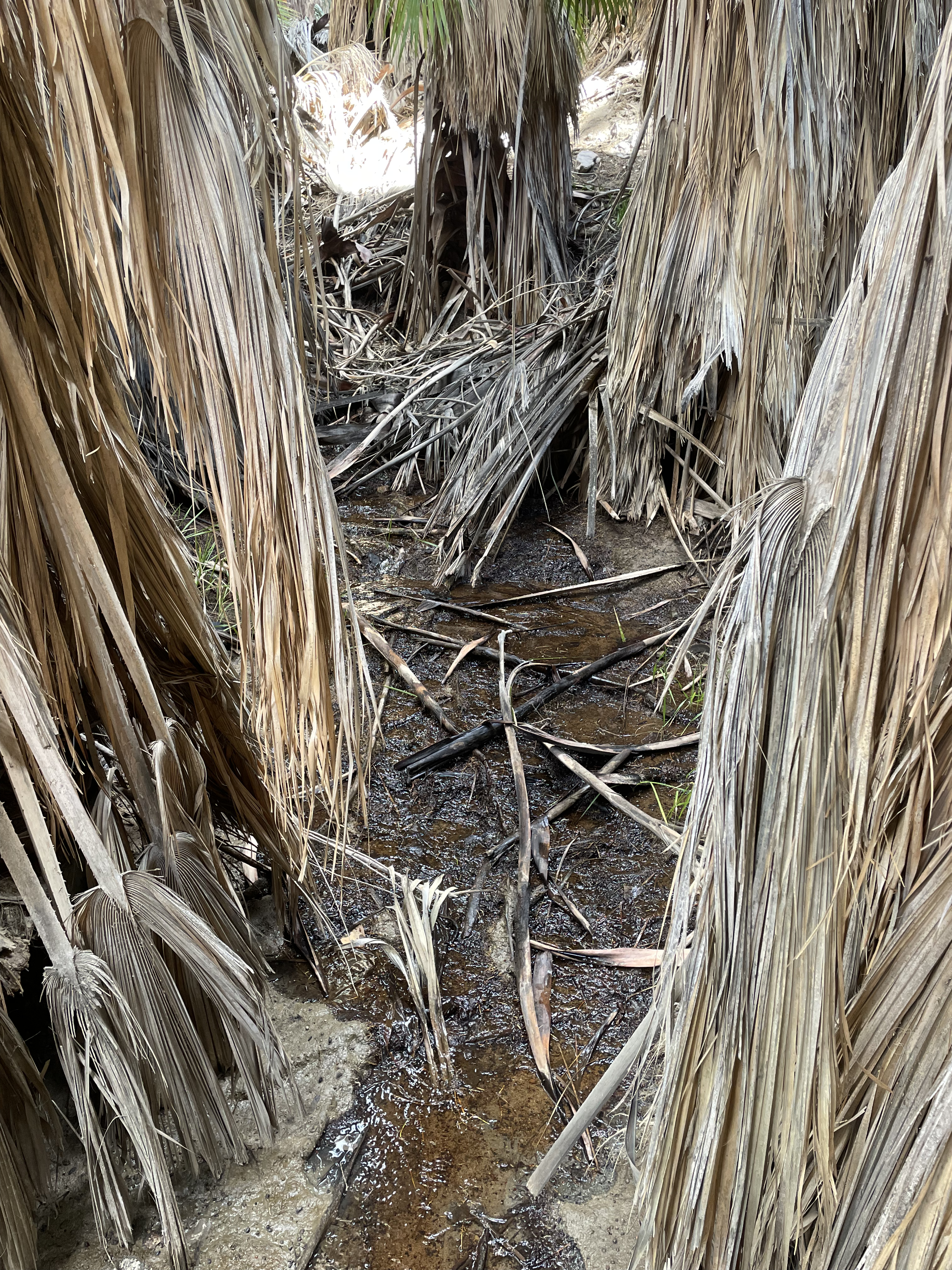
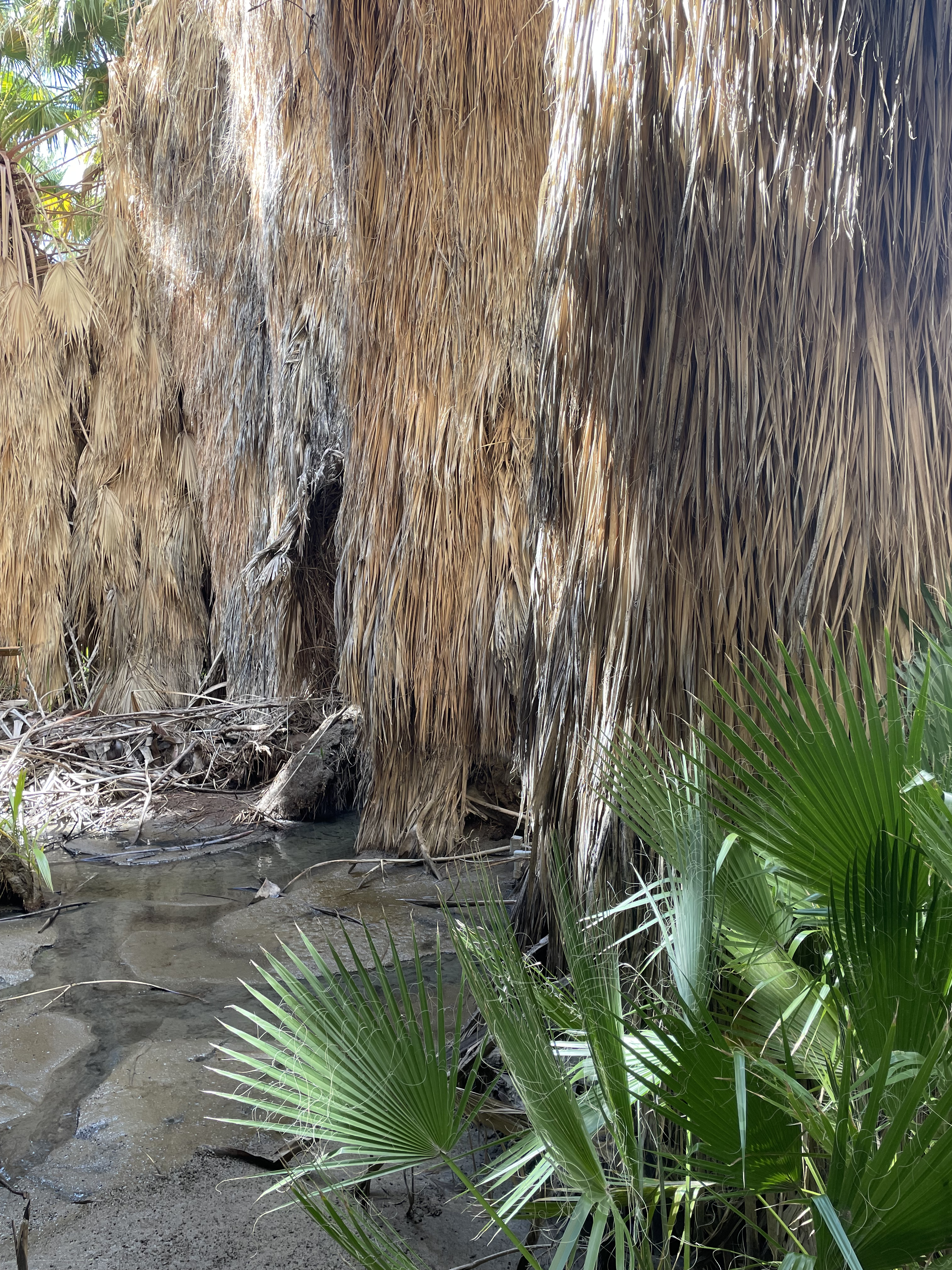

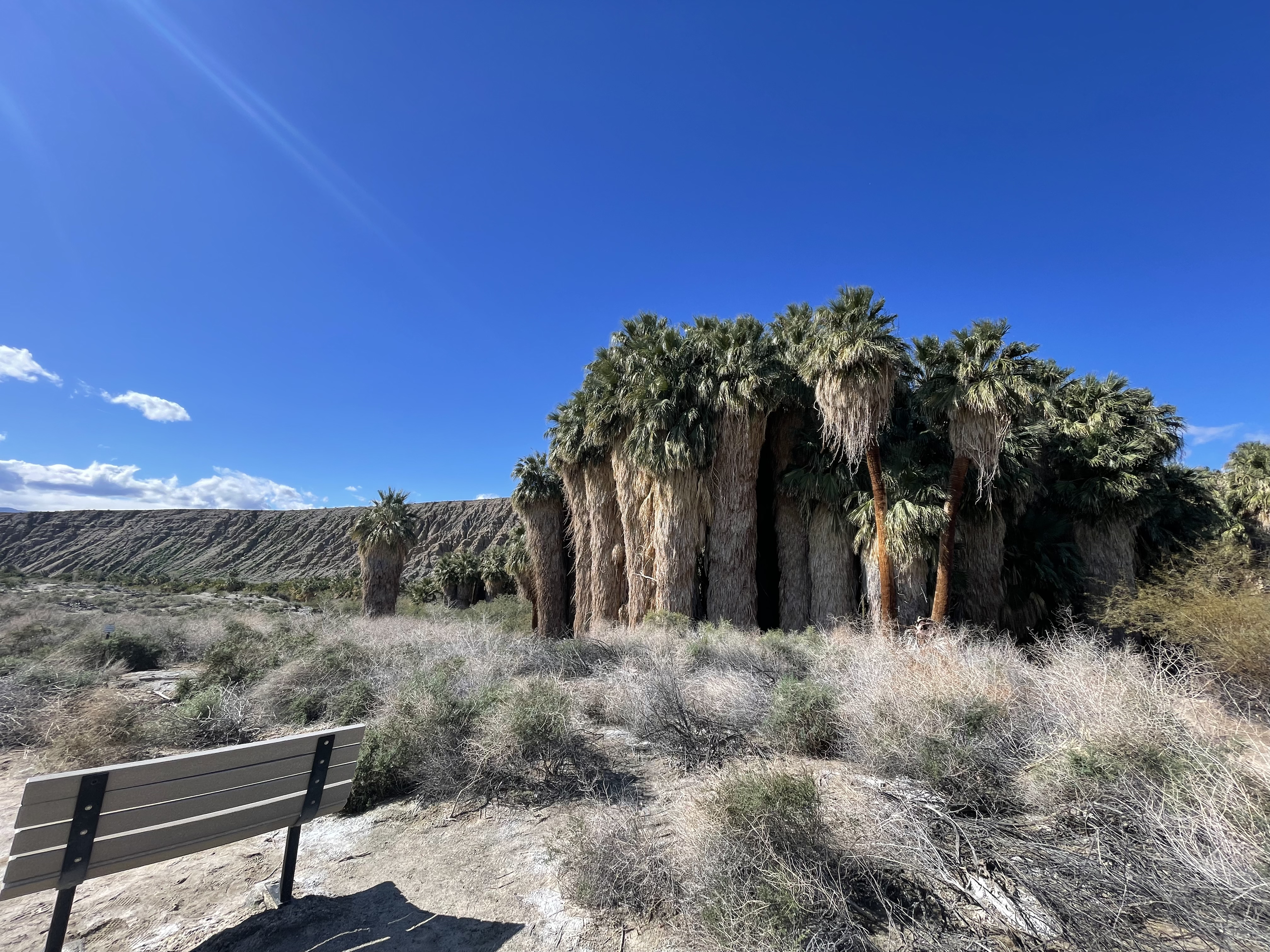
Next we ventured to “Cabot’s Pueblo Museum” an adventure that is close to impossible to explain, and it is not often that I have said that. In the simplest of descriptions the “museum” is a collection of junk that the “artist” salvaged from all over, and then he built a Pueblo style structure using his findings either to build or furnish the museum.
This is an excerpt from the website:
Cabot Yerxa began building the pueblo in 1941, when he was 58 years old. The pueblo was to be a museum and home for Cabot and his wife, Portia.
The Hopi-inspired building is hand-made and created from reclaimed and found materials from throughout the Coachella Valley. Cabot used recovered lumber from his original homestead. Additionally, he purchased abandoned cabins and dismantled them to use the materials for the pueblo, going so far as to straighten out used nails. Much of the pueblo is made from adobe-style and sun-dried bricks.
Filled with Native American art and artifacts, souvenirs of Cabot’s travels around the world, and Cabot’s own works of art, the museum officially opened to the public in 1950. The Pueblo has four stories, is 5,000 square feet and includes 35 rooms, 150 windows, 30 rooflines, and 65 doors


We took the guided tour, and the docent did a wonderful job of explaining how the museum had been built and pointed out many items that had obviously been salvaged from different sights and areas of the country. He also gave insight into Cabot’s history and family background, even though we walked through the museum which was also his home, it would be easy to understand just how eccentric he had been. The site would qualify for the term “tourist trap” but the quirky nature of it left me is some ah, of what he had created in the last decade of his life.
Well it is now lunch time, well at least a late lunch, after some discussion the decision was made to have some shrimp tacos at Del Taco. This is a restaurant chain in California that offers 2 jumbo shrimp tacos for $6, a special that makes it close to the pricing we experienced in the Baja, very good taste and value, unless you have experienced the Baja. Now whether planned or just coincident the Mexican bakery La Abuelita which just happened to be across the street, safe to say we made a second visit to the bakery before calling it a day and heading back to the campground.
Blog 513
Discover more from The Buchanan's Rolling Down The Road
Subscribe to get the latest posts sent to your email.
 The Buchanan's Rolling Down The Road
Beautiful scenery & pictures.
LikeLike