BLM Rules

Dispersed Camping

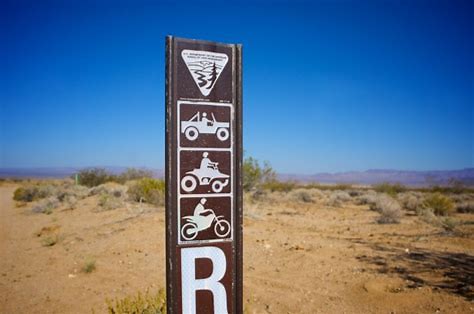
Camping on public lands away from developed recreation facilities is referred to as dispersed camping. Most of the remainder of public lands are open to dispersed camping, as long as it does not conflict with other authorized uses or in areas posted “closed to camping,” or in some way adversely affects wildlife species or natural resources.

Dispersed camping is allowed on public land for a period not to exceed 14 days within a 28 consecutive day period. The 28 day period begins when a camper initially occupies a specific location on public lands. The 14 day limit may be reached either through a number of separate visits or through 14 days of continuous overnight occupation during the 28 day period. After the 14th day of occupation, the camper must move outside of a 25 mile radius of the previous location until the 29th day since the initial occupation. The purpose of this special rule is to prevent damage to sensitive resources caused by continual use of any particular areas. In addition, campers must not leave any personal property unattended for more than 10 days (12 months in Alaska).

Campsite Selection

Dispersed camp sites are located along most secondary roads and may not be marked.  Popular locations can be recognized by the telltale flat disturbed area that has been used as a camp site before.  Not all flat spots are sites. If possible, please use existing sites to avoid creating new disturbances. To further protect your public lands, campers must not dispose of any refuse, hazardous materials, sewage, or in any manner pollute the surrounding area.

States may have additional requirements or restrictions for dispersed camping. Please see Regional Information before planning your trip. 

Here is an example of Colorado’s State rules and may vary from State to State:

Camping and Occupancy Regulations
Tres Rios Field Office and Canyons of the Ancients National Monument, Colorado
The Bureau of Land Management welcomes campers who recreate on their public lands. Public lands are not intended
for establishing and maintaining residency. Rules and regulations specifically prohibit residence on public lands.
BLM Camping and Occupancy Regulations include but are not limited to the following:
43 CFR 8365.1-6: Violation of supplementary rule (75 FR 32968):
• 14-day Camping Limit within a 30-day period.
• After 14 days, must move at least 30 air miles.
• Personal property or refuse must not be left behind when vacating the campsite, to include property to be used
by another user.
• Property must not be left unattended for more than 48 hours.
• You must not establish occupancy, take possession of, or otherwise use public lands for residential purposes.
(Camping is for recreational purposes only)
• If the area charges fees, fees must be paid within 30 minutes of entering the fee area.
• You must not violate any state or county laws or regulations relating to public health, safety, sanitation, building
or fire codes while camping, occupying, or using public lands.
Camping is defined as – Erecting of a tent or shelter of natural or synthetic material; preparing a sleeping bag or
other bedding material for use; parking of a motor vehicle, motor home or trailer; or mooring of a vessel for the
apparent purpose of overnight occupancy while engaged in recreational activities such as hiking, hunting, fishing,
bicycling, sightseeing, off-road vehicle activities, or other generally recognized forms of recreation.
Occupancy is defined as – Full or part-time residence on public lands for non-recreational purposes, such as
temporary residence in connection with, or while seeking, employment in the vicinity, or because another
permanent residence is not available. It also means activities that involve residence, such as the construction,
presence, or maintenance of temporary or permanent structures that may be used for such purposes, or the use of
a watchman or caretaker for the purpose of monitoring activities. Residence or structures include, but are not
limited to, barriers to access, fences, tents, motor homes, trailers, cabins, houses, buildings, and storage of
equipment or supplies.
43 CFR 4140.1(b)(6); 43 CFR 8365.1-1(b): Sanitation/Dumping/Littering:
• Camps must be kept clean and free of litter and trash.
43 CFR 9212: Fire Prevention:
• Fires must not be left unattended.
• Fires must be completely extinguished when leaving camp. Make sure fire is cold out, use water!
Day Use Areas
• Durango Special Recreation Management Area – Animas City Mountain, Skyline and Grandview Recreation
Management Zones. (Camping and Campfires Prohibited)
• Cortez Special Recreation Management Area – Phil’s World Recreation Management Zone to include the
Simon Draw Trailhead and Cash Canyon Trailhead.
• Canyons of the Ancients National Monument – Visitor Center and Museum, Lowry Pueblo, Painted Hand
Pueblo, Sand Canyon Pueblo, Upper and Lower Sand Canyon Trailheads, Sand Canyon-Rock Creek Special
Recreation Management Area.
Day use is defined as – Areas open for public access only during daylight hours, typically between sunrise and
sunset, or where specific hours of operation have been identified. Overnight use in these areas is specifically
prohibited.
More Information
For more information about BLM Public Lands, Contact the Tres Rios Field Office at 970-882-1120
BLM Tres Rios Field Office and Canyons of the Ancients National Monument Law Enforcement Tip Line
833-660-5771 toll free – TRFOtipline@blm.gov
In case of an Emergency, Call 911
LTVA Rules

As more and more people ask about BLM (Bureau of Land Management), I thought it may be wise and helpful to post the rules for use.

The goals of the Bureau of Land Management, Long-Term Visitor
Areas are to provide a safe and enjoyable public land camping
experience for all visitors, while promoting environmental
stewardship, mutual respect and responsible use of America’s natural
resources. The following are the supplementary rules for the designated
Long-Term Visitor Areas (LTVAs) and are in addition to rules of
conduct set forth in 43 CFR Subpart 8365. The supplementary rules
apply yearlong to all public land users who enter the LTVAs.

  1. The Permit Requirements and Fees. You must have a permit to use a
    designated LTVA between September 15 and April 15. The permit
    authorizes you to camp within any designated LTVA using those
    camping or dwelling unit(s) indicated on the permit between the
    periods from September 15 to April 15. There are two types of permits:
    Long-Term and Short-Visit. The long-term permit is valid for the entire
    season or any part of the season. The short-visit permit is valid for 14
    consecutive days, and may be renewed an unlimited number of times
    for the cost of the permit. LTVA users must pay the cost of the fee
    indicated on the LTVA permit, in U.S. funds only, before or upon
    arrival. The Bureau of Land Management (BLM) will not refund permit
    fees.
  2. Displaying the Permit. To make it valid, at the time of purchase, you
    must affix your short-visit permit decal or long-term permit decal, using
    the adhesive backing, to the bottom right-hand corner of the
    windshield of all transportation vehicles, and in a clearly visible
    location on all camping units. You may use no more than two
    secondary vehicles within the LTVA.
  3. Permit Transfers. You may not reassign or transfer your permit.
  4. Permit Revocation. An authorized BLM officer may revoke, without
    reimbursement, your LTVA permit if you violate any BLM rule or
    regulation, or if your conduct or that of your family, guest, or pets is
    inconsistent with the goal of BLM’s LTVA Program. Failure to return
    any LTVA permit to an authorized BLM officer upon demand is a
    violation of these supplementary rules. If BLM revokes your permit,
    you must remove all of your property and leave the LTVA system within
    12 hours of notice, and you may not enter any other LTVA in Arizona
    or California for the remainder of the LTVA season.
  5. Unoccupied Camping Units. Do not leave your LTVA camping unit or
    campsite unoccupied for a period of greater than five days unless an
    authorized BLM officer approves it in advance.
  6. Parking. For your safety and privacy, you must maintain a minimum
    of 15 feet of space between dwelling units.
  7. Removal of Wheels and Campers. Campers, trailers, and other dwelling
    units must remain mobile. Wheels must remain on all wheeled vehicles.
    You may set trailers and pickup campers on jacks manufactured for that
    purpose.
  8. Quiet Hours. Quiet hours are from 10 p.m. to 6 a.m. under applicable
    state time zone standards, or as otherwise posted.
  9. Noise. Do not operate audio devices or motorized equipment,
    including generators, in a manner that makes unreasonable noise as
    determined by the authorized BLM officer. Outdoor amplified music is
    allowed only within La Posa and Imperial Dam LTVAs in locations
    designated by BLM, and when approved in advance by an authorized
    BLM officer.
  10. Access. Do not block roads or trails commonly in public use with
    your parked vehicles, stones, wooden barricades, or by any other means.
  11. Structures and Landscaping. a. Fixed fences, dog runs, storage
    units, windbreaks, and other such structures are prohibited.
    Temporary structures of these types must conform to posted
    policies. b. Do not alter the natural landscape by painting rocks, as
    well as defacing or damaging any natural or archaeological feature.
  12. Livestock. Boarding or keeping livestock (horses, cattle, sheep,
    goats, etc.) within LTVA boundaries is prohibited.
  13. Pets. Pets must be kept on a leash at all times. Keep an eye on
    your pets. Unattended and unwatched pets may fall prey to
    coyotes or other desert predators. You are responsible for cleanup and sanitary disposal of your pet’s waste.
  14. Cultural Resources. Do not disturb any archaeological or
    historical values including, but not limited to, petroglyphs, ruins,
    historic buildings, and artifacts that may occur on public lands.
  15. Trash. You must place all trash in designated receptacles.
    Public trash facilities are shown in the LTVA brochure. Do not
    deposit trash or holding-tank sewage in vault toilets. An LTVA
    permit is required for trash disposal within all LTVA
    campgrounds. You may not change motor oil, vehicular fluids, or
    dispose of or possess these used
    substances within an LTVA.
  16. Dumping. Do not dump sewage, gray water, or garbage on the
    ground. This includes motor oil and any other waste products.
    Federal, state, and county sanitation laws and county ordinances
    specifically prohibit these practices. Sanitary dump station
    locations are shown in the LTVA brochure. You must have an
    LTVA permit for dumping within all LTVA campgrounds.
  17. Self-Contained Vehicles. a. In Pilot Knob, Midland, Tamarisk,
    and Hot Spring LTVAs, you may camp only in self-contained
    camping units. The La Posa, Imperial Dam, and Mule Mountain
    LTVAs are restricted to self-contained camping units, except
    within 500 feet of a vault toilet or rest room.
    b. Self-contained camping units must have a permanent affixed
    waste water holding tank of 10-gallon minimum capacity. BLM does
    not consider port-a-potty systems, systems that utilize portable
    holding tanks, or permanent holding tanks of less than 10-gallon
    capacity, to be self-contained.
  18. Campfires. You may have campfires in LTVAs subject to all
    local, state, and Federal regulations. You must comply with
    posted rules.
  19. Wood Collection. Do not collect wood within LTVAs. You
    may not possess native firewood (i.e., mesquite, ironwood, palo
    verde) within LTVAs. Please contact the nearest BLM office for
    current regulations concerning wood collection.
  20. Speed Limit. The speed limit in LTVAs is 15 miles per hour or
    as otherwise posted.
  21. Off-Highway Vehicle Use. Motorized vehicles must remain on
    existing roads, trails, and washes.
  22. Vehicle Use. Do not operate any vehicle in violation of state or
    local laws and regulations relating to use, standards, registration,
    operation, and inspection.
  23. Firearms. Do not discharge or otherwise use firearms or
    weapons inside or within 1/2 mile of LTVAs.
  24. Vending Permits. You must have a vending permit to carry
    on any commercial activity. Please contact the nearest BLM
    office for information on vending or concession permits.
  25. Aircraft Use. Do not land or take off any aircraft,
    including ultralights and hot air balloons, in LTVAs, unless an
    authorized BLM officer approves it in advance.
  26. Perimeter Camping. Do not camp within one mile outside
    the boundaries of Hot Spring, Tamarisk, and Pilot Knob
    LTVAs and within two miles outside the boundary of Midland
    LTVA.
  27. Hot Spring Spa and Day Use Area. Food, beverages, glass
    containers, soap, pets, and/or motorized vehicles are
    prohibited within the fenced-in area at the Hot Spring Spa.
    Day-use hours are 5 a.m. to midnight.
  28. Mule Mountain LTVA. You may camp only at designated
    sites within the Wiley’s Well and Coon Hollow campgrounds.
    You may have only one (1) camping or dwelling unit per site.
  29. Imperial Dam and La Posa LTVAs. Do not camp overnight
    in desert washes in Imperial Dam and La Posa LTVAs.
  30. La Posa LTVA. You may enter La Posa LTVA only at legal
    access roads along U.S. Highway 95. Do not create or use any
    other access points. Do not remove or modify barricades, such
    as fences, ditches, and berms.
  31. Posted Rules. You must observe and obey all posted rules.
    Individual LTVAs may have additional specific rules in
    addition to these supplementary rules. If posted rules differ
    from these supplemental rules, the posted rules take
    precedence.
  32. Other Laws. If you hold an LTVA permit, you must observe
    and obey all Federal, state, and local laws and regulations
    applicable to the LTVA.
  33. Campsite Maintenance. You must keep the LTVA and,
    specifically, your campsite in a neat, orderly, and sanitary
    condition.
  34. Length of Stay. Between April 16 and September 14, you
    may stay in an LTVA only 14 days in any 28-day period. After
    your 14th day of occupation at an LTVA, you must move
    outside of a 25-mile radius of that LTVA.
  35. Penalties. Under 43 CFR 2932.56(b), if you knowingly and
    willfully violate or fail to comply with any of the
    supplementary rules provided in this notice, BLM may revoke
    your LTVA permit. You may also be subject to issuance of a
    citation and/or arrest with a fine under 18 U.S.C. 3571 and/or
    imprisonment under 18 U.S.C. 3581, and the Federal Land
    Policy and Management Act of 1976 (43 U.S.C. 1733(a))

The information is courtesy of the BLM website, and of course is subject to change as necessary. BLM land is the similar to our Crown land here in Canada