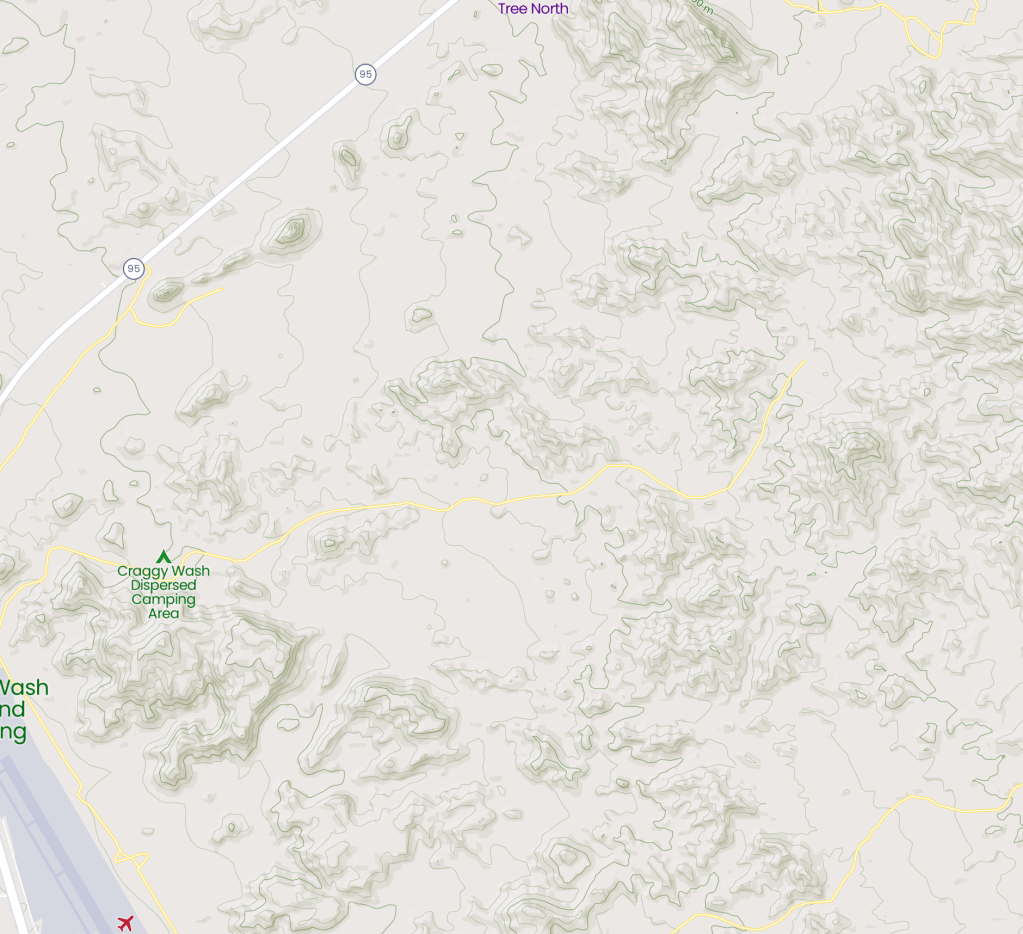
Location: East side of AZ-95 1.5 miles north of Lake Havasu City AZ
Rate: FREE for 14 days
GPS: 34.5935 -114.3619
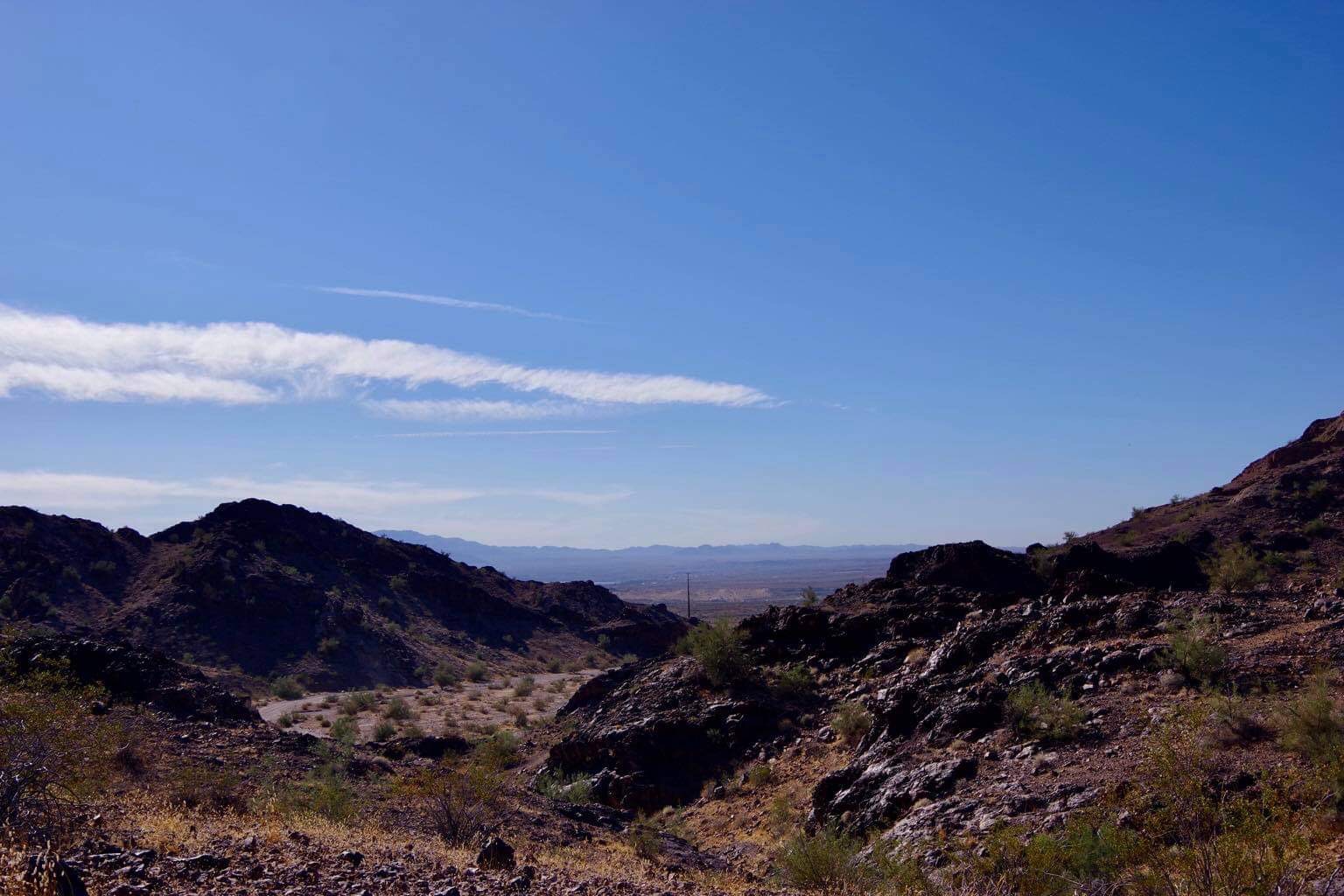
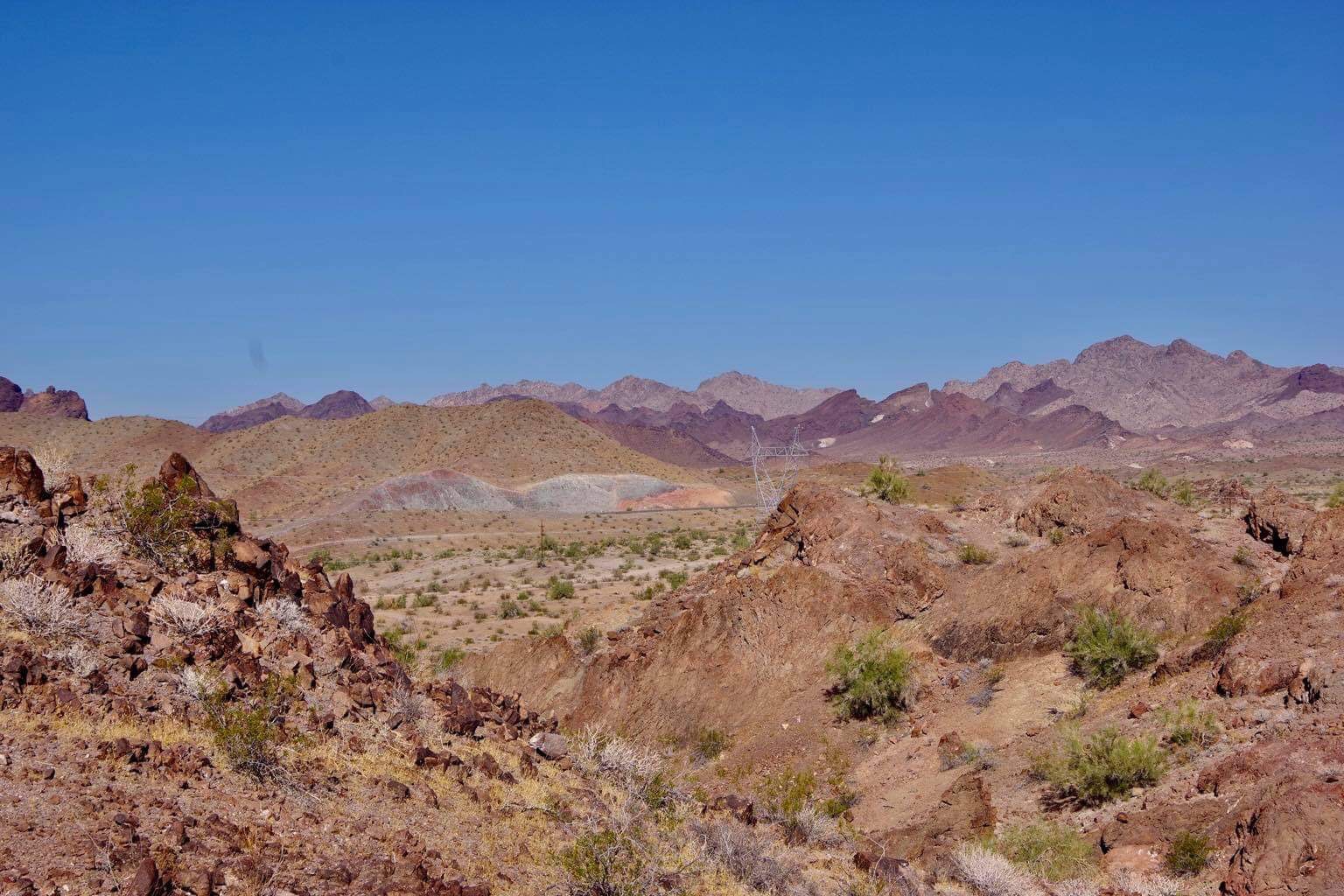
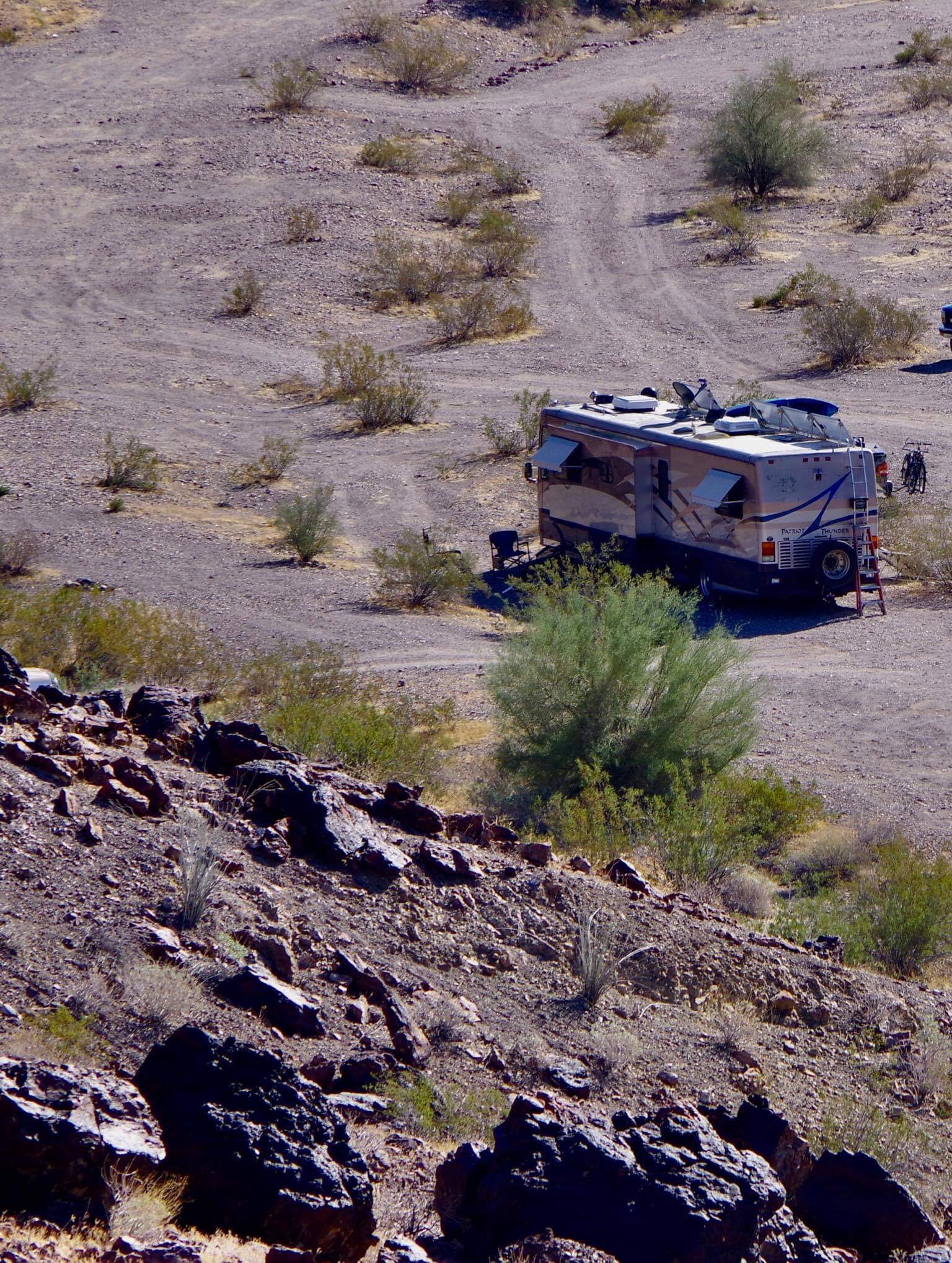
This spot is a real gem. And while we have stayed here on a number of occasions it is not the best suited to bigger rigs as it is very rough terrain. We have always managed to get a spot in the same area which is approximately a mile and a half from the highway it is always reasonably busy and closer neighbours than with a lot of dispersed camping areas. We have never driven to the end of Craggy wash but have been back two or three miles it is a narrow wash between the mountains and the beauty is amazing. During the winter months the mountains can shadow solar panels reducing input so careful planning is required
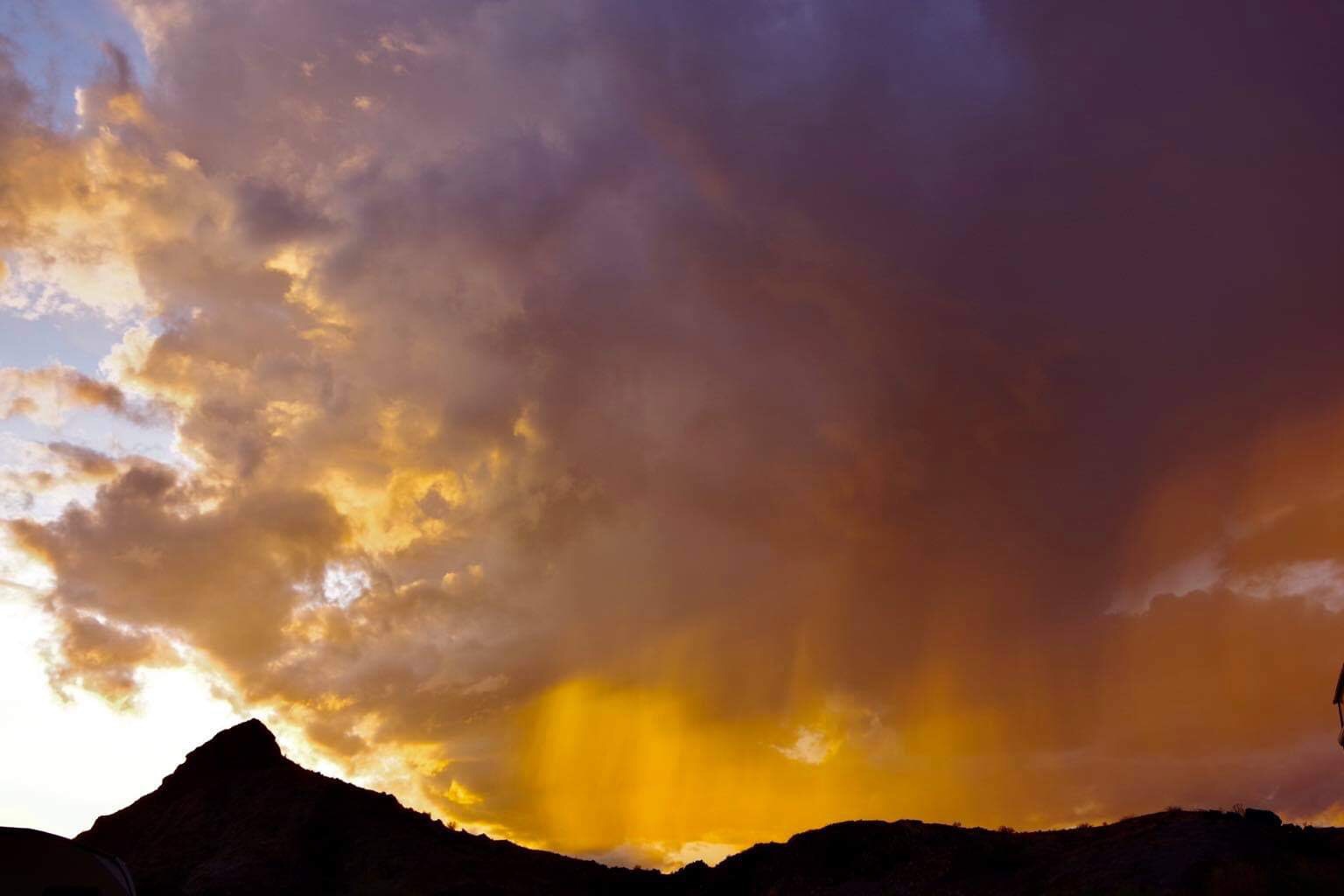
Just as the name implies this whole area is a wash. And for those of you that have never seen a wash when it rains it can be a little terrifying. For lack of better descriptions a wash is a dry river that can spring back to life with just a snap thunderstorm.
Do not camp in washes unless you are fully aware of just what can happen and how fast. This has always been one of the most amazing things to understand and if you are not from an area that experiences these flash floods it is almost to much to fathom, that the water crossing over a road or running down one of these washes can be multiple feet deep in just a few moments. And one of the most unnerving parts can be that it may never rain where you are, the storm could be miles away high in a mountain range that catches you totally off guard in a valley miles away.
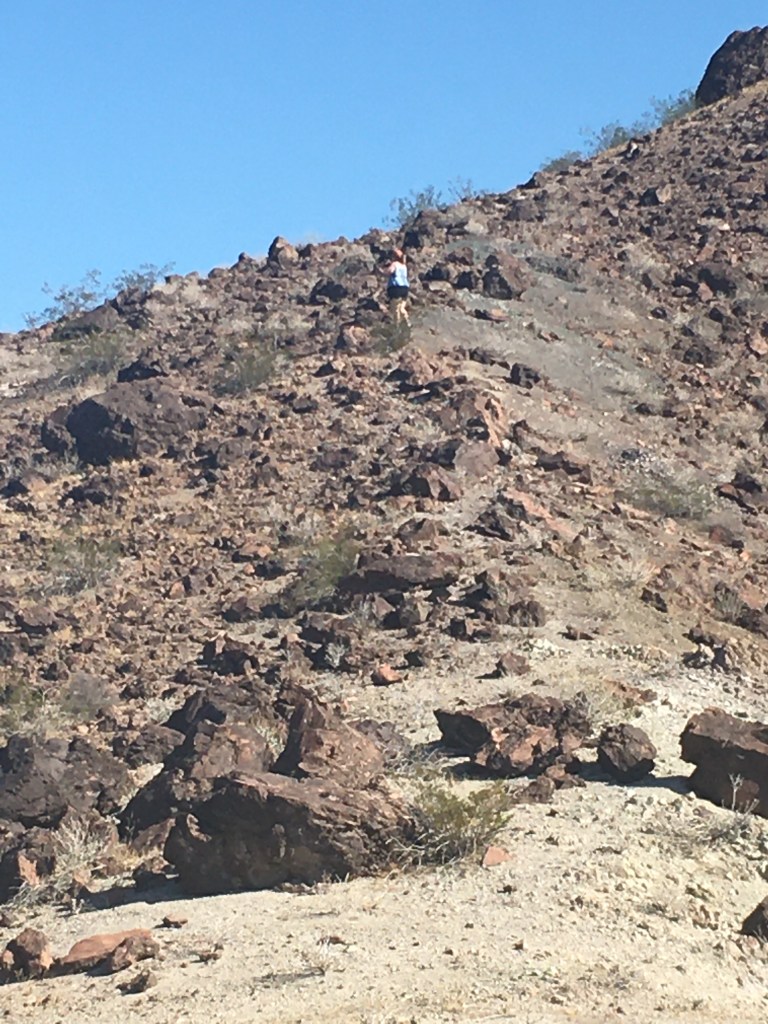
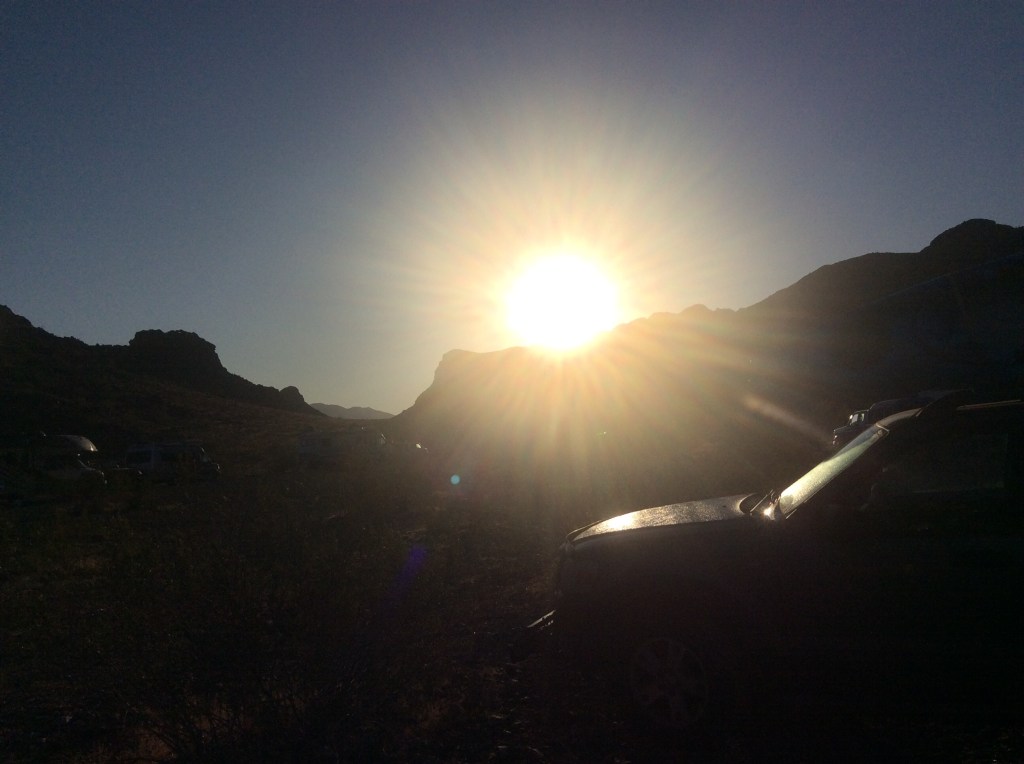
All the photos below are from Miss Laurie as it is a photogenic area with beautiful sun rises, sunsets, scenic views as well as some wildlife. I can’t see us getting to Arizona and not spending a little time at Craggy wash. Lake Havasu City is a few miles south and offers all the shopping needed, dining, attractions, a movie theatre, and more. We have seen wild burrows within five minutes of our camp site, you can even kayak on Lake Havasu less than ten minutes away.
The LTVA long term permit ($180) allows use of Bureau of Land Management designated LTVAs continuously from September 15th to April 15th (a total of 7 months), or for any length of time between those two dates. The LTVA short-visit permit ($40) allows use of Bureau of Land Management designated LTVAs for any 14 consecutive day period from September 15th to April 15th, which begins on the day the permit receipt is exchanged for the official permit and decal. The short-visit permit may be renewed an unlimited number of times for the cost of the permit. LTVA permits are valid at all LTVA camping areas.
This is dispersed camping at its truest form, once you purchase your permit than you are free to park pretty much anywhere you want to. But you must always keep in mind mother nature and the lay of the land. And you must remember all BLM areas are not created equal some are dirt, come sand, some stone and others pretty much rock. And how far you venture off the main roads will depend on you rig.
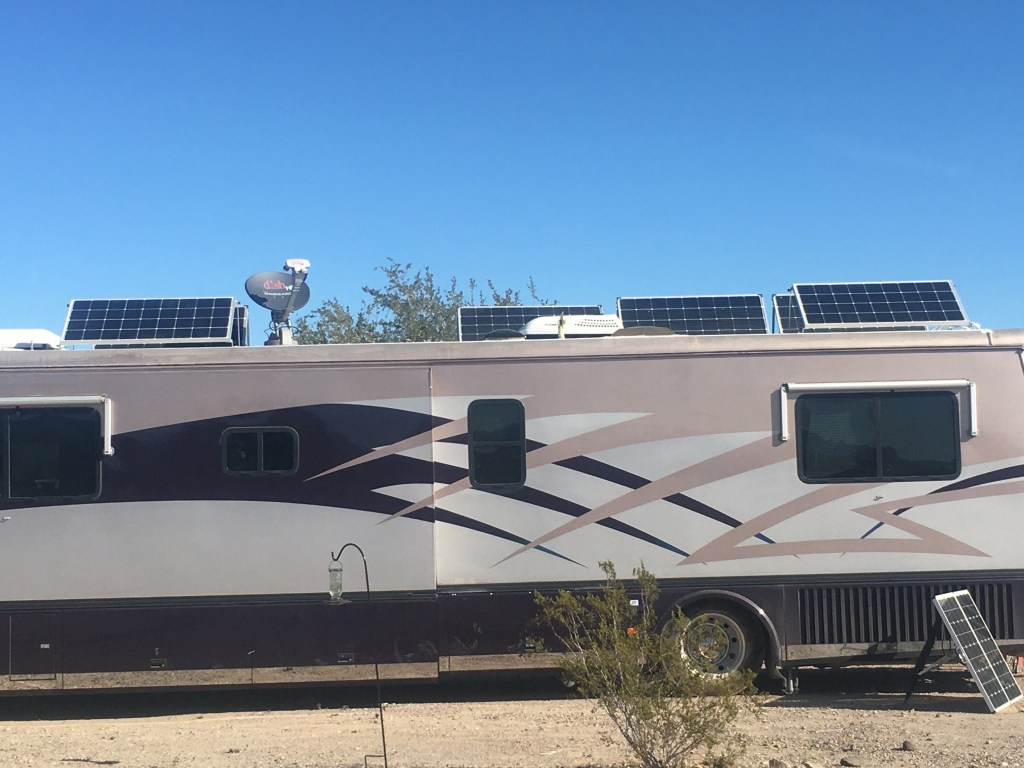
Our 40′ diesel pusher coach keeps us closer to the main roads, and while we venture off the gravel roads we are very careful not to get into areas than will require being towed out and we also avoid damaging the underside of our coach.
I have posted the LTVA rules under a separate blog as many will have little or no interest in the rules while those looking to use BLM areas will have many questions. Again LTVA and BLM have simalar rules but also vary greatly a you will learn as you review these blogs
The LTVA @ La Posa has four separate areas La Posa West, La Posa North, La Posa South, and Tyson Wash. Each area offers some unique terrain as well as different amenities. La Posa South is the largest area and offers all the utilities as trips to south are required to dump and refill tanks. Near the middle to the end of January this process could take up to three or four hours to complete. There are two dump stations for rigs and one for blueboys, and I have known people to use the last of their water supply to shower or do laundry (we have done laundry) while in line at the dump station then after dumping storage tanks a hundred yards down the road are four fresh water spigots, two on each side of the road. Usually filling our fresh water tanks takes twice as long as it does to dump the “grey” and “black”.
While La Posa West is one of the smaller areas as you can see it is also the closest to Quartzsite and the “show grounds”, As much as the huge tent RV show is talked about the real draw for thousands of people to the quartzsite area are the rock and gem show which starts long before the RV show and is going well after the RV show has folded the tent up.
This whole area is an ATVer’s dream with hundreds of tracks into the desert and up onto the mountains around the LTVA. For those of us that do not participate they can be very noisy and dusty as they roll through the different areas. One must remember these areas are not campgrounds, there are rules but they are not strongly enforced unless there are complaints, and a complaint will normally not result in any kind of quick resolution. This is primitive camping and the best idea is to get along with those close by or just move on to a different area.
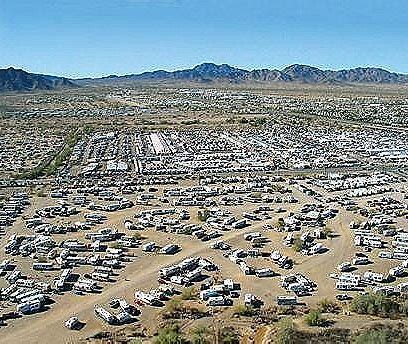
La Posa North
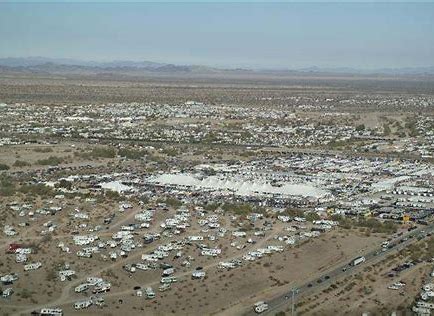
La Posa West
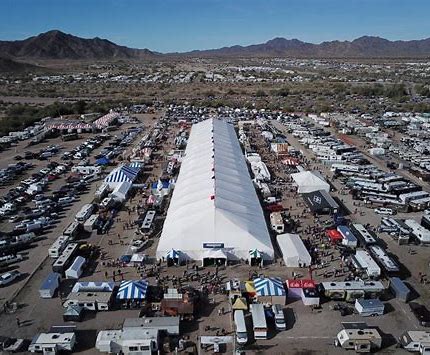
Big Tent RV Show
As you can see there are RVs pretty much as far as one can see, you can notice the big tent is up in all of these photos, so were all taken near the end of January. But also notice that there is no true organization to the parking of RVs, different groups split off into different areas, but many people return each year to the same spot to meet up with the same people year after year. And as we see these different communities form they will start working as a group and maybe do water and sewage runs as a group. So the group will share a blueboy or a water bladder with a pump and work as a team to avoid breaking camp, Many use composting toilets and as much as its not allowed on BLM land they will weep their gray water, so then the water bladder becomes a weekly job to top off everyone’s rig.
BLM which is federal does not allow grey water weeping but most of the state lands do. I personally do not see an issue with it, putting a little moisture back into the desert really has no great effect, and any one that is trying to survive on small fresh water supplies are usually being very conservative anyway and are usually very sensitive to what they allow into their grey water tanks as well, so harsh chemicals should not be a concern. I know growing up as a kid in rural southern Ontario grey water being wept onto the lawn was the normal thing, not a lot worse than pumping chlorinated water on your lawn to keep it green in the summer months.
We have camped at La Posa West in January of 2018 for 28 days and again in January of 2020 for another 28 days although not consecutive, and had it not been for the coronavirus pandemic and the border closure we had planned on longer stays in LTVA’s but most likely moving in and around to the different areas. Being in the LTVA near the end of January has to be on almost everyone who camps bucket list, Every thing is represented from multi-million dollar Provost coach to 15′ tow behind, from huge solar systems to little 1000 watt Honda generators, from loners like ourselves to huge gettogethers of close to a hundred rigs, its all there for two or three weeks in January each winter.




 The Buchanan's Rolling Down The Road