

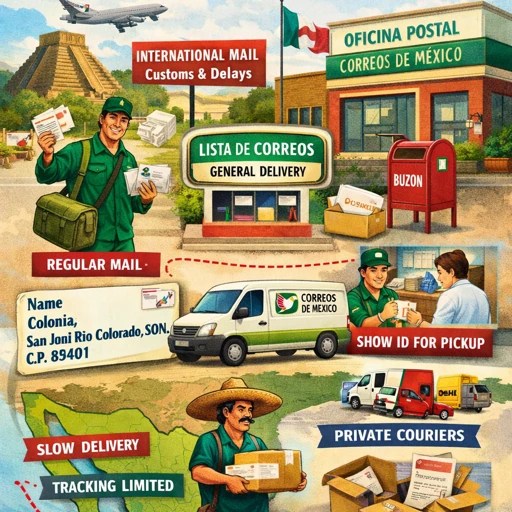
If you’re traveling, living, or spending part of the year in Mexico, you may eventually need to send or receive mail. The Mexican postal service—Correos de México—works a bit differently than what many Canadians and Americans are used to. Understanding how it operates can save you time, frustration, and lost packages.
This guide explains how the Mexican postal system works, what services are available, and when you may want to use alternatives.
What Is Correos de México?
Correos de México is Mexico’s national postal service. It has been operating in various forms since the 1500s and today maintains thousands of post offices across the country, from large cities to small towns.
While it provides many of the same services as Canada Post or USPS, expectations should be adjusted. Delivery times are generally longer, and some services are better suited for documents than packages.
Addressing Mail in Mexico
One of the biggest differences is how addresses work.
A typical Mexican address looks like this:
Name Street Name and Number Colonia (Neighborhood) City, State Postal Code (Código Postal) Mexico
Key Address Components
- Colonia is critical and functions like a neighborhood or district.
- Postal codes are very specific and often cover only a few blocks.
- Rural areas may not have home delivery at all.
If you’re mailing something to Mexico, always verify the correct colonia and postal code.
Home Delivery vs. Post Office Pickup
Unlike in Canada or the U.S., home mail delivery is not guaranteed everywhere.
- In large cities: limited home delivery may exist
- In small towns and rural areas: mail is often held at the post office
- Many residents use “Lista de Correos” (General Delivery)
Lista de Correos (General Delivery)
Mail is addressed to the recipient care of the local post office. The recipient must:
- Visit the post office in person
- Present valid photo ID
- Ask if mail has arrived under their name
This is common practice for travelers and seasonal residents.
Services Offered by Correos de México
Regular Mail
- Letters and postcards
- Very affordable
- Slow but usually reliable for non-urgent items
Registered Mail (Correo Certificado)
- Tracking within Mexico
- Signature required
- Recommended for important documents
Parcel Service
- Available, but slow
- Limited tracking
- Not ideal for high-value items
International Mail
- Can take several weeks (or longer)
- Customs delays are common
- Tracking may stop once the item enters Mexico
How Long Does Mail Take?
Delivery times vary widely.
| Type of Mail | Typical Time |
|---|---|
| Local letters | 5–10 business days |
| Domestic mail | 1–3 weeks |
| International mail | 3–6+ weeks |
| Parcels | 4–8+ weeks |
Holidays, customs inspections, and regional staffing all affect timing.
Tracking Mail in Mexico
Tracking exists but is limited.
- Registered mail can be tracked online
- Updates may be infrequent
- International tracking often ends once the package clears customs
For important or time-sensitive shipments, Correos tracking can be unreliable.
Customs and Import Considerations
International mail entering Mexico goes through customs.
- Packages may be opened for inspection
- Duties and taxes may apply
- Some items are restricted or prohibited
- Clearance delays are common
If duties are owed, the recipient must usually pay them before release.
When to Use Private Courier Services
Many travelers and expats prefer private carriers such as:
- DHL
- FedEx
- UPS
- Estafeta
Advantages
- Faster delivery
- Reliable tracking
- Door-to-door service
- Better customer support
Disadvantages
- Higher cost
- Duties are almost always assessed
For important documents, electronics, or time-sensitive items, private couriers are usually the better choice.
Tips for Travelers, RVers, and Expats
- Use digital billing and paperless statements whenever possible
- Have important mail sent to a trusted contact in your home country
- Use Lista de Correos if staying long-term in one area
- Avoid sending valuables through standard mail
- Be patient—mail in Mexico runs on a different timeline
Is the Mexican Postal Service Reliable?
Correos de México works best when:
- You’re not in a hurry
- You’re sending documents or letters
- You understand local pickup procedures
For everyday correspondence, it’s functional and inexpensive. For anything urgent or valuable, alternatives are recommended.
Back in December my son asked if we hade an address here in the Baja that he could send a Christmas Greeting, bellow is a question I posed to my AI app to see if receiving a Christmas greeting was a possibility.
What would my postal code be here at our site Latitude 31.115778 Longitude -114.914499 and where would the closest post office be?
Here’s what I can tell you about the location you’re staying at latitude 31.115778, longitude –114.914499:
📍 Likely Postal Code
Your coordinates place you in northern Mexico, just across the border from Yuma, Arizona — likely in or near San Luis Río Colorado, Sonora. In that region of Baja California / Sonora, postal codes typically fall within the 83000–85994 range for Baja California and 83000–85994 for Sonora per the Mexican postal code system (the ranges vary by state) .
- The official Correos de México postal code for the main San Luis Río Colorado postal area is likely around 83401 — this is the postal code used at the prominent local post office in town.
However, because rural addresses can be outside the official town’s coded area, your exact site might be assigned a slightly different 5-digit code depending on local colonia / settlement name. The best way to confirm is to check with the local post office (they can lookup the exact area for you).
📮 Closest Post Office
The nearest established Mexican postal service location is likely:
Correos de México / San Luis Río Colorado, Son.
- 📍 Address: José María Morelos y Pavón, Cuauhtémoc, 83401 San Luis Río Colorado, Sonora, Mexico
- 🕐 Typical Hours: Weekdays 08:00–16:30; Saturday 09:00–13:00 (may vary slightly)
This is the main Correos de México post office in San Luis Río Colorado, and it’s where most mail and parcels are processed for the region.
📬 Tips for Using This Postal Code and Office
- When addressing mail to your site, use:
[Your name] [Street address / lot description] San Luis Río Colorado, Son. C.P. 83401 MÉXICO(If you have a specific street/colonia name, include it before the city.) - If mail carriers don’t deliver right to your site, you can have parcels held “en Lista de Correos” (general delivery) at the post office — then pick them up with your ID.
- For parcels from abroad, include your Mexican phone number and postal code 83401 to help with customs and delivery.
📍 Summary
| Info | Details |
|---|---|
| General Area | Near San Luis Río Colorado, Sonora, Mexico |
| Likely Postal Code (Código Postal) | 83401 (verify with office) |
| Closest Post Office | Correos de México / San Luis Río Colorado, Son. |
Final Thoughts
The Mexican postal service reflects Mexico itself—historic, widespread, and a bit slower paced. With the right expectations and a little planning, it can serve your needs just fine.
If you’re traveling through Mexico or living life on the road like we are, understanding how mail works is just one more step toward smoother adventures.
Day 3028



 The Buchanan's Rolling Down The Road