Solar – For Dummies

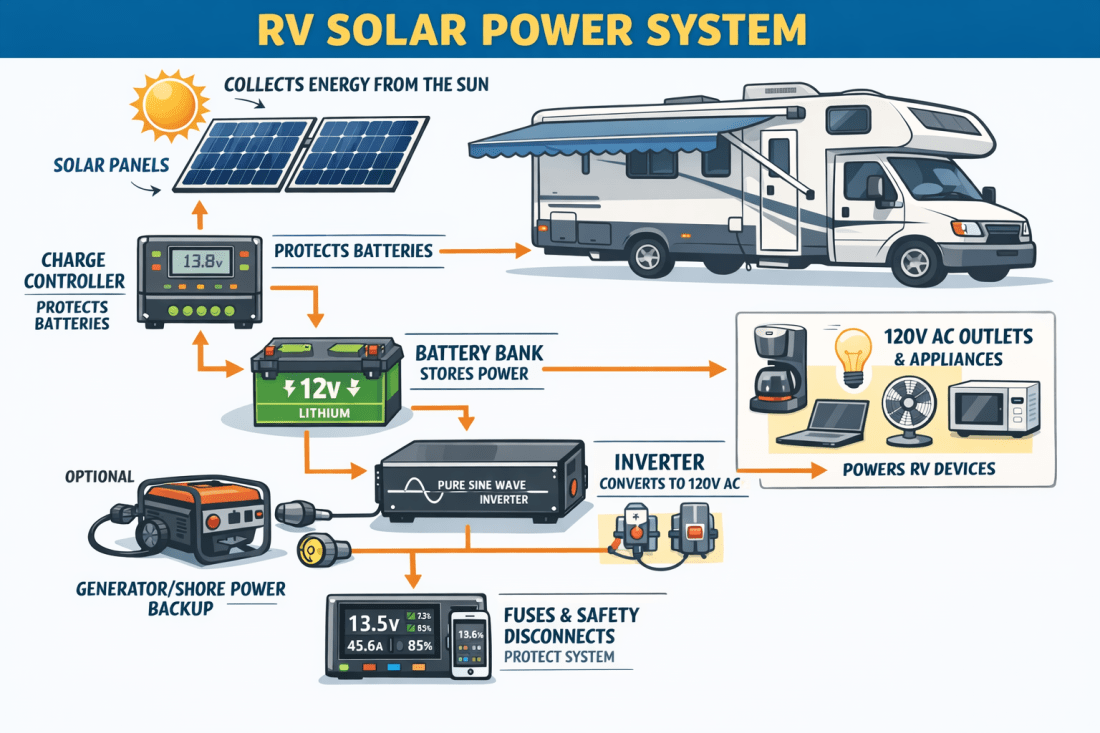
The Basic Parts of an Off-Grid Solar System

An off-grid system always has five core components:

  1. Solar Panels
  2. Charge Controller
  3. Battery Bank
  4. Inverter
  5. Wiring, Fuses & Disconnects (Safety Gear)

Optional but common:

  • Generator or shore power backup
  • Monitoring display or app

1. Solar Panels – Make the Power

What they do:
Solar panels turn sunlight into electricity (DC power).

How they operate:

  • Sun hits the panels
  • Panels produce electricity whenever there is light (more sun = more power)
  • Power flows out of the panels toward the charge controller

Think of them as:
As a fuel pump on your car pumping electricity to your batteries


2. Charge Controller – Protects the Batteries

What it does:
Controls how power from the panels goes into the batteries so they don’t get damaged.

How it operates:

  • Takes power from the panels
  • Adjusts voltage and current
  • Stops charging when batteries are full

Two types:

  • PWM – basic, cheaper
  • MPPT – more efficient, common in modern systems

Think of it as:
As a water valve to prevent overfilling but filling the batteries as fast as possible


3. Battery Bank – Stores the Power

What it does:
Stores electricity so you can use power at night or when it’s cloudy.

How it operates:

  • Charges during the day
  • Discharges when you use power
  • Feeds power to the inverter

Common battery types:

  • Lead-acid (older, heavier)
  • AGM (sealed lead-acid)
  • Lithium (LiFePO₄) – most popular now

Think of it as:
A storage tank for your electricity.


4. Inverter – Makes Power Usable

What it does:
Converts battery power (DC) into household power (AC).

How it operates:

  • Pulls DC power from batteries
  • Converts it to 120V AC (or 240V)
  • Powers outlets, appliances, and electronics

Types:

  • Pure sine wave – required for modern electronics
  • Modified sine wave – outdated, avoid

Think of it as:
A translator between your batteries and your appliances.


5. Wiring, Fuses & Disconnects – Keeps Everything Safe

What they do:
Protect equipment and people from short circuits, overloads, and fire.

How they operate:

  • Fuses blow if power exceeds safe limits
  • Disconnects allow you to shut the system off
  • Proper wire size prevents overheating

Think of them as: A seatbelt of circuit breaker to protect you and your system

Solar – For Dummies

Featured

The Basic Parts of an Off-Grid Solar System

An off-grid system always has five core components:

  1. Solar Panels
  2. Charge Controller
  3. Battery Bank
  4. Inverter
  5. Wiring, Fuses & Disconnects (Safety Gear)

Optional but common:

  • Generator or shore power backup
  • Monitoring display or app

1. Solar Panels – Make the Power

What they do:
Solar panels turn sunlight into electricity (DC power).

How they operate:

  • Sun hits the panels
  • Panels produce electricity whenever there is light (more sun = more power)
  • Power flows out of the panels toward the charge controller

Think of them as:
As a fuel pump on your car pumping electricity to your batteries


2. Charge Controller – Protects the Batteries

What it does:
Controls how power from the panels goes into the batteries so they don’t get damaged.

How it operates:

  • Takes power from the panels
  • Adjusts voltage and current
  • Stops charging when batteries are full

Two types:

  • PWM – basic, cheaper
  • MPPT – more efficient, common in modern systems

Think of it as:
As a water valve to prevent overfilling but filling the batteries as fast as possible


3. Battery Bank – Stores the Power

What it does:
Stores electricity so you can use power at night or when it’s cloudy.

How it operates:

  • Charges during the day
  • Discharges when you use power
  • Feeds power to the inverter

Common battery types:

  • Lead-acid (older, heavier)
  • AGM (sealed lead-acid)
  • Lithium (LiFePO₄) – most popular now

Think of it as:
A storage tank for your electricity.


4. Inverter – Makes Power Usable

What it does:
Converts battery power (DC) into household power (AC).

How it operates:

  • Pulls DC power from batteries
  • Converts it to 120V AC (or 240V)
  • Powers outlets, appliances, and electronics

Types:

  • Pure sine wave – required for modern electronics
  • Modified sine wave – outdated, avoid

Think of it as:
A translator between your batteries and your appliances.


5. Wiring, Fuses & Disconnects – Keeps Everything Safe

What they do:
Protect equipment and people from short circuits, overloads, and fire.

How they operate:

  • Fuses blow if power exceeds safe limits
  • Disconnects allow you to shut the system off
  • Proper wire size prevents overheating

Think of them as: A seatbelt of circuit breaker to protect you and your system