

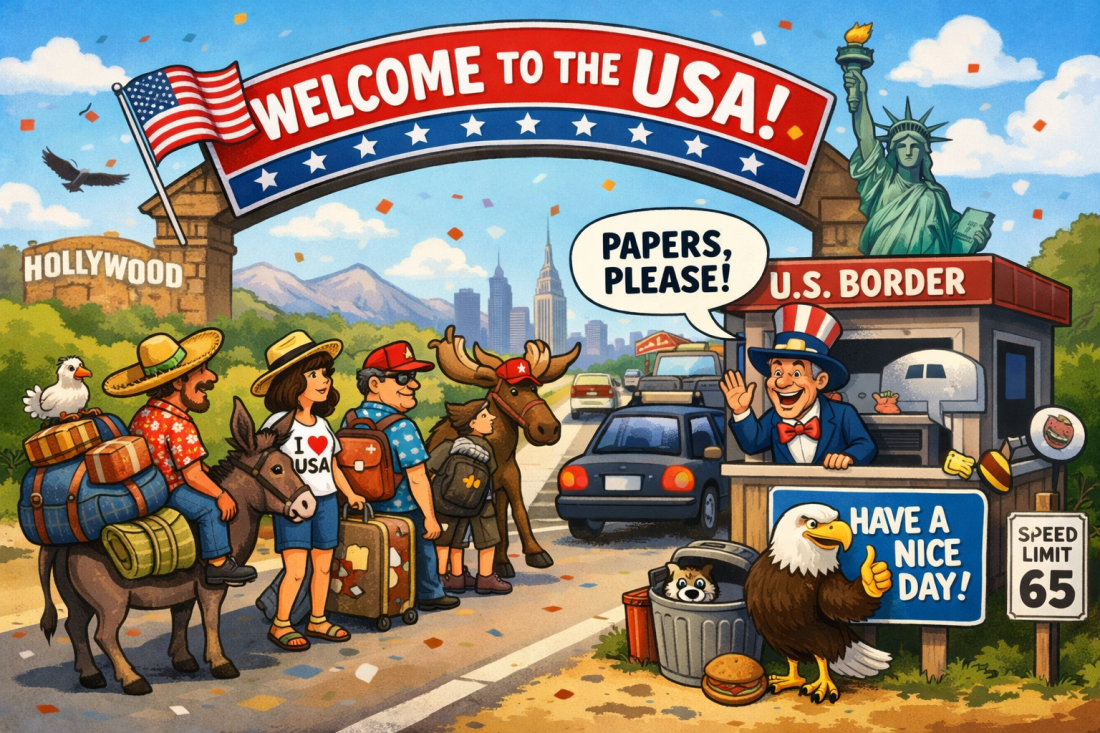
Introduction
Planning a road trip from Canada to the United States in your motorhome? Whether you’re heading south for a winter escape or a long adventure, crossing the border requires preparation. In 2026, new rules and compliance measures have changed the experience for Canadian travelers. Here’s your complete guide to ensure a smooth journey.
1. Required Documents for Travelers
Every person in your motorhome must have proper identification. Missing paperwork can lead to delays or denied entry.
• Canadian Passport: Valid for the entire duration of your stay.
• NEXUS Card: Speeds up processing at designated lanes but does not exempt you from new biometric rules.
• Driver’s License: For driving in the U.S.
• Consent Letter for Minors: If traveling with children and one parent is absent.
• Travel Insurance: Strongly recommended for medical coverage.
2. Vehicle Documentation
• Registration and Proof of Ownership: For your motorhome and any towed vehicles.
• Insurance: U.S.-valid coverage. Mexican insurance ends at the U.S. border.
• Rental Agreement: If renting an RV, include written permission to cross into the U.S.
3. Pet Requirements
Bringing your cat? Here’s what you need:
• Health Certificate: Not federally required but recommended.
• Rabies Vaccination Proof: Some states require it.
• Secure Carrier: For inspection at the border.
4. Recent Changes for 2026
• Biometric Photo Collection: All non-U.S. citizens, including Canadians, are photographed at entry and exit. No age exemptions—children and seniors included.
• Device Screening: Expect possible inspections of phones and laptops.
• Extended Stay Registration: If staying over 30 days, you may need to register electronically with USCIS (Form G-325R). Some travelers are asked to obtain Form I-94 at the border (fee: $30 USD, fingerprinting, photo).
Some clarification: if not issued an I-94 at the time of crossing the border and this can be checked on line at U.S. customs and border protection if not on file one week after crossing a G-325R should be completed if you will exceed 30 days in the States here is where your register for that USCIS for information and registration. I hope that helps clear some of the mud. So cross the border as normal then check for an I-94 if none there then complete the G-325R.
5. Food Restrictions at the Border
Declare all food items. Failure to declare can result in fines up to $1,000. Here’s what you need to know:
Prohibited Items
• Meat and Meat Products: Fresh, frozen, dried, smoked, or canned (including pork, beef, poultry).
• Fresh Fruits and Vegetables: Most are banned due to pest risks (e.g., avocados, mangoes, citrus, tomatoes).
• Raw Dairy Products: Milk, yogurt, soft cheeses.
• Eggs and Raw Egg Products.
Allowed Items
• Commercially Packaged & Processed Foods: Canned goods, sealed jars, baked goods, candies, condiments.
• Dried Goods: Beans, nuts, dried fruits (like raisins).
• Powdered Milk and Hard Cheeses: Shelf-stable only.
6. Quick Tips for a Smooth Crossing
• Cross at an official port of entry during daylight hours.
• Keep passports, NEXUS cards, and vehicle documents handy.
• Remove prohibited items before approaching the border.
• Be ready for biometric photo and possible device screening.
• Declare everything—especially food and pets.
Conclusion
Crossing into the U.S. in your motorhome as a Canadian traveler is straightforward if you prepare. With new biometric rules and compliance requirements, planning ahead is essential. Follow this guide, and your adventure will start stress-free.
This was the process when I prepared to cross from Mexico to the United States of America the last week of January 2026, please check at your time of crossing as the present administration has made numerous changes.
Day 3037


 The Buchanan's Rolling Down The Road