February 2026

Hello Everyone:

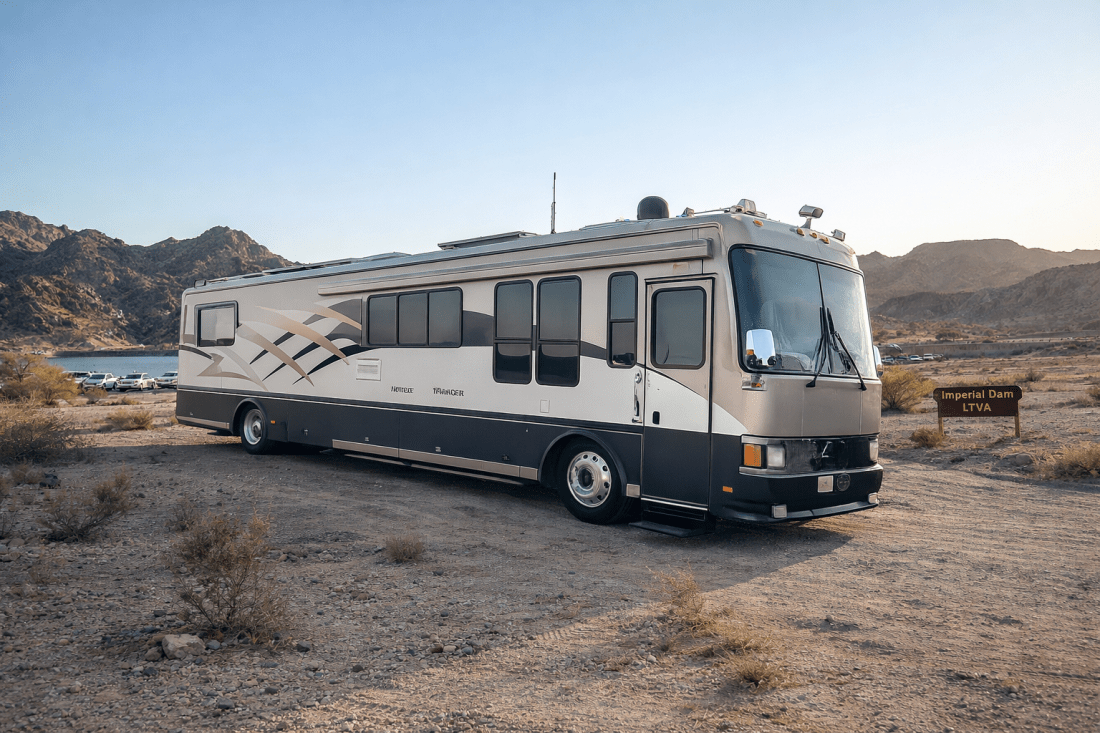
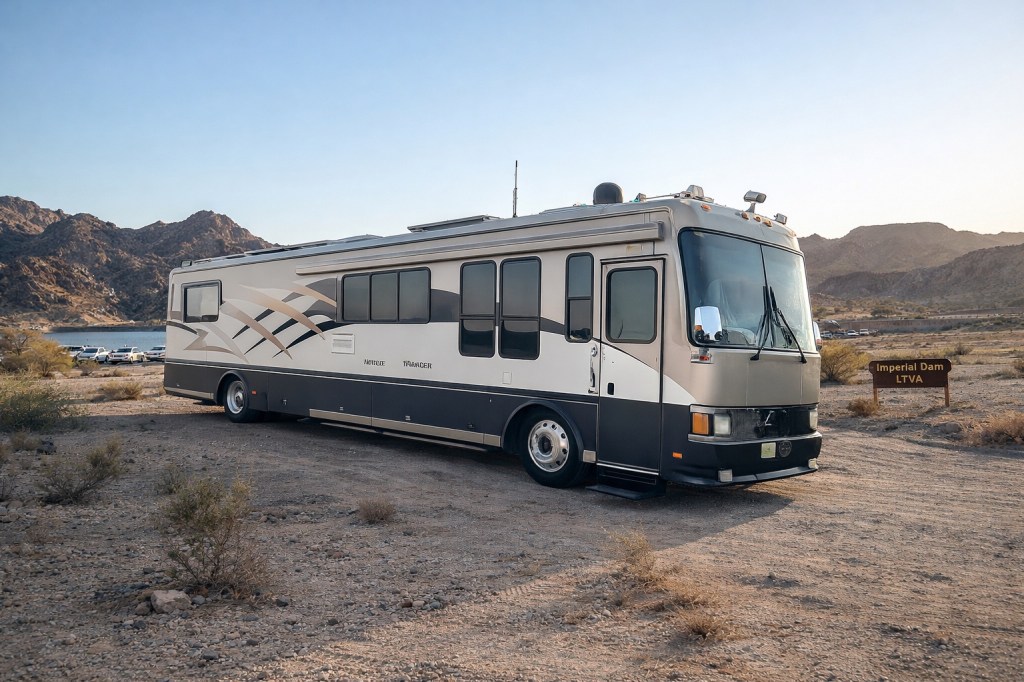
As we close out February we are located on Hurricane Ridge in the Imperial Dam LTVA which is technically in Winterhaven California. This month has been anything other than relaxing, the last couple of weeks has been a busy time around the Coach, We closed our stay at the El Dorado Ranch with little fan fare, Miss Laurie playing pickleball and I was writing and starting to prepare for our departure, always an exciting time with a little anxiety thrown in, will everything work the way it is designed, will that welded torque rod hold up, will our bumper hit while pulling out of this site, how will the border be, will the U.S. Customs and Border guard be nice, will we be able to restock, refuel, and find our friends in the LTVA area all before dark? I’m sure you get the idea, the sadness of leaving some where that has been a great winter home, the joy of being mobile again, the desire to explore, the need to address our solar shortfall, boondocking where there are very few rules and no one really cares what you do. We were also expecting cooler days and nights as is the norm but finding ourselves in the middle of a major record setting heatwave.


Looking Ahead:

Key Dates:

  • March 16th Andrew has a ball tournament in Mesa Arizona

Plans & Highlights:

  • Visit with friends in and around Phoenix
  • A return visit to Laurie’s happy place “The Boyce Thompson Arboretum
  • Boondocking in some new areas
  • End of March make our way to Show Low to visit with friends

Bucket List Items:

  • Explore the Mount Lemon area near Tucson
  • A visit to Tohono Chul Botanical Garden

Blog Posts this Month:

Travel and Destinations:

RV Tech & Gear:

Lifestyles & Reflections:


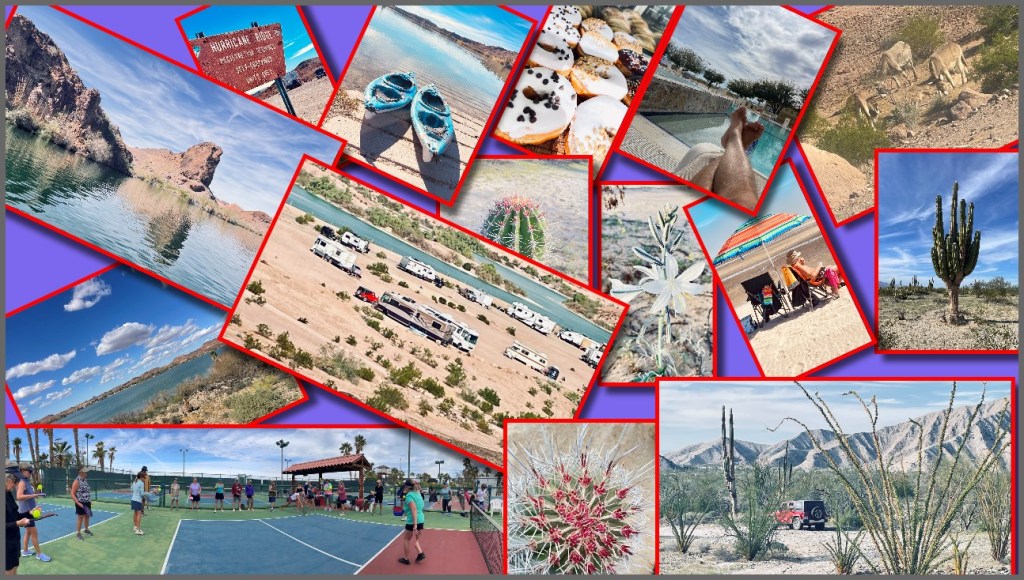
This Month in Photos:

Lessons From the Road:

After 8+ years of full-time RV living

This Months Take Away:

The wanderlust that drives so many of us living this nomadic lifestyle, while hard to explain it is the never ending quest to a new place, a drive to explore some where new, the comfort of having your home and all of its comforts with you, the desire to enjoy time with old friends and make new friends along the way.


Updates & Projects:

Rig Update:

  • Not a lot of changes on the rig this month, we have had another tire sensor failure on our TPMS, this time on the right front coach tire.

Systems / Solar / Connectivity:

  • As we returned to the United States I have a multi-point plan for our solar system, it will be a multi point systematic approach that will be very involved and detailed, but not real expensive in actual dollars.
  • We have been battling with the power consumption of many of our creature comforts, like our StarLink, does the power consumption outweigh the benefit of constant connectivity?

Blog & Creative:

  • It has been a cruise control month for blogs, as I had prepared and scheduled their publishing times for the whole month.
  • A new video on YouTube this month, shows a day at the beach see video

Laurie’s Projects:

The first of February was a busy pickleball time for Miss Laurie, and after crossing into the United States and settling into the Imperial Dam LTVA then there was rock exploration of the area, so this is the only painting that was completed.


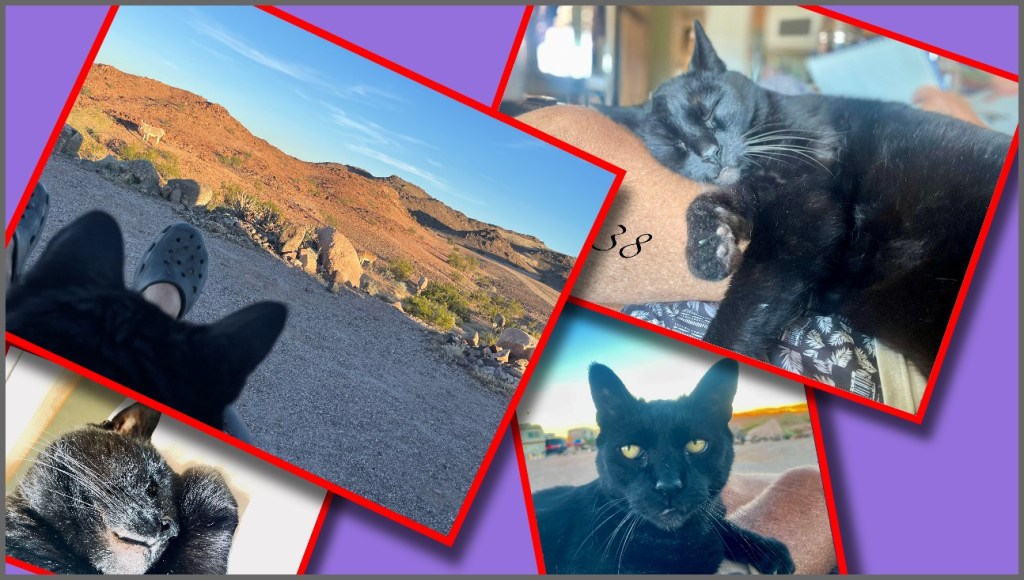
Mister Sam’s Photos:

Thank you for following along and being part of our journey.

See you down the road.

Laurie & Brian

The Buchanan’s Rolling Down the Road

www.thebuchanansrollingdowntheroad.com

Day 3082
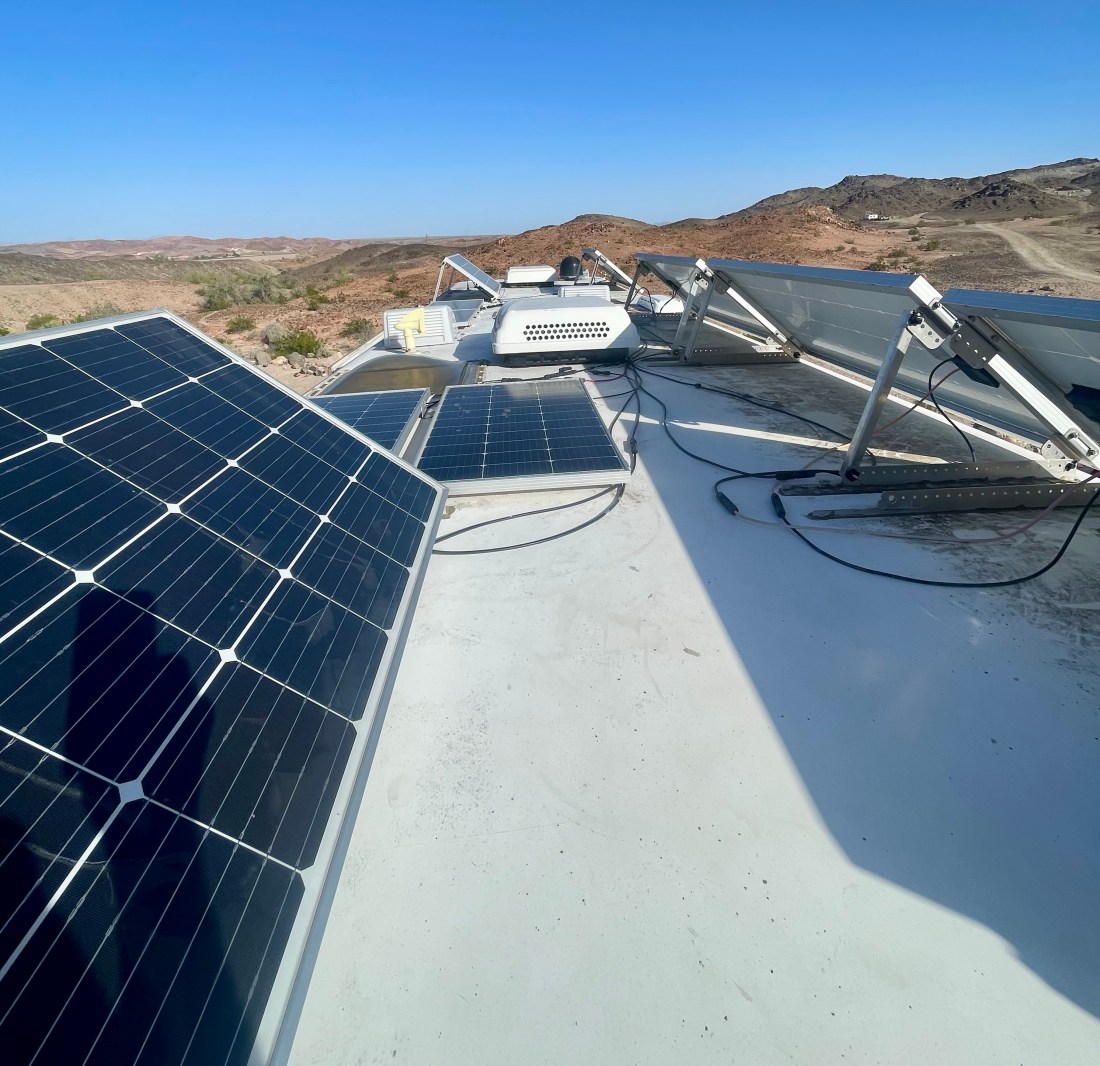
Stage 2: Real‑World Performance, System Refinements, and the Payoff of Doing It Right


After weeks of wiring changes, controller upgrades, tilt adjustments, and chasing shadows across the roof, the solar system finally delivered the kind of performance the theory always promised. Mid‑February in Winterhaven, CA isn’t supposed to be peak solar season, yet the last two days produced 7,250 watt‑hours and 7,513 watt‑hours, with the batteries topping off by afternoon. These numbers confirm that the system is now operating close to its true 1,540‑watt potential.

Matching the Theory With Real‑World Results
The array consists of:

  • 2 × 210‑watt panels (420 W)
  • 4 × 180‑watt panels (720 W)
  • 4 × 100‑watt panels (400 W)

Totaling 1,540 watts, the theoretical February harvest in Winterhaven—using roughly 5.5 peak sun hours—lands around 8.47 kWh. Hitting 7.2–7.5 kWh in real conditions puts the system at 85–89% of theoretical output, which is exceptional for winter sun, real‑world temperatures, wiring losses, and the inevitable shading challenges of an RV roof.
These numbers aren’t guesses or projections—they’re the result of actual harvest data over multiple days, and they validate the design decisions made along the way.

The Fourth Controller: The Turning Point


The biggest leap in performance came from adding a fourth solar controller. This upgrade allowed each array to operate independently, eliminating the compromises that come from mixing panel sizes, voltages, and shading profiles on shared controllers.
With the new layout:

  • The 210‑watt pair now runs in full series on the Victron MPPT 100/30, reaching clean high‑voltage operation and pulling peaks up to 2.1 kW.
  • The 4 × 180‑watt array runs as a matched series string on its Blue Sky controller, exactly as designed.
  • The 4 × 100‑watt panels were moved to their own controller, freeing them to be rewired for shading tolerance without affecting the rest of the system.
    This separation eliminated the clipping that previously held the system back. Each controller now tracks its own array without interference, and the results show it.

Before and After: A System Transformed

Before

  • Mixed arrays sharing controllers
  • Voltage mismatches causing early clipping
  • Shading on the 100‑watt panels dragging down entire strings
  • Tilt set “by eye,” leaving watts on the table
  • Roof real estate feeling like a puzzle with no clean solution

After

  • Four independent MPPT controllers
  • All major arrays running in clean series strings
  • The 100‑watt array rewired in parallel to isolate shading
  • Tilt optimized using the app for maximum winter performance
  • Batteries topping off in mid‑February
  • Daily harvests consistently above 7 kWh

The transformation is visible not just in the numbers, but in how predictably the system now behaves. The theory said this configuration should work—and the real‑world data now confirms it.

One of the ongoing issues was the potential for a voltage drop issue, I know it is not a serious issue but it is still an issue. All controllers were removed and reinstalled to shorten all of the wiring. Now all PV cables from the roof are 10 gauge solar wire, each solar feed has a 40 amp circuit breaker (as protection and a way to control the circuit) each battery power line has been upgraded to 6 gauge wire with new crimped cable ends to a 50 amp fuse and then to a bus bar that combines all the power and ground lines into 00 gauge wire to the battery on both positive and negative lines. the 00 gauge wires are my longest wires, so I’m thinking the voltage drop issue should be resolved.


What’s Left for Stage 3
The system is now functionally complete and performing at a level that matches its design. The remaining tasks are refinements:

  • Making the 4 × 100‑watt array tippable
  • Eliminating the last sources of morning and afternoon shading
  • Returning the 100‑watt array to a series/parallel configuration once shading is resolved
  • Finalizing roof placement now that performance data is guiding the decisions

These aren’t fixes—they’re optimizations aimed at squeezing out the last few percent of performance.


Day 3076