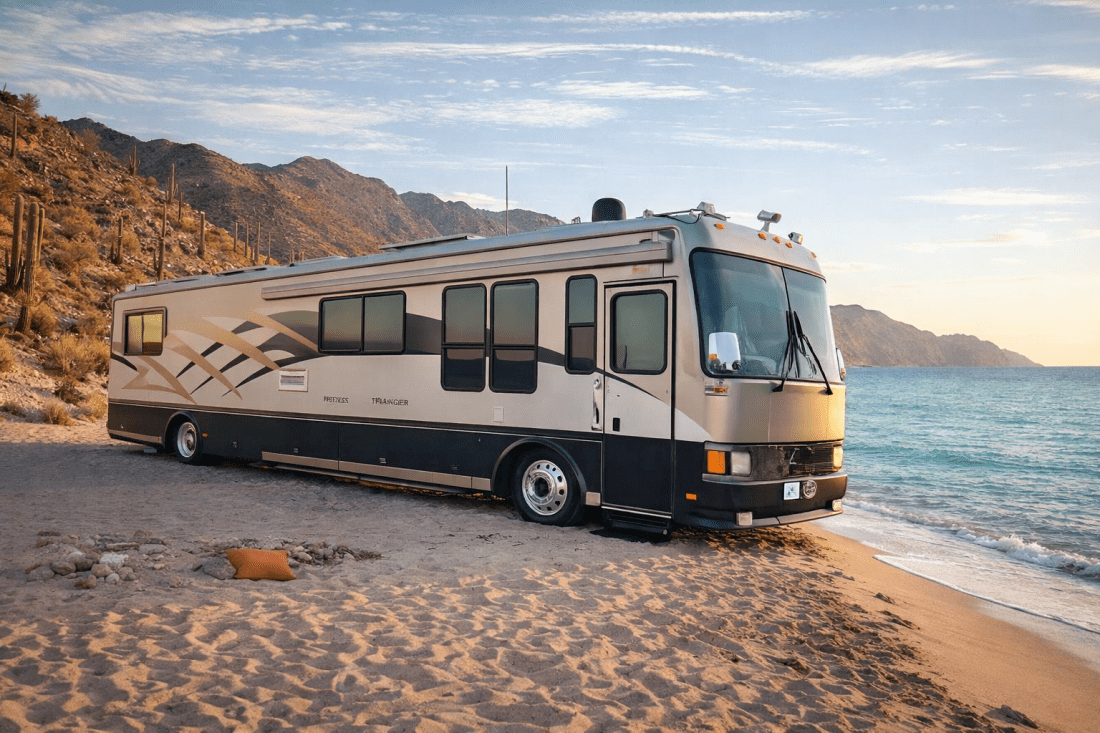
Hola amigos (Hello friends)

I know what the hell two fresh blogs in a row two days in a row!

Just another sunrise

Well let me start by saying that I seem to have caught up on my reading list. As you know I read most of my books through my Libby app which means I borrow and read ebooks on my handheld devices from my library and its library group. And the last couple of years I have been reading between 50 & 60 novels a year and have been reading a number of different authors series, and at this point I place a hold on the next book of the series as soon as they are announced. But right now while I have about a dozen on hold waiting my turn, I decided it was time to see if anyone is still interested in the ramblings of a curmudgeon.

So I started this blog yesterday while sitting by the pool, and nothing says Christmas in Mexico like having carollers by the pool.

Carollers by the pool!

As you could see by this morning’s sunrise we are in for some cloudy days here in the Mexican Baja and possibly even some rain. The Baja is a peninsula that is approximately 100 miles wide and 900 miles long with the Pacific Ocean on the west coast and the Sea of Cortez on the east coast. It is made up of two Mexican states Baja California (BC) & Baja California Sur (BCS). It also has a mountain range that runs the length of the the peninsula, and that range creates two very distinct weather patterns, and right now the western portion is preparing for heavy rain storms while our eastern portion will just have cooler cloudy weather as this area gets very little rain.

We are staying just 10 kilometres north of San Felipe on Highway 5 at El Dorado Ranch. This resort is very strange, and I will try and explain that comment which may come across as a bit of a ramble. The “Ranch” has property on both the east and west sides of Hwy 5, and encompassing thousands of acres of which much has had no development. The east side has an eighteen hole golf course that has some spectacular views of the Sea of Cortez, and while we have walked portions of it we have not played it yet, and around the course are some homes that appear to be amazing, there are also condominium style units and access to the beach, pickle ball courts, a pool, and a couple of restaurants. I would estimate that portion as being approximately one square kilometre and I’m going to guess it was the original portion, but in true Mexican style some areas are magnificent and just across the street could look like an abandoned project. The eastern side has electricity, water, and sewers, it also has some concrete roads with street lights and many dirt roads with lots of exposed infrastructure it reminds me of some of the failed projects you find in Florida that were destined to fail.

The western portion is huge with sporadic built up areas, there is limited electricity areas and and no water or sewer, so many areas are “off grid” with water cisterns and sewage tanks and lots of solar systems. So there are water deliveries and sewage pump outs available throughout the “Ranch” there are huge homes and RV lots right beside them. From what we have gained so far is that each area has its own HOA rules, in some areas the RV has to be covered, while the other side of the road the cover is not required. As previously stated we are staying on a lot that is 100 feet square and apparently was a building lot, that I suspect some one purchased on speculation, that didn’t work out for what ever reason, the brought in power, installed a water cistern with a pump, and a septic tank and when it didn’t sell they added some gravel and a couple of patios and created two RV sites to rent out and on one of the sites they added an old fifth wheel trailer to which they added a couple of couple of mini split air conditioners and now they rent it out.

So in our first month there have been two different renters, the first couple only stayed a weekend (thankfully) as they had a yapping dog that they left in the trailer when they went out which was most of the time, and the dog barked continuously. The second couple are older and have purchased a lot and a trailer and are renting here until they can move onto their own area. They have a dog as well but is much better behaved and they seem very nice but have been very busy getting their lot prepared.

The whole area seems to have slowed down as many people have left to spend the holidays with family back home. There are a lot of Canadians here, most are from the western provinces, many are here because of the better value for a hurting Canadian dollar and others are feeling the hostil environment north of the border with the constantly changing rules for Canadian visitors. We have just got through the shortest day of the year along with the start of “winter”, which we will enjoy with activities and the beach, while watching the cold and snow back in Ontario.

Day 3003

A little short on juice!

We have a seasonal site at a campground on the Grand River near the village of Dunnville in Ontario, and Ontario is in the middle of an extended heat wave with daily temperatures around 30°C (86°F) which in the southwest would be very comfortable because of the low humidity. But we are not in the southwest and with close to 100% humidity it bring with it a feels like temperature of 40°C (104°F) and that makes it very uncomfortable. This is an old campground and only offers a 30 amp connection which would normally not be an issue if it was a clean power feed, and by clean I mean a connection like you would expect at your home where the utility supplies a good power source. We don’t have that luxury here with our supply being what I would refer to as a dirty connection, the dirty connection could be the fault of either the park or the utility.

In this case the issue is with the utility, as many of you know we are responsibly self sufficient with our lithium batteries and our 1500 watts of solar panels, but we do not have enough power to operate our air conditioner for hours at a time, so I usually operate one air conditioner on the parks power and power the rest of the coach from our batteries and solar.

Since arriving here at the park the power has always been a bit of a concern, old park, old wiring, old breakers and such. I was hoping not to have to learn the park’s system as we are just paying campers, but over the last two weeks we (I) have learned a lot about the parks system. There are approximately 70 camp sites, but some are not occupied, there are actually two different power sources into the park, I discovered that my source is supplied from a different village than the majority part of the park, in fact there are only six 30 amp outlets on this power source and one is unoccupied.

Five 30 amp sites would mean the maximum power consumption would be 150 amps at 120 volts or 75 amps at 240 volts. The utility supplies 240 volt source, a quick check of the main panel shows a 100 amp service at 240 volts which is equivalent to 200 amps at 120 volts, more than enough to supply the six sites at 30 amps each. So why is my roof air conditioner sounding like it is struggling to operate, a couple of minutes finds that our power supply is not maintaining 120 volts in fact it is dropping off to less that 100 volts, a real red flag for our air conditioner.

Not the kind of voltage numbers that I wanted to see at our supply post.

As simply as I can say it this is a major issue, during the week we are the only people in our row therefore the only site pulling any more power than the normal fridge operation in the other sites, but this happened on a weekend with four out of the five sites occupied, it’s hot and humid so four air conditioners operating. Now RV air conditioners are not efficient and pull a heavy power draw, but should be able to operate easily within the supply limits. So what causes the voltage to be 100 instead of 120? The answer could be what is referred to as voltage drop, and the easiest explanation of voltage drop is by trying to draw to much power through too small of power cord. If this is the case if I checked the voltage at my post and compared it to the voltage at the source they would vary greatly. Like if out post outlet read a voltage of 100 volts and the power supply at the main panel shows 120 volts it would tell me that our power supply had a bad voltage drop. In our case the voltage reading were only a couple of volts difference, proving the issue is a utility issue, I would speculate that it is a transformer on the utility pole which is failing.

I’m lucky we have an on board generator, so Saturday afternoon I decide to disconnect from shore power and fire up the generator, now the generator starts with power from the chassis batteries, we have owned the coach for eight years and the batteries were not new when we purchased the coach, in fact Miss Laurie and I discussed getting new chassis batteries this year before our fall departure. I had not started the generator or the coach since June and now when I went to start the generator I got a failure code from the chassis batteries! Not a big issue normally, but it is hotter than hell here today and the solution to this is the battery charger which is buried in the basement compartment, then the time to charge the batteries enough to start the generator, 20 minutes later with both air conditioners running off of our generator we watch the coach temperature drop from 31°C (88°F) to 23°C (74ºF) in an hour.

I have reported this situation to the park owners and now will have to wait to see how long it takes the utility company to resolve the problem, my expectation is not high but will push for a satisfactory resolution.

It’s now the first of the week, still in the heat wave but we are back to the only people in our row, and as bad as the voltage remains we are able to operate the one air conditioner, I have been sourcing new chassis batteries and will obtain then this week, these batteries run a number of things besides starting the generator and the main diesel engine so they are heavy duty batteries and unlike our house batteries they are rated by CCA (Cold Cranking Amps), our batteries are 950 CCA each for a total of 1900 CCA which is what it takes to start our big diesel engine on a cold start. The starter batteries have to be lead acid type and be designed as starting batteries, shock means they can provide huge amperage to a starter motor, deep cycle batteries can not and neither can lithium, our six lithium house batteries for example could only supply a peak amperage of 1200 before shutting down from overload.

After a day of research and price comparisons I have purchased two new series 31 batteries for just over 300 dollars Canadian which is an excellent price as most comparable batteries wound have well over 450 dollars. I’m now charging the new batteries which most places do not do, these lead acid batteries are brought to life by the seller flooding the with sulphuric acid when purchased, this means they remain shelf stable for years, and if being installed in a normal vehicle would be charged by the vehicle alternator as it drove down the road, we are not going to be driving anywhere for a while so ad the manufacturer suggests I will top both batteries off before installing, then the onboard system will trickle charge them daily to replace the items that draw power from them daily.

This is a lead acid battery chart – notice that a lead acid battery is classified as 50% discharged at 12.06 volts – from full to half in less than one volt!

The voltage on the batteries were 12.67 and 12.66 volts before charging, which according to a lead acid power chart has them at 90% charged and while good, is not 100%.

The biggest downfall of lead acid batteries is the very show charging rate, the battery shown below had a voltage reading of 12.67 volts at time of purchase, place it on my smart battery charger and it charger for five hours before the charger switched to a float charge. But now the battery has a reading of 13.14 volts which is what is revered to as a surface charge which is the voltage reading from the charger, after sitting for a couple of hours the final photo shows the fully charged voltage of 12.77, it took five hours to achieve that extra few hundreds of a volt the difference between 90% and 100%.

Purchasing big starter batteries, here is my tip for getting the best price. Ask your local trucking fleet where they purchase their batteries and the contact that supplier, for example I saved over $60 per battery, the closed competitor price wise had 2 in stock the supplier I purchased from had 2100 in stock, most truck fleet operators replace their fleet batteries well before they fail to avoid roadside service at overinflated prices.

Day 2874