

Published by: The Buchanan’s Rolling Down the Road
🐋 Swimming With Giants Near La Paz
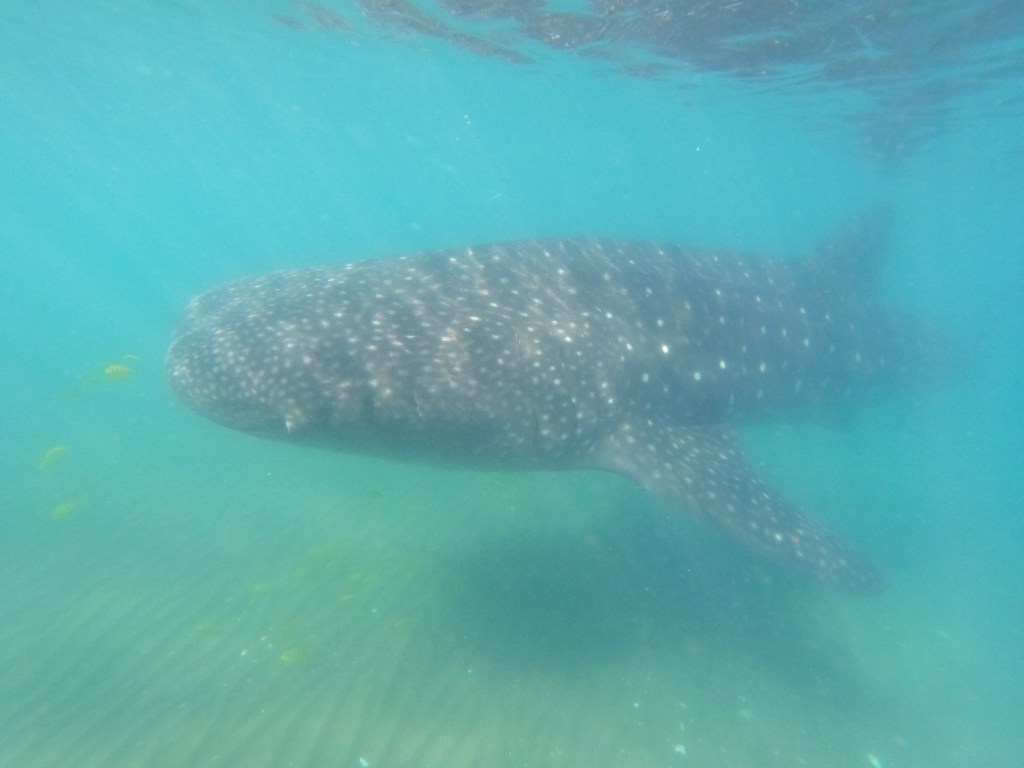
A couple of years ago, I had the incredible experience of swimming with whale sharks near La Paz. These gentle giants move with a calm confidence that makes you feel small — in the best possible way. Sharing the water with the largest fish in the sea is humbling, peaceful, and unforgettable.
Whale sharks visit the Sea of Cortez seasonally, drawn by plankton blooms in the warm, nutrient-rich waters. Encounters like this are a reminder of just how alive this sea really is.
🦭 A Sound on the Water Near San Felipe
While on the beach north of San Felipe, I thought I heard a seal — a sharp bark echoing over the water. Whether it was a sea lion or another pinniped, moments like this remind you that the Sea of Cortez isn’t just something you see — it’s something you hear and feel.
Rocky islands and quiet shorelines throughout the northern gulf provide habitat for sea lions, seabirds, and other marine life that thrive far from crowds.
🐠 Why the Sea of Cortez Is Called “The Aquarium of the World”
The Sea of Cortez, also known as the Gulf of California, separates Mexico’s Baja California Peninsula from the mainland. It’s often called “The Aquarium of the World,” a nickname made famous by ocean explorer Jacques Cousteau.
This region supports:
- 🐋 Blue, humpback, gray, and sperm whales
- 🐬 Dolphins and porpoises
- 🐢 Sea turtles
- 🦈 Sharks and rays
- 🐟 Hundreds of fish species, many found nowhere else
Nutrient-rich currents fuel massive food chains, from microscopic plankton to massive marine mammals.
🌿 Protected Waters: Nature Preserves of the Sea of Cortez
Much of the Sea of Cortez is protected to preserve its biodiversity for future generations.
🌍 UNESCO World Heritage Site
In 2005, UNESCO designated the Islands and Protected Areas of the Gulf of California as a World Heritage Site. This includes over 240 islands and coastal zones, recognized for their unmatched marine diversity.
These protected areas shelter:
Nearly 900 species of fish About one-third of the world’s marine mammals Dozens of endemic species found nowhere else on Earth
🏝 Notable Marine Parks & Reserves
Some of the most important protected areas include:
🐠 Cabo Pulmo National Park
One of North America’s oldest coral reefs, protected since 1995 and now a conservation success story.
🌊 Bahía de Loreto National Park
A vast marine park north of La Paz with crystal-clear waters, whales, dolphins, and island ecosystems.
🦭 Espíritu Santo Archipelago (La Paz)
Often called “Mexico’s Galápagos,” this biosphere reserve protects sea lions, reef fish, and seabirds.
🌱 Alto Golfo de California Biosphere Reserve
Protects the northern Sea of Cortez and the Colorado River Delta, a vital habitat for endangered species.
📜 A Sea That Shaped History
Humans have lived along the Sea of Cortez for thousands of years. Indigenous peoples relied on its resources long before Spanish explorers mapped its shores in the 1500s.
In the 20th century, writers and scientists like John Steinbeck helped bring global attention to the region’s ecological importance. Today, conservationists, local communities, and eco-tourism operators work together to balance protection and sustainable use.
🌅 Why the Sea of Cortez Matters
The Sea of Cortez is more than beautiful scenery — it’s a living system where desert meets ocean, and life depends on balance.
Experiences like:
Swimming with whale sharks Hearing seals across still water Watching dolphins ride a bow wave
…aren’t just memories — they’re reminders of why this sea deserves protection.
Day 3070
Discover more from The Buchanan's Rolling Down The Road
Subscribe to get the latest posts sent to your email.
 The Buchanan's Rolling Down The Road