

OK lets get started, this shouldn’t take more than a month or so to figure out…like seriously how hard can it be? All we want to do is to live for a couple of months in the Arizona Desert boondocking. Because we are doing a major upgrade to Thunders electrical we have to determine how much power we need, how much battery we need to supply it and of course how we can recharge to do it all over again.
So we have to start by looking at our normal daily usage of power, yes I know that we have items that draw huge amounts of power but how often do you use them and for how long?
If boondocking today I would get up, and my first stop would be at the control center to check the batteries, percentage and voltage. If satisfactory I would turn on the inverter which would start all our iPads and phones to start charging and I would have power at the cooktop to ignite the propane to perk a pot of coffee. The other thing that happens is that we also start every watt sucking phantom load item in the coach…like our satellite receiver, the dish, the television, the Blu-ray player, the microwave, you get the idea. It is all those little draws that add up over a 24 hour day. Notice I said that I had to turn the invertor on, that’s because we had to shut it down the night before when we went to bed, Why? you night ask because the draw over night might be enough to damage the batteries or set of low voltage items like the smoke / propane monitor.
Every thing in our coach wants a little power, our minimum draw with everything shut off there is about a 2 amp draw, it is made up of a number of things like the DC control board on the refrigerator and all the little things that monitor our coach. But that 2 amp draw for 24 hours is 48 amp hours of battery. And with the invertor turned on the draw jumps up to 5.5 amps and if you figure that for 24 hours, now we are looking at 132 amps of battery power every day that we have to replace. So how do we go about determining what we need?
We must convert it all to one common denominator some items give us power consumption in watts some in amp some are 120 AC and some are 12 DC so we have to convert every thing to 12 volt DC because that will be our source for the power supply our battery bank. we will use ohms law to convert every thing so that we can determine the size of inverter we need which will determine how big our battery bank needs to be and last but not least how much solar we will need to recharge the batteries.
Here is how Wikipedia describes Ohms law:
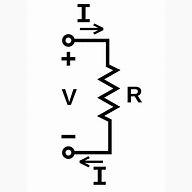
Ohm’s law states that the current through a conductor between two points is directly proportional to the voltage across the two points. Introducing the constant of proportionality, the resistance, one arrives at the usual mathematical equation that describes this relationship: I=V/R, where I is the current through the conductor in units of amperes, V is the voltage measured across the conductor in units of volts, and R is the resistance of the conductor in units of ohms.
Ya ya I know its all Greek to you so I will try to make it simpler for you if we know any two numbers we can calculate the third lets use the microwave as an example we know it plugs into 120 Volts and the plate on it says it’s 1000 Watts so we need to know the amps so take the (W)atts 1000 and divide by the (V)olts 120 and that will give us (A)mps of 8.3 of AC current.
And we will run the microwave for 1 hour to cook dinner so we will have used 1000 watt/hours.
Now we must convert to DC amp/hours because we use a 12 volt battery bank so that 1000 watt/hours divided by 12 volts of the battery bank equals 83.3 amp/hours.
So in a perfect world a single 100 amp/hour lithium battery should feed a 1000 watt inverter for one hour to run the microwave to cook our dinner.

Now that is not reality but it starts the process, so what I will do is list every thing in our coach that draws power both 120 volt and 12 volt. Then we will assign an educated (from experience) estimate as to how long each is ran every day like how long does the TV run per day, how long to charge your phone per day, your lap top, your fan, your toaster, your residential fridge, just track a few days of use and see how many watt/hours. Some items are difficult like the residential fridge because the compressor only runs part time I would use a device called a Kill-O-Watt meter, it plugs into the wall socket and the you plug the device into it and leave it for a set time and it will track how many watts in total were used and I like a 24 hour time so it is much truer picture of the power usage.
So here is your project list all your electrical, remember to separate by voltage and on part two we will start adding up the watt/hours. You can sometimes find a spreadsheet that helps with the list and times and does the calculations…I will be creating one in Excel with the calculations built in and will gladly pass it along if your interested.




 The Buchanan's Rolling Down The Road