2025 in Review: Miles, Memories, and Finding Our Rhythm

By The Buchanan’s Rolling Down The Road
December 2025

Every year seems to move faster than the last, but 2025 felt like it moved at highway speed. From desert mornings at Boyce Thompson Arboretum to lake days in Ontario, new states on the map, mechanical challenges, and finally settling into winter life on a quiet Mexican beach — this year reminded us why we chose this life.


Winter & Spring in the Arizona Desert

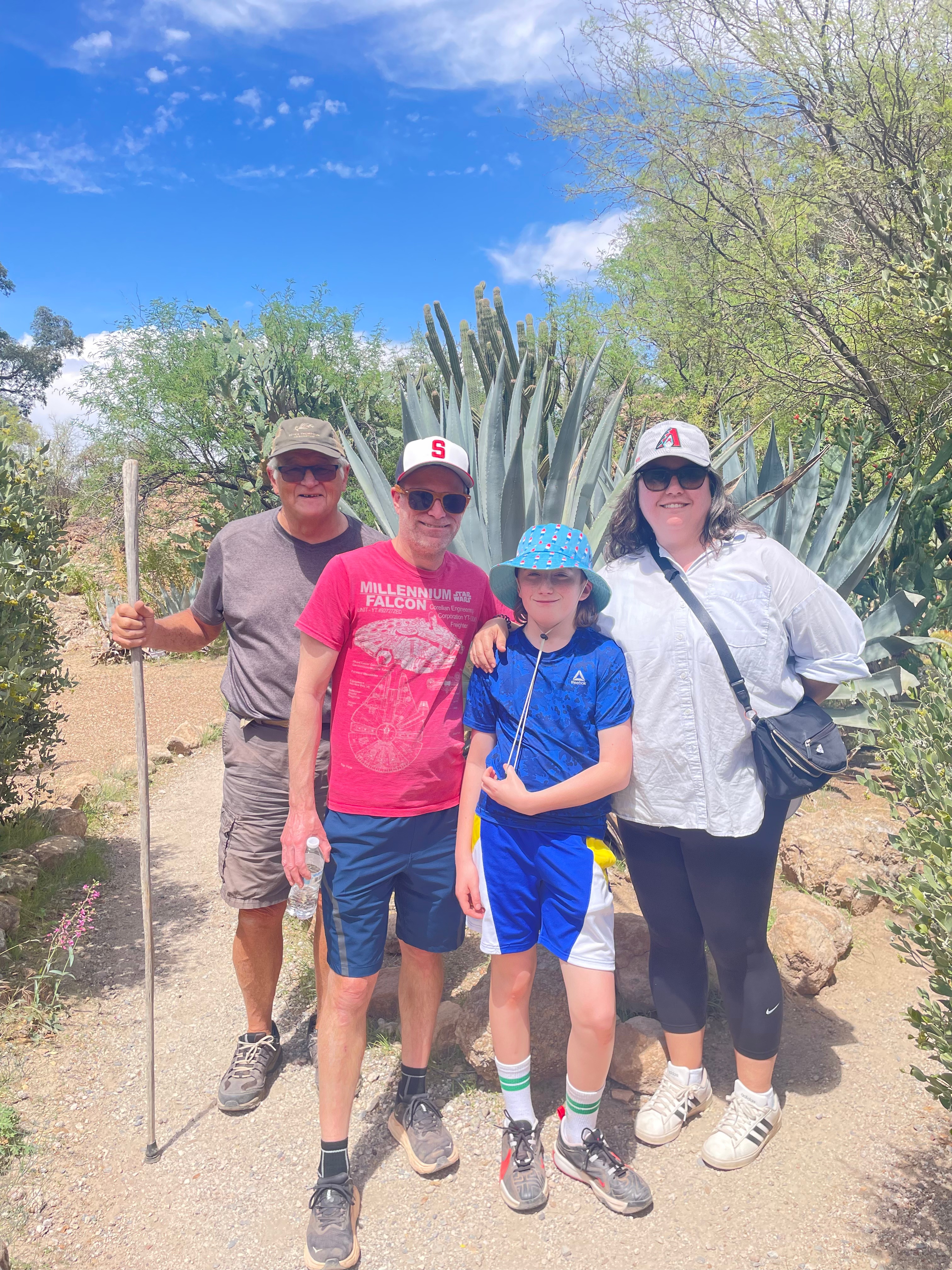
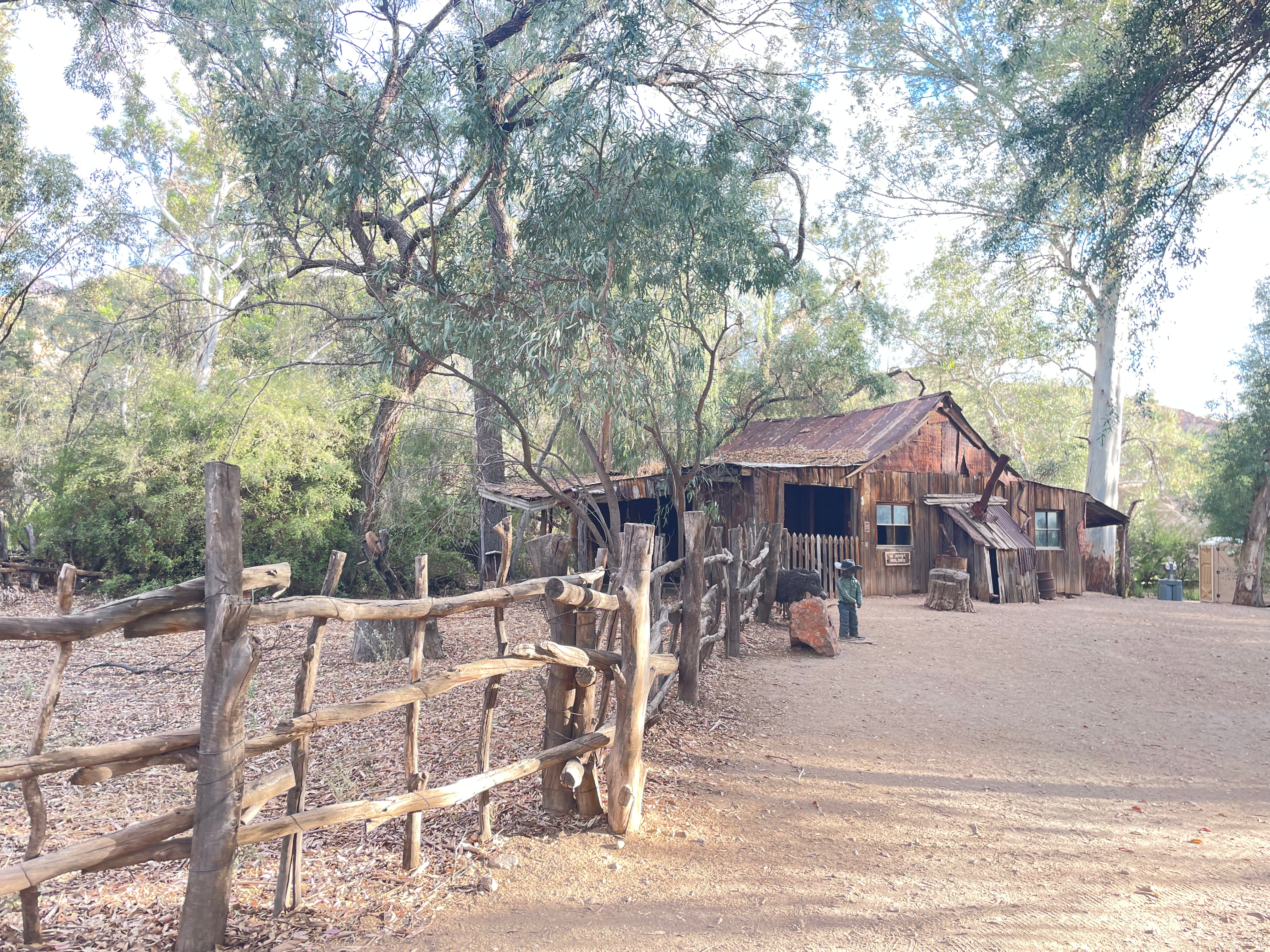
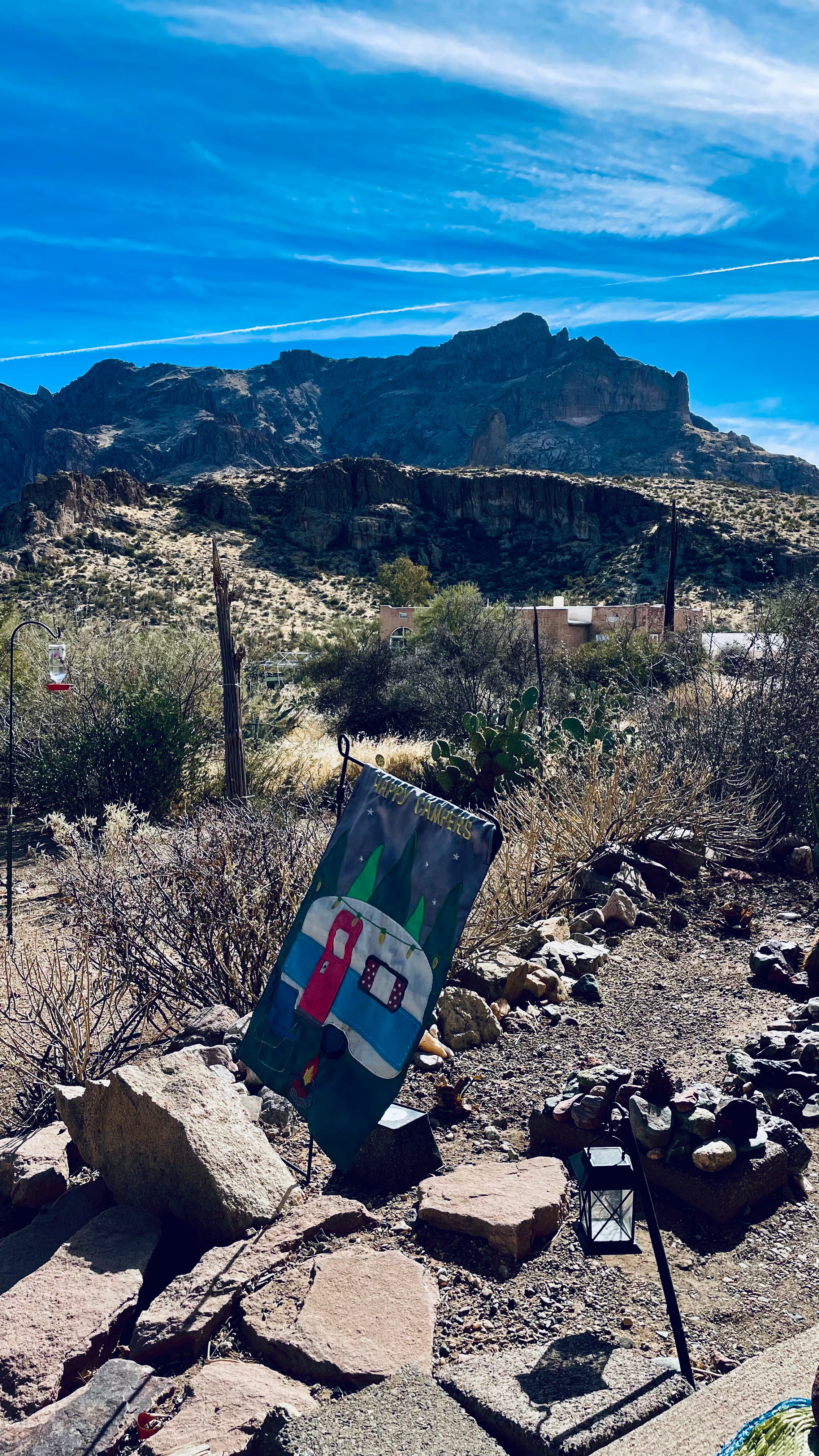
We started the year camped and volunteering once again at Boyce Thompson Arboretum. The desert welcomed us back with cactus blossoms, hummingbirds at the feeders, and the ever-present coati wandering through the grounds. Miss Laurie spent plenty of time rock hounding, while we both enjoyed the familiar rhythm of volunteer life.

January through March were filled with great company and simple adventures:

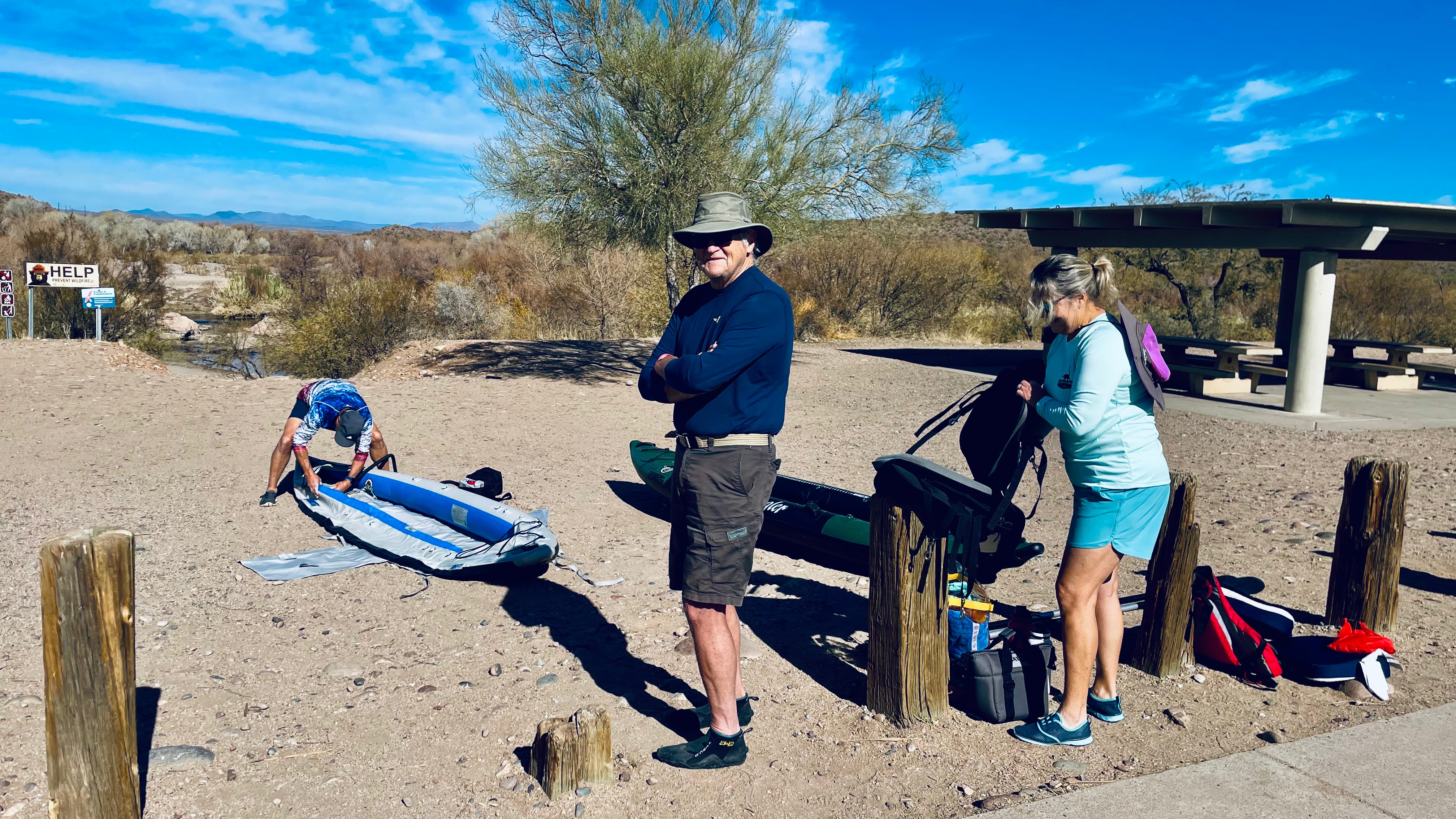
  • Kayaking the Lower Salt River with Ray & Karen, watching wild horses along the banks
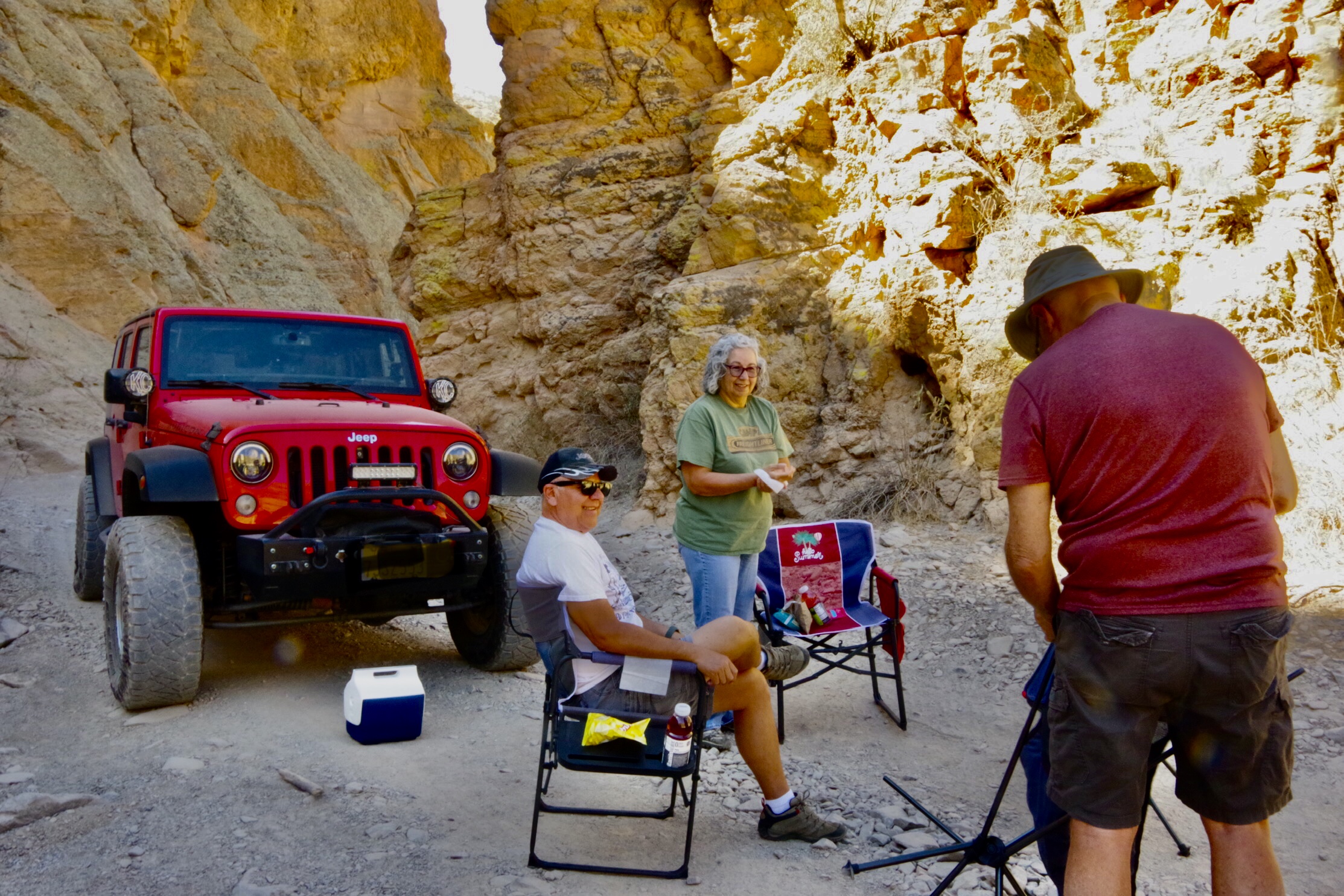
  • Off-roading Box Canyon with Al & Carmen, followed by unforgettable Mexican food
  • Visits with friends in Show Low, Tucson, and Gilbert

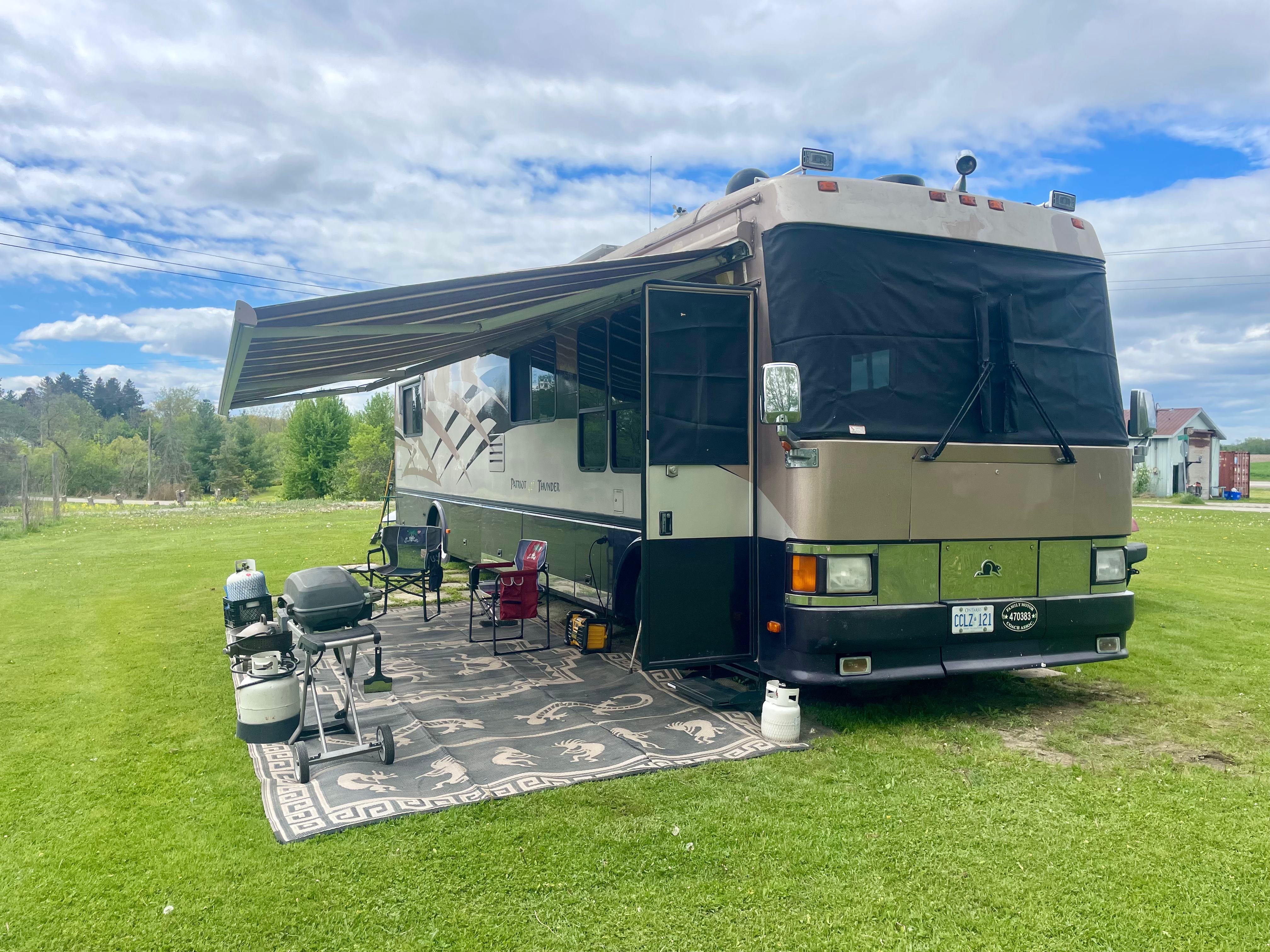
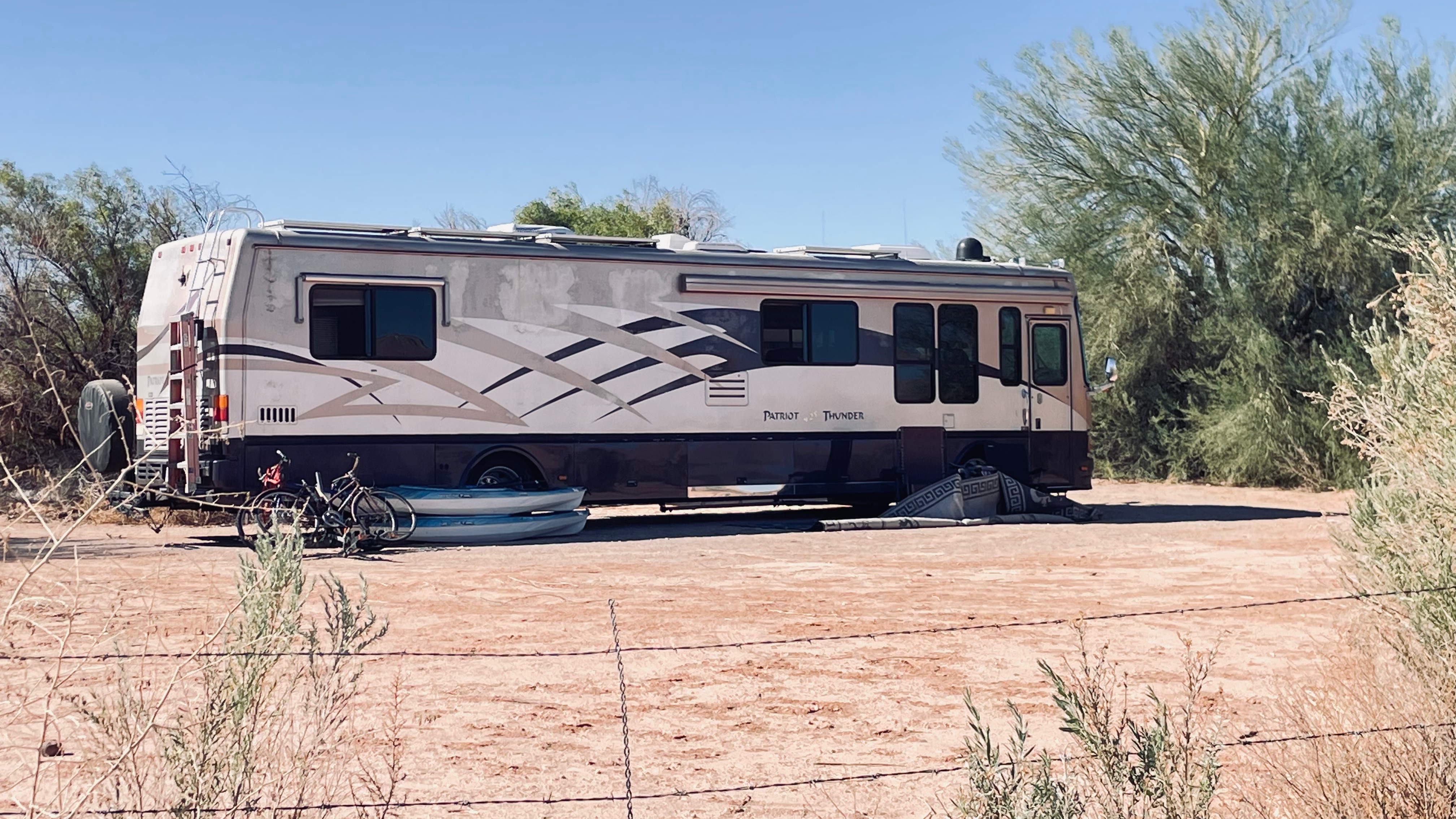
Of course, no season is complete without a mechanical lesson. A leaking freshwater tank on Thunder turned into a full replacement, along with a new SeeLevel tank monitoring system.


Saying Goodbye & Heading East

April marked our final month at the Arboretum. A volunteer thank-you dinner, final walks among blooming cactus, and a special highlight — watching my grandson Andrew play baseball during a Phoenix tournament — made the goodbye meaningful and bittersweet.

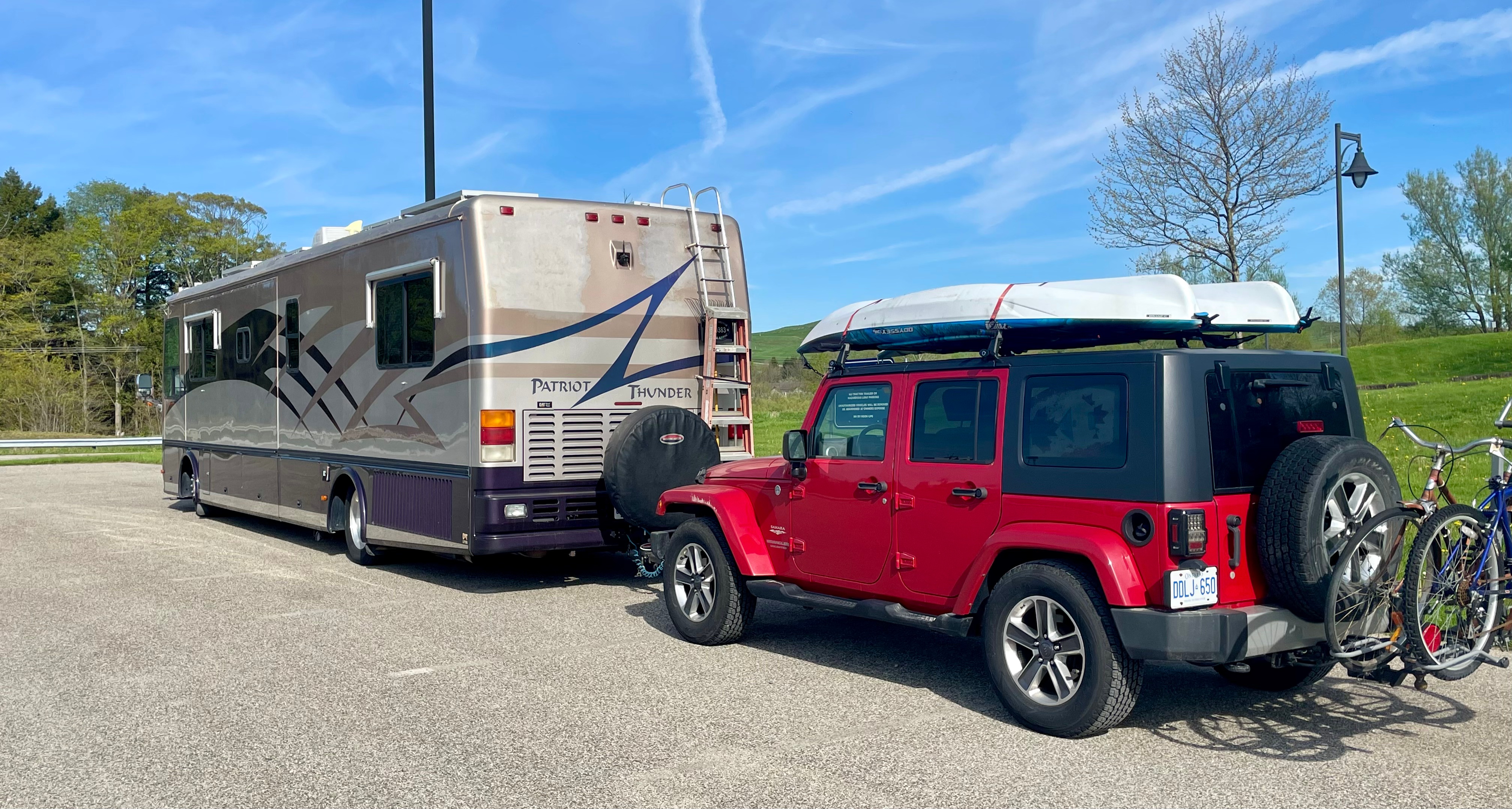
On April 28, we turned Thunder east and began our spring migration back to Ontario.

The journey was a familiar patchwork of:

  • Walmart and Cracker Barrel overnights
  • Welcome centers and Harvest Hosts
  • Visits with friends and family along the way

We crossed back into Canada on May 8, settling into short stays until our summer site became available.


Summer at Sunni Bank RV Park

By mid-May, we arrived at Sunni Bank RV Park in Ontario, where summer truly began. Reconnecting with longtime friends Bob & Irena turned into a season full of laughter, food, and friendly competition.

Highlights included:

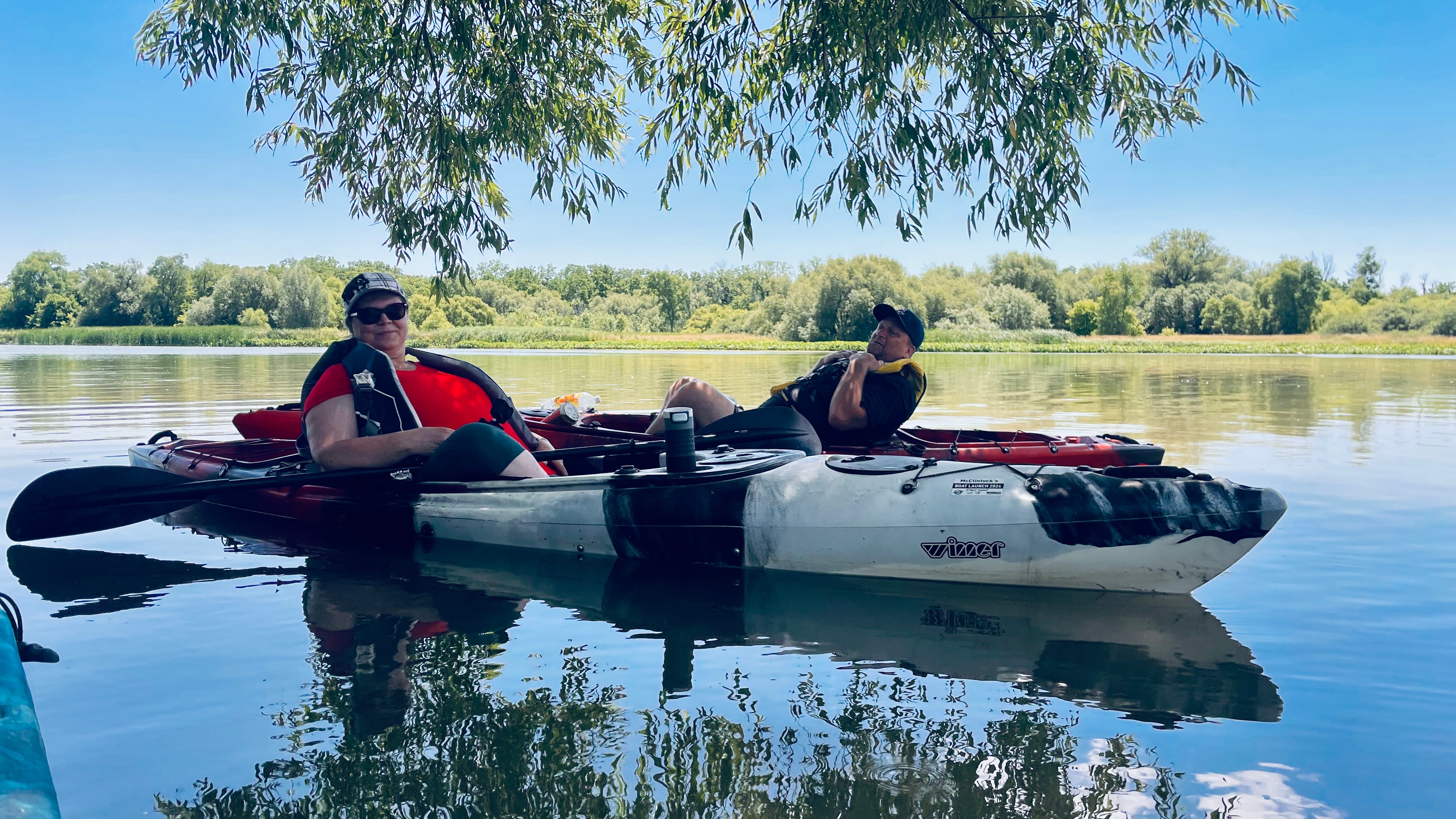
  • Kayaking the Grand River
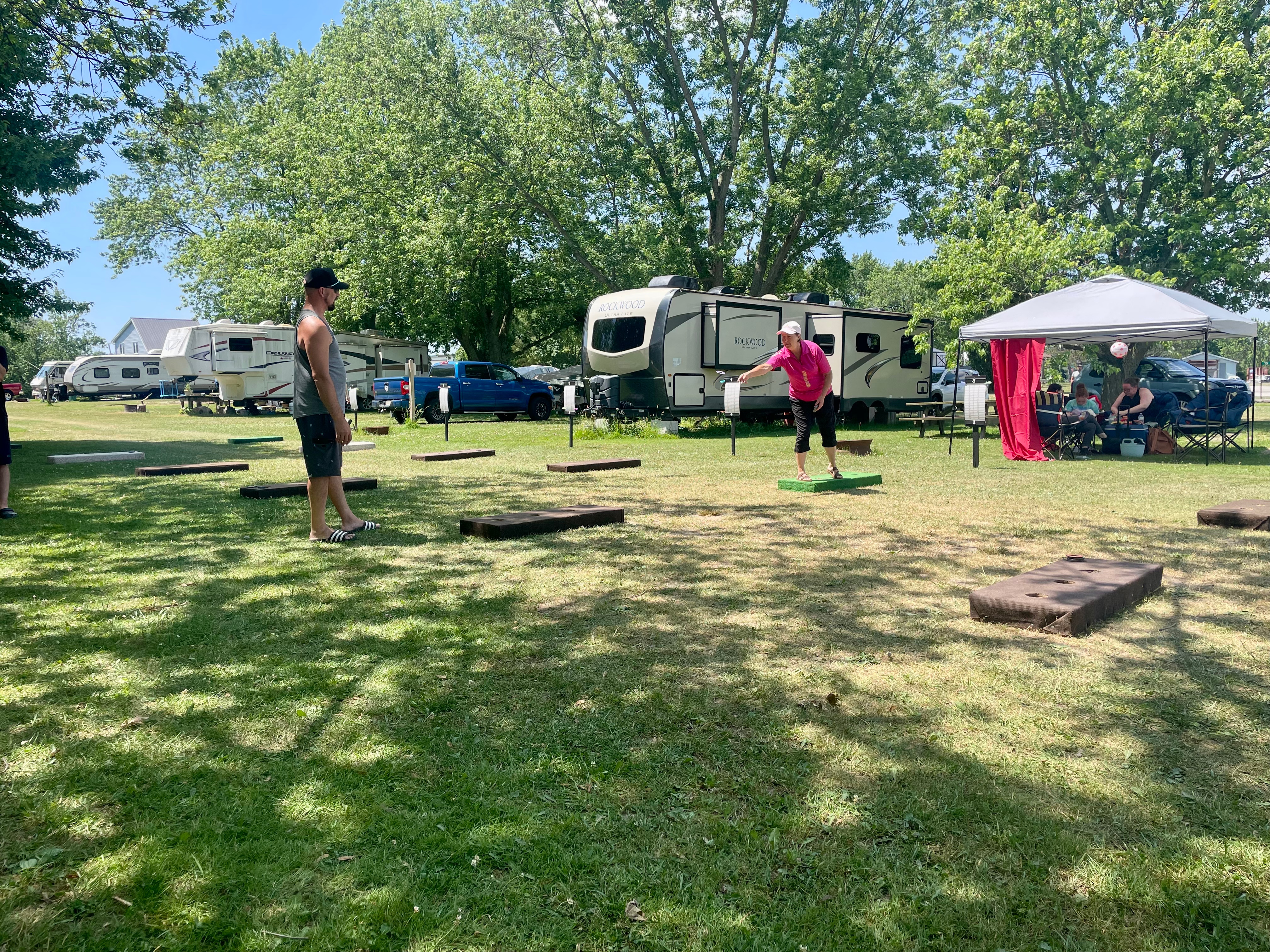
  • Cornhole and washer board tournaments
  • Campfires and sunset conversations
  • An ongoing (very serious) search for the best Lake Erie perch

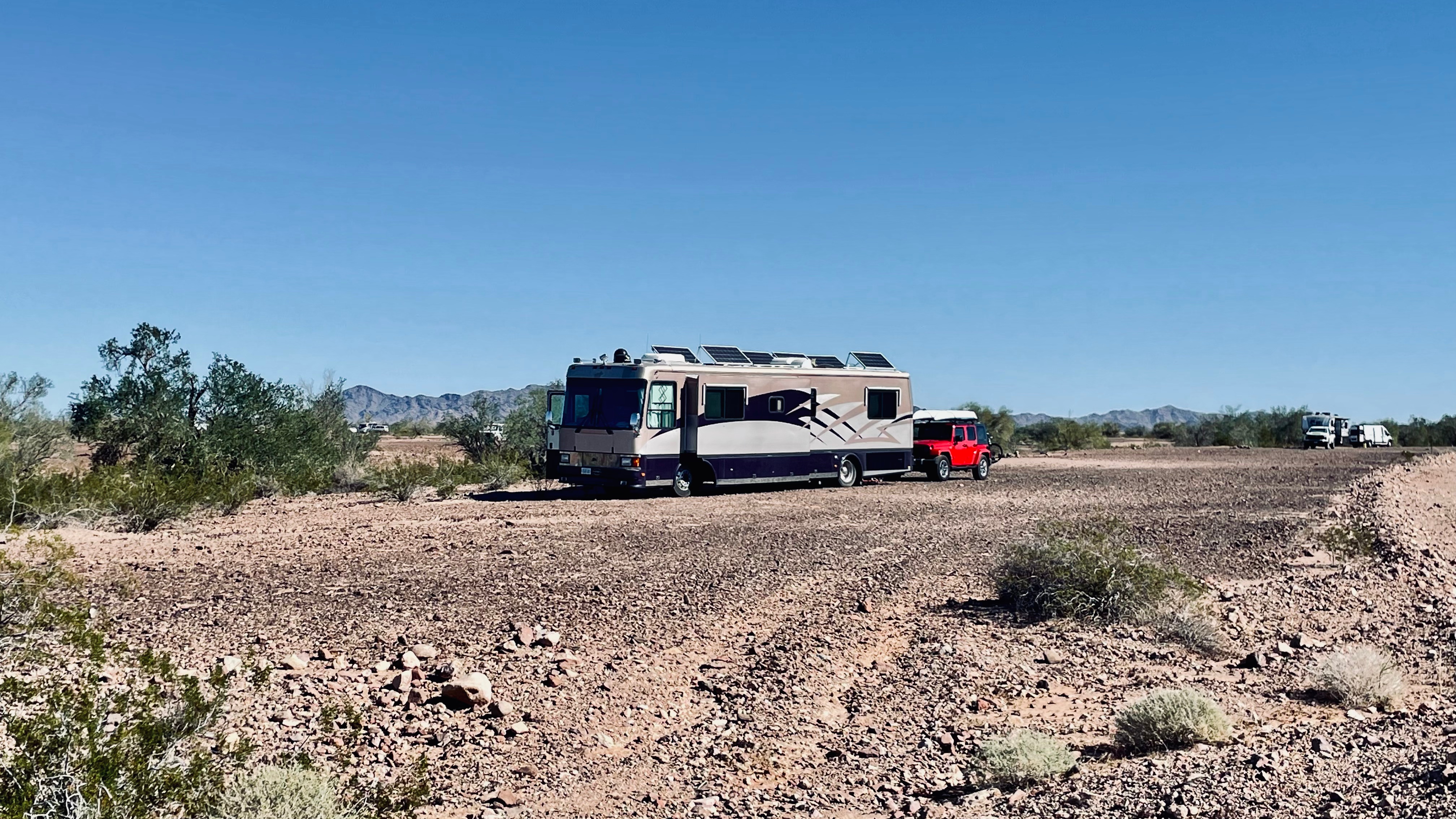
Spring rains left Thunder sunk deep enough to break patio stones, and our open site — great for solar and Starlink — came with the challenge of nearby roosters. Still, once settled, it felt like home.


Summer Curveballs & Small Victories

Summer also brought its share of challenges:

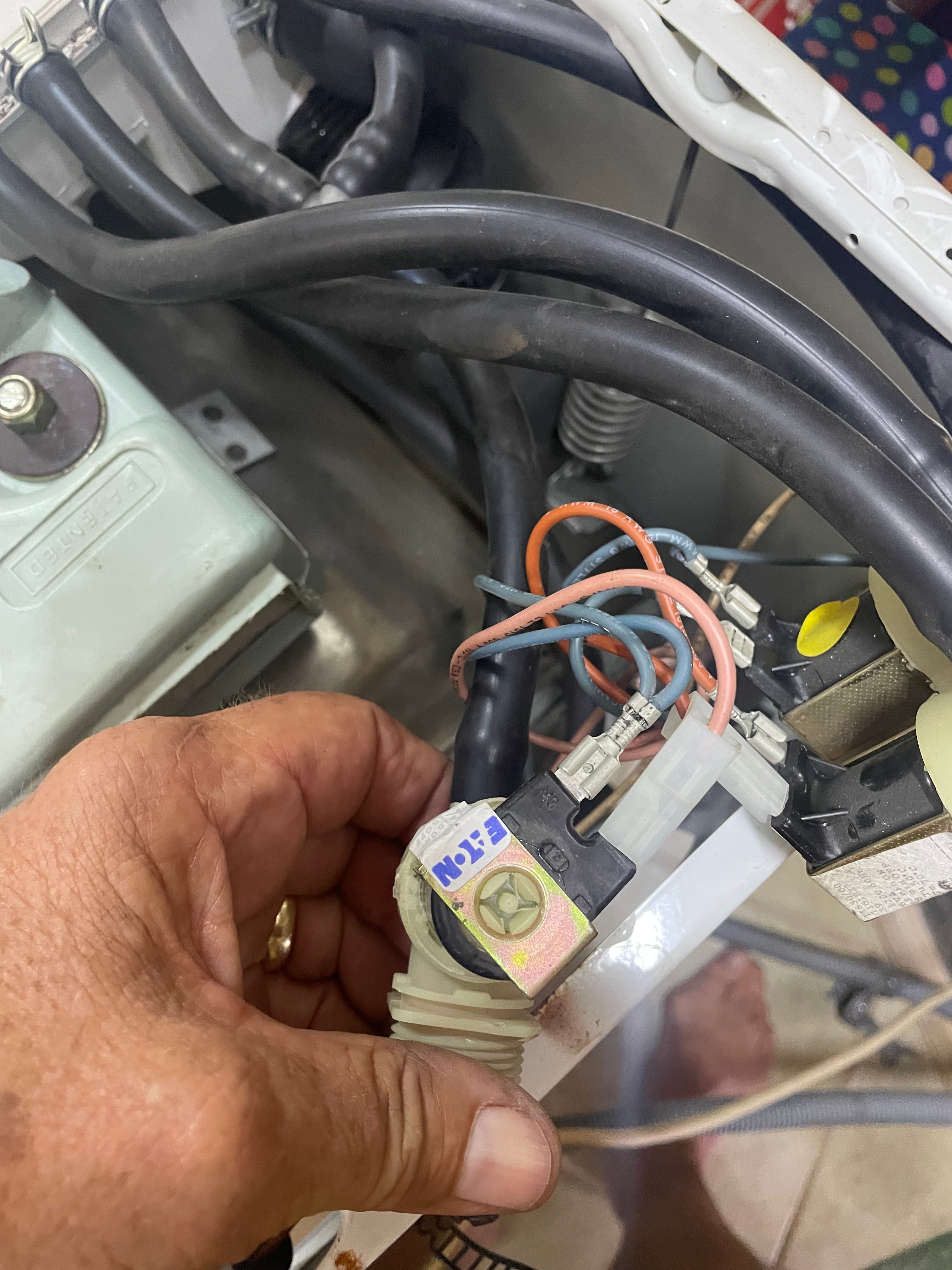
  • A leaking washer/dryer valve
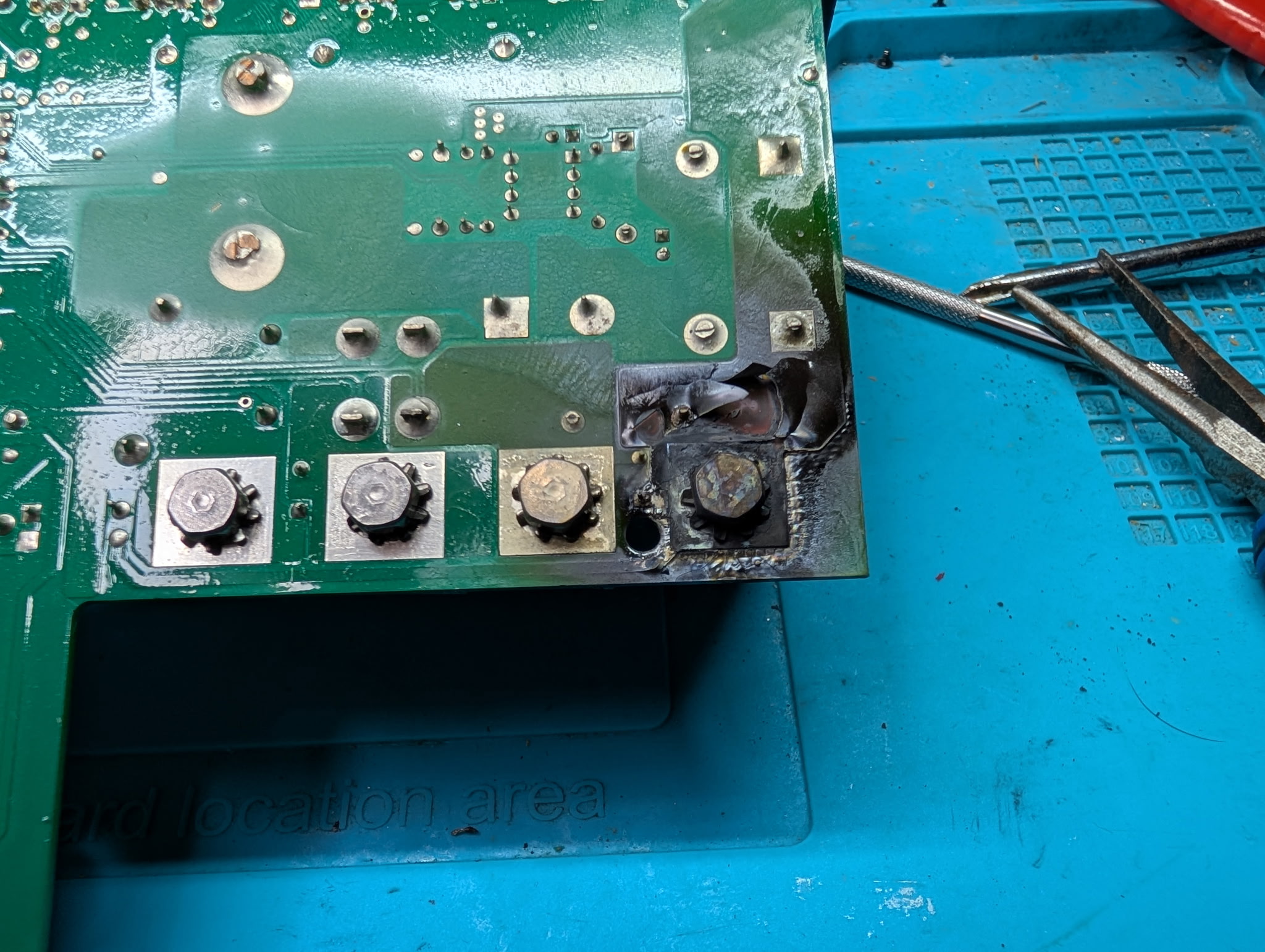
  • A burned-out solar charge controller
  • Leveling system switch failures
  • Weak chassis batteries

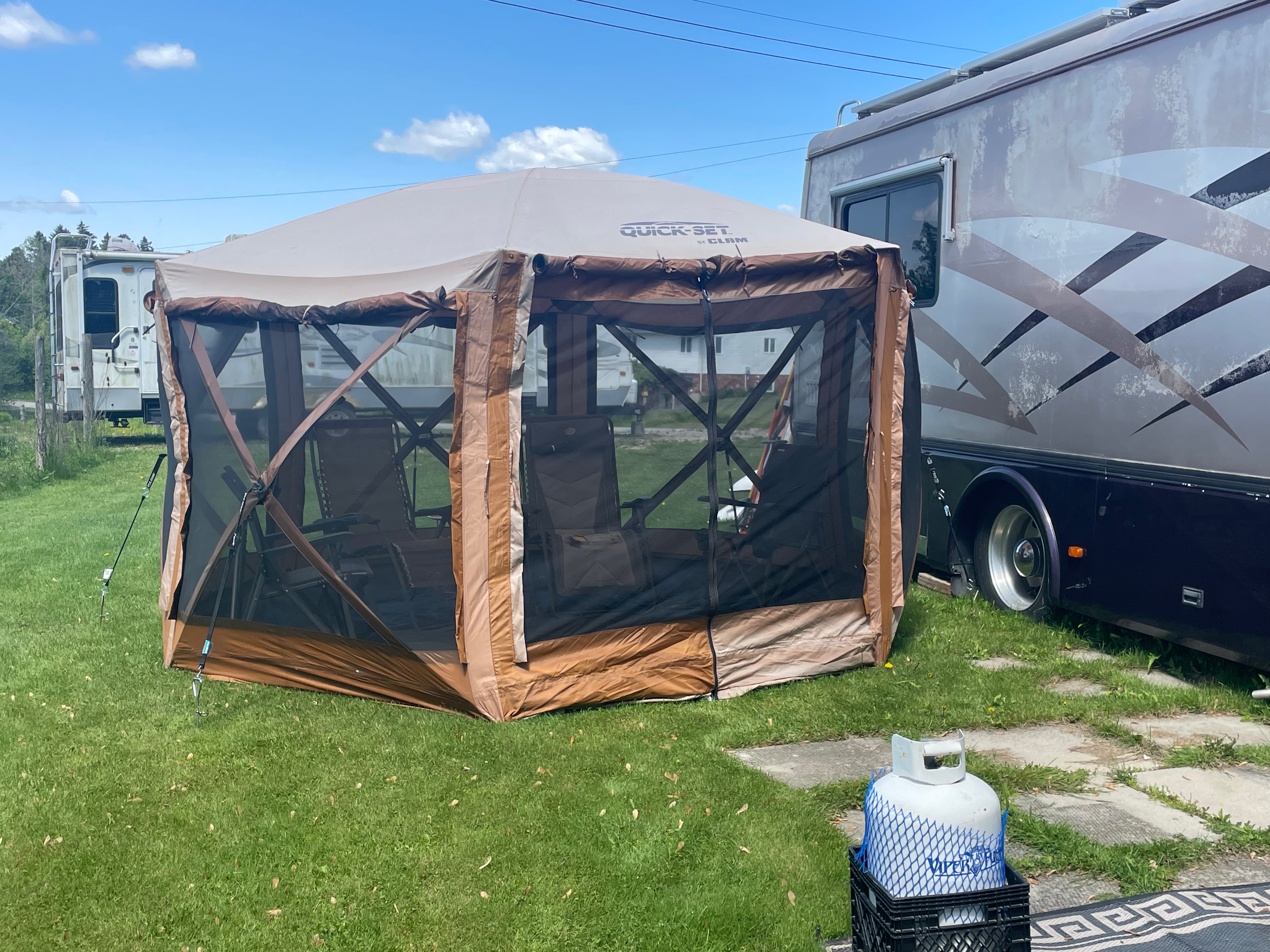
Thanks to persistence, ingenuity, and Bob “knowing a guy,” everything was repaired. We also restored our Clam screen porch — a favorite spot for afternoon naps — and fully embraced cornhole as our new obsession.

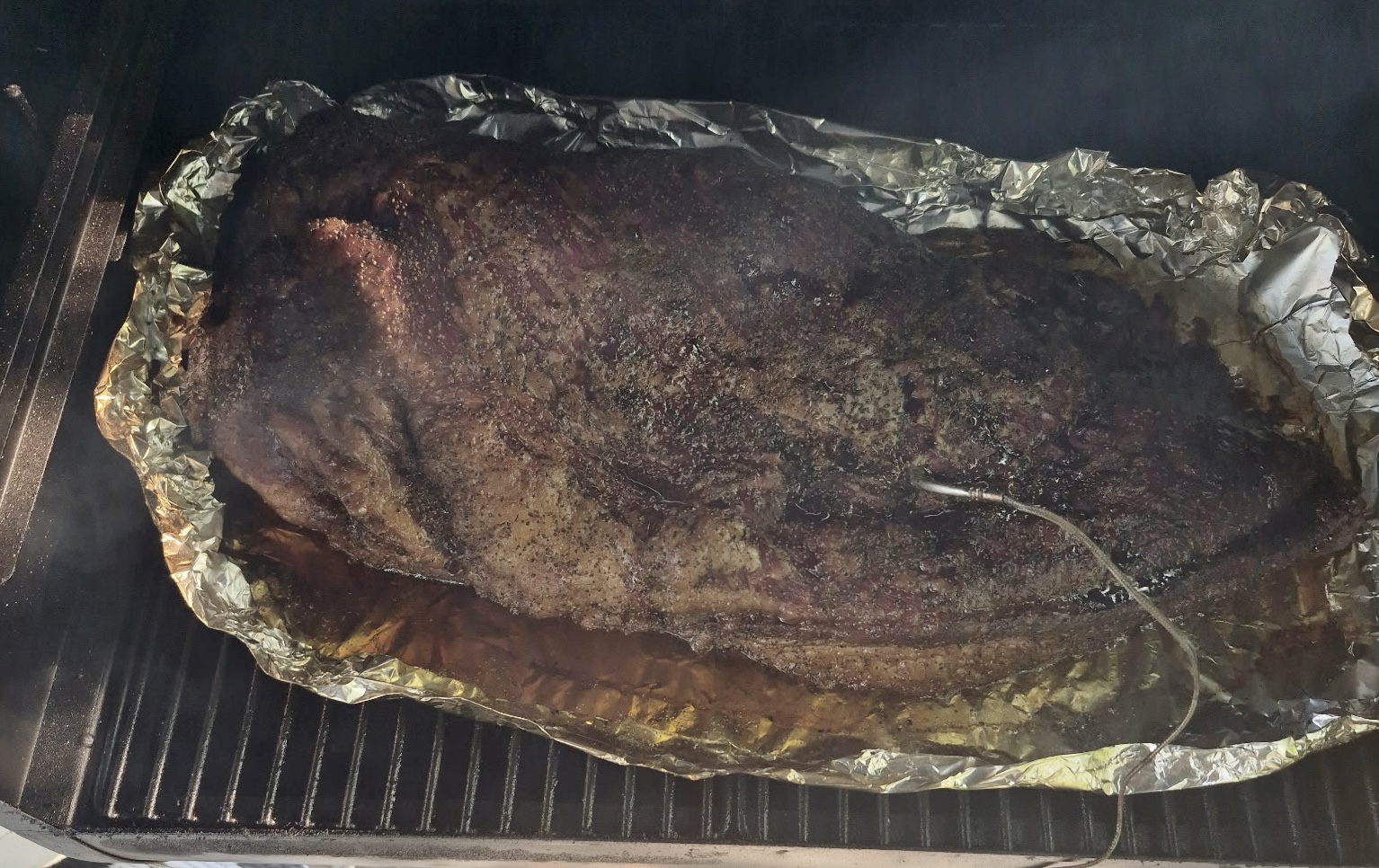
Birthdays were celebrated, briskets were smoked, and long, slow summer days reminded us how important community is on the road.


Fall Travels & New States

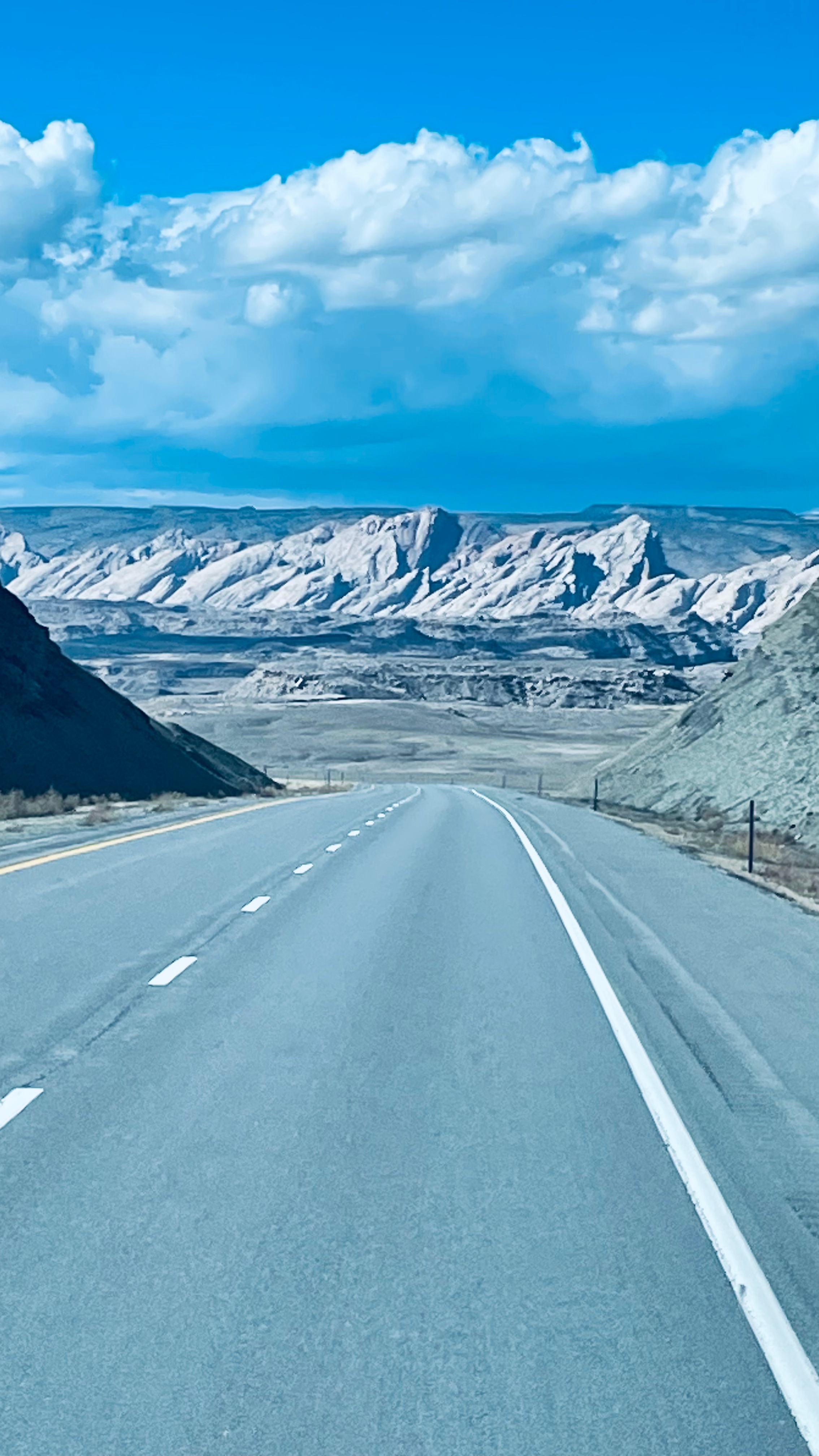
October arrived quickly, and with it, packing up and climbing Thunder out of the spring ruts — literally. From there, we headed west on a new northern route, adding four new states to our travel map:

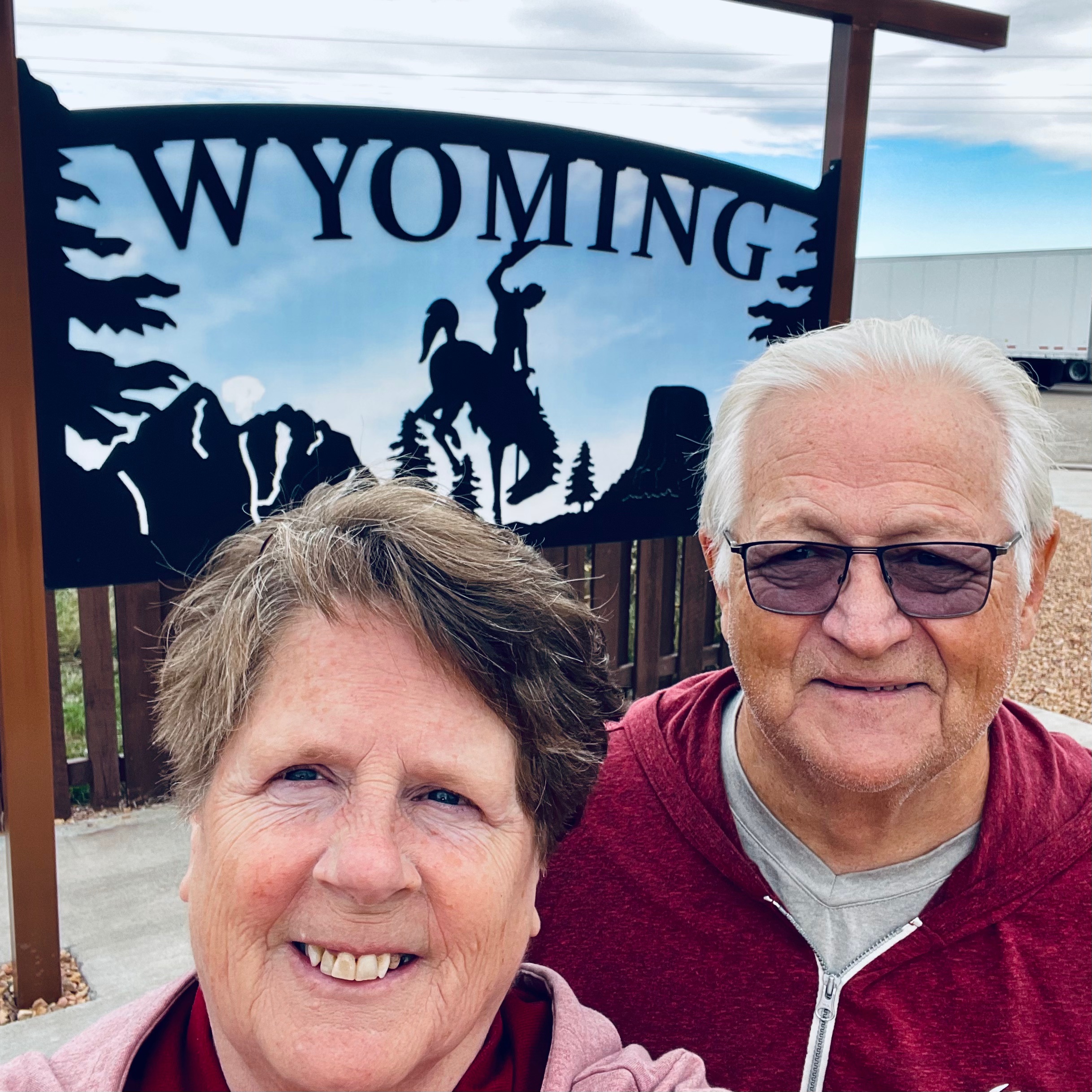
Nebraska • Wyoming • Colorado • Utah

Highlights included:

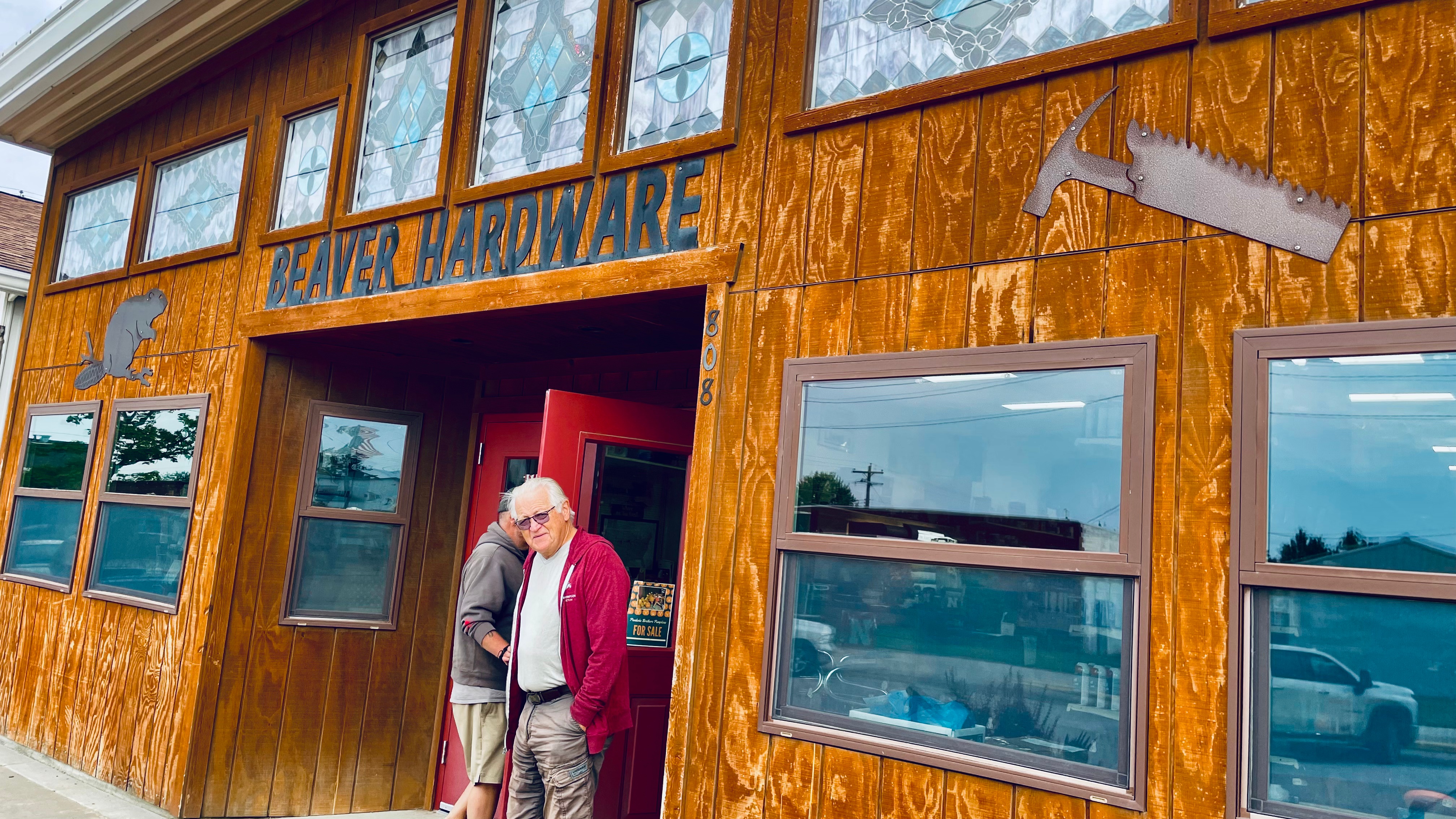
  • A charming $10/night city campground in Beaver Crossing, Nebraska
  • Climbing I-70 through the Rocky Mountains (with a bag of chips exploding from elevation)
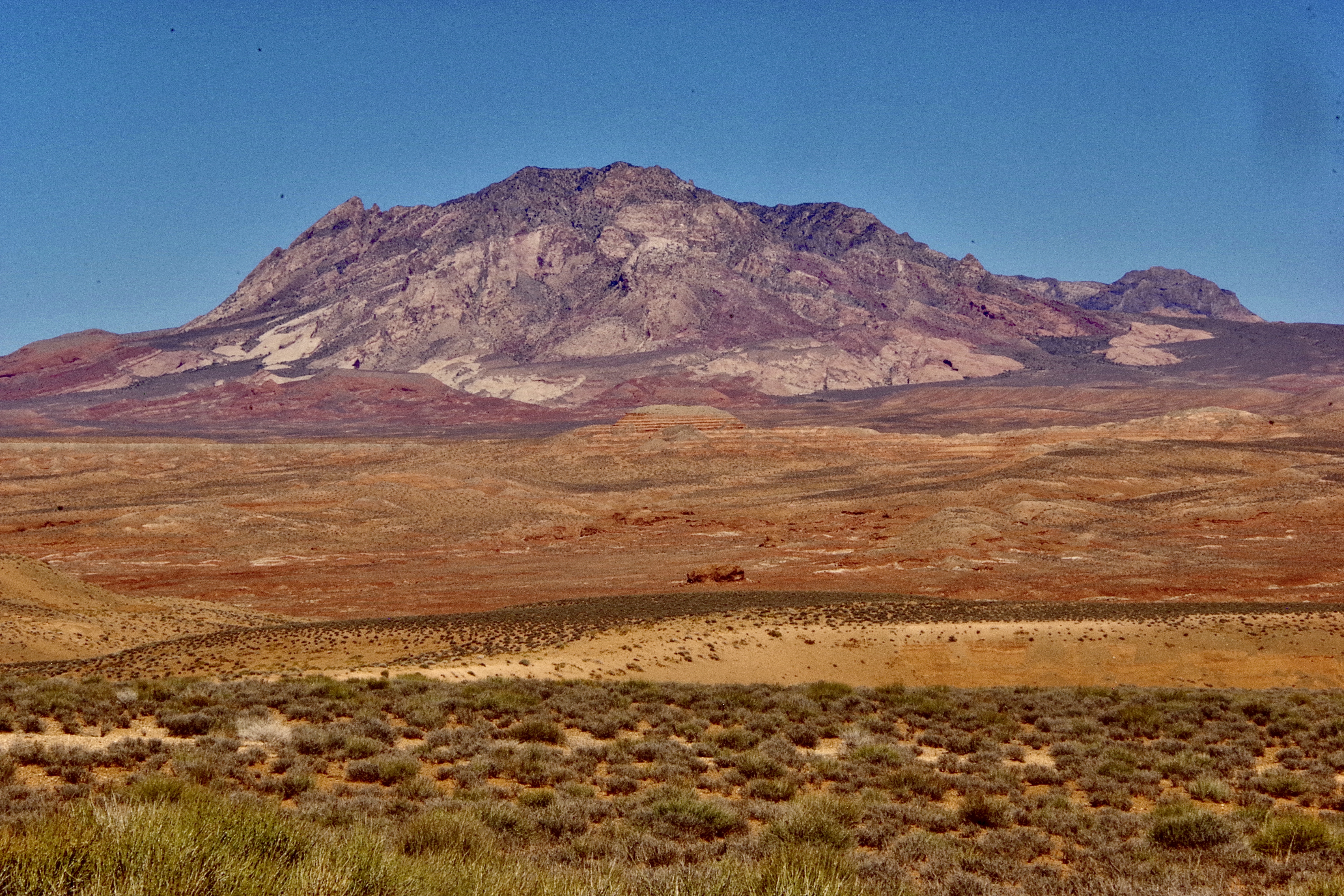
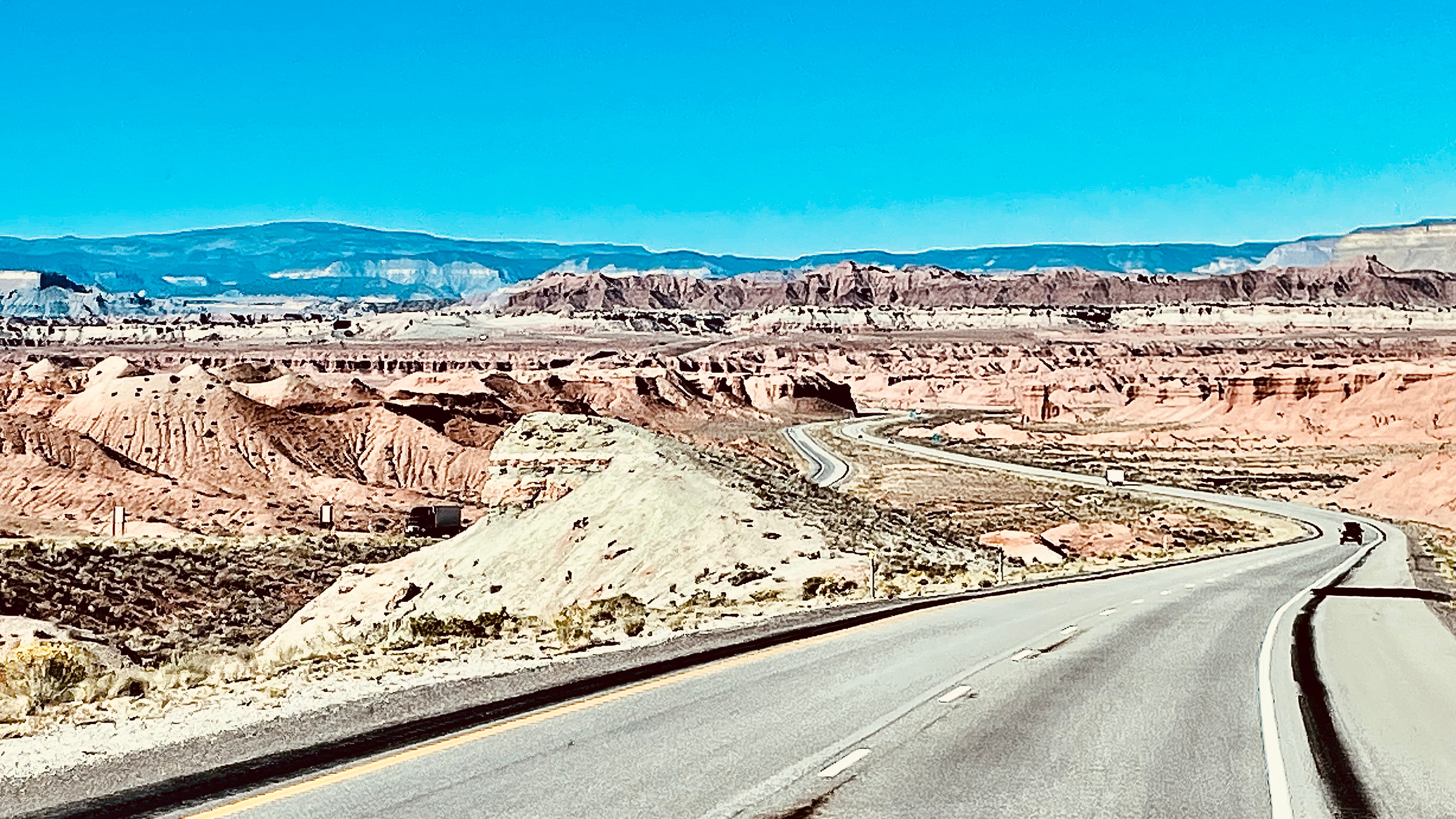
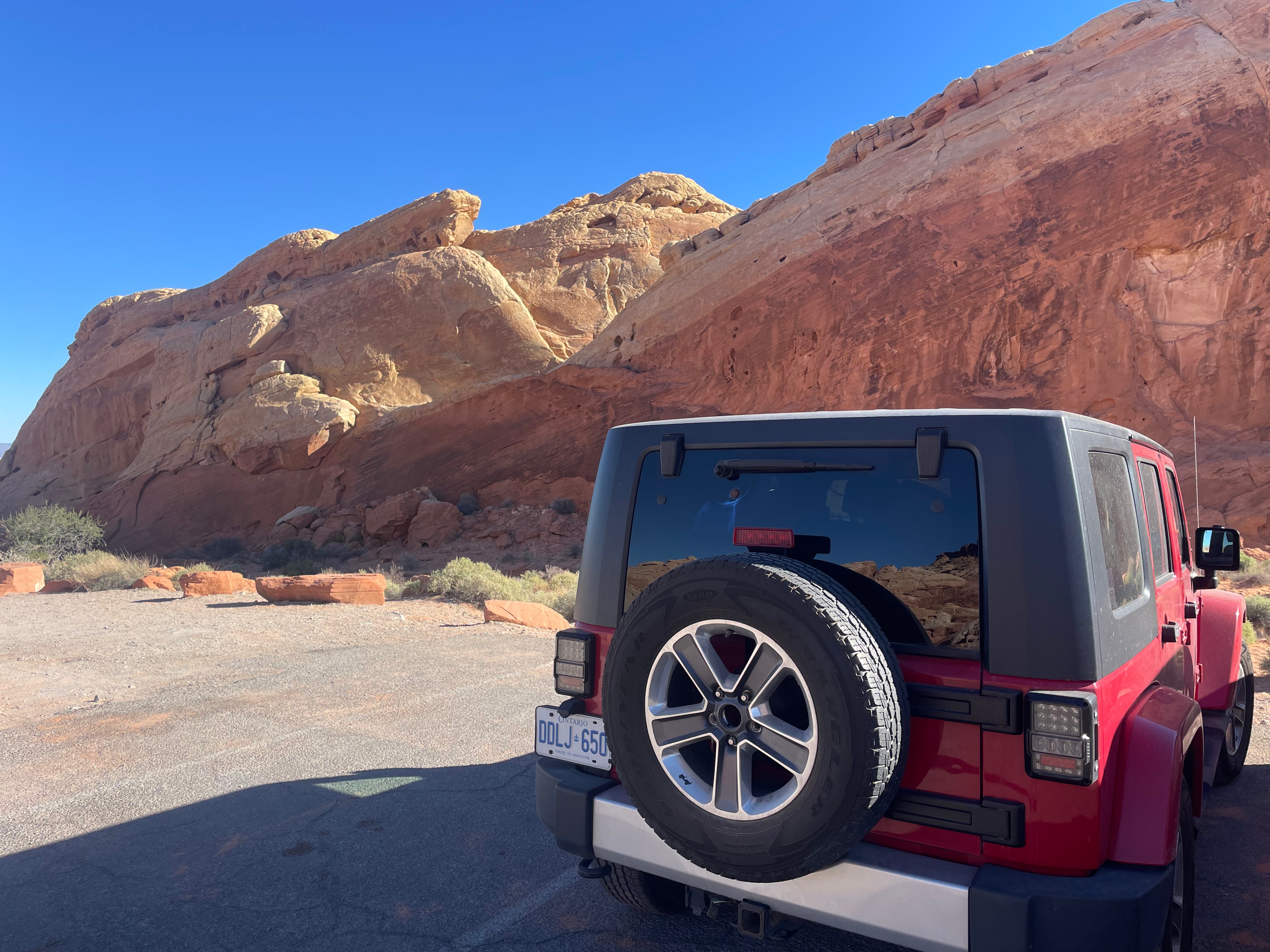
  • Six nights boondocking near Goblin Valley State Park
  • Exploring Lake Powell and quiet desert mesas

Each mile reminded us why we still love long travel days.


Vegas, the Border & an Unexpected Breakdown

We paused in Las Vegas, splitting time between our time-share and keeping Thunder comfortable at the Elks Lodge — a perfect solution for us and Mister Sam.

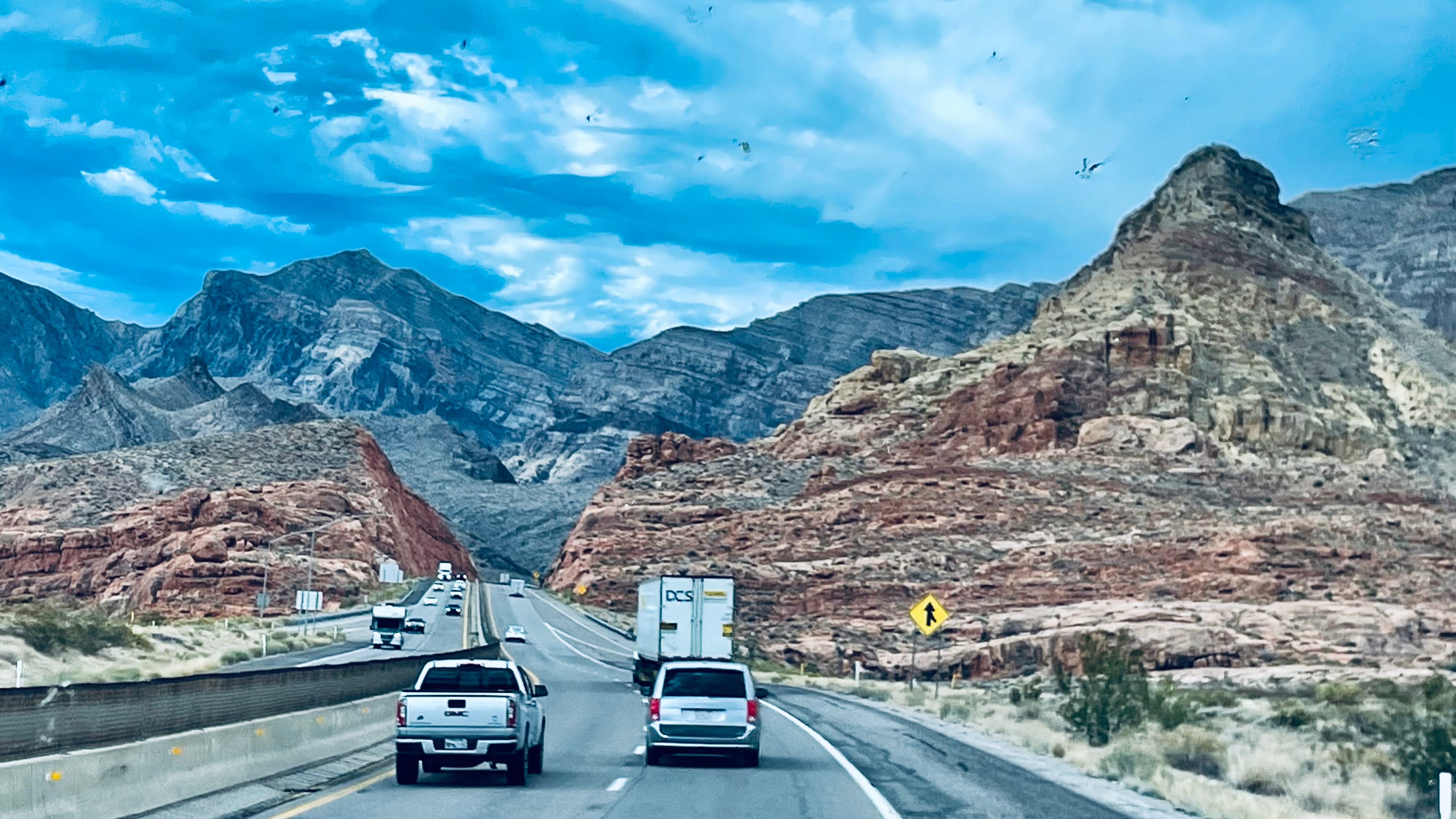
Mid-November, we headed south toward Mexico. The border crossing at Mexicali was smooth… until one mile later, when a torque rod failed. With no good options, we strapped it up and carefully drove 185 kilometers south to San Felipe.

Sometimes the only option is forward.


Wintering in Mexico

We’re now settled at El Dorado Ranch Resort in San Felipe, Mexico, where life has slowed to a gentler pace.

Our days include:

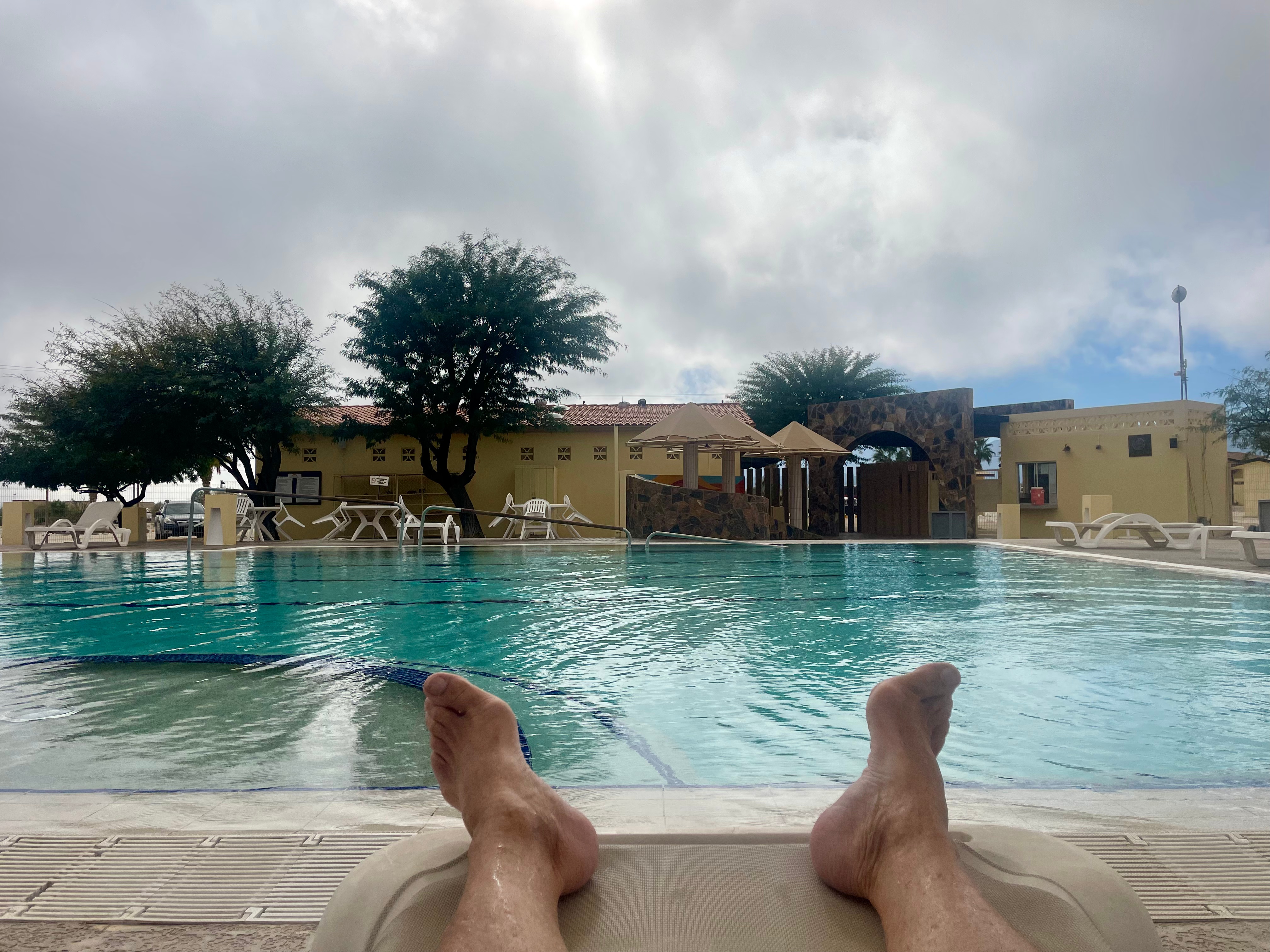
  • Quiet mornings on an empty sand beach
  • Pool time, hot tubs, and water volleyball
  • Pickleball lessons for Miss Laurie
  • Cornhole games and fresh shrimp on the grill

While we’re still finding our social rhythm here, everyone has been welcoming and kind. Christmas was spent mostly on the beach — different, but just right for this season of life.


Looking Back at 2025

As the year comes to a close, we’re reminded that this lifestyle isn’t about perfect plans. It’s about adaptability, community, and finding joy in the in-between moments — even when something breaks, a route changes, or time moves faster than expected.

2025 gave us new states, old friends, challenges overcome, and a deeper appreciation for the road ahead.

And somehow, it still feels like we’re just getting started.

Day 3009

A little short on juice!

We have a seasonal site at a campground on the Grand River near the village of Dunnville in Ontario, and Ontario is in the middle of an extended heat wave with daily temperatures around 30°C (86°F) which in the southwest would be very comfortable because of the low humidity. But we are not in the southwest and with close to 100% humidity it bring with it a feels like temperature of 40°C (104°F) and that makes it very uncomfortable. This is an old campground and only offers a 30 amp connection which would normally not be an issue if it was a clean power feed, and by clean I mean a connection like you would expect at your home where the utility supplies a good power source. We don’t have that luxury here with our supply being what I would refer to as a dirty connection, the dirty connection could be the fault of either the park or the utility.

In this case the issue is with the utility, as many of you know we are responsibly self sufficient with our lithium batteries and our 1500 watts of solar panels, but we do not have enough power to operate our air conditioner for hours at a time, so I usually operate one air conditioner on the parks power and power the rest of the coach from our batteries and solar.

Since arriving here at the park the power has always been a bit of a concern, old park, old wiring, old breakers and such. I was hoping not to have to learn the park’s system as we are just paying campers, but over the last two weeks we (I) have learned a lot about the parks system. There are approximately 70 camp sites, but some are not occupied, there are actually two different power sources into the park, I discovered that my source is supplied from a different village than the majority part of the park, in fact there are only six 30 amp outlets on this power source and one is unoccupied.

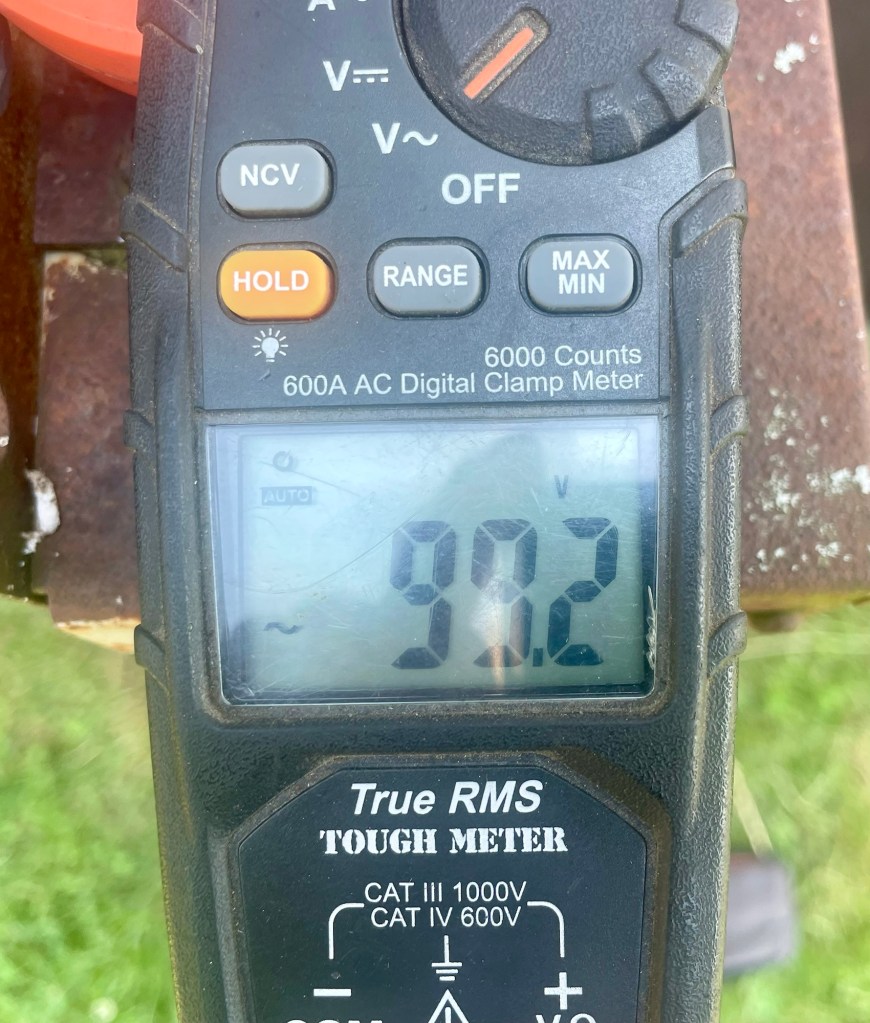
Five 30 amp sites would mean the maximum power consumption would be 150 amps at 120 volts or 75 amps at 240 volts. The utility supplies 240 volt source, a quick check of the main panel shows a 100 amp service at 240 volts which is equivalent to 200 amps at 120 volts, more than enough to supply the six sites at 30 amps each. So why is my roof air conditioner sounding like it is struggling to operate, a couple of minutes finds that our power supply is not maintaining 120 volts in fact it is dropping off to less that 100 volts, a real red flag for our air conditioner.

Not the kind of voltage numbers that I wanted to see at our supply post.

As simply as I can say it this is a major issue, during the week we are the only people in our row therefore the only site pulling any more power than the normal fridge operation in the other sites, but this happened on a weekend with four out of the five sites occupied, it’s hot and humid so four air conditioners operating. Now RV air conditioners are not efficient and pull a heavy power draw, but should be able to operate easily within the supply limits. So what causes the voltage to be 100 instead of 120? The answer could be what is referred to as voltage drop, and the easiest explanation of voltage drop is by trying to draw to much power through too small of power cord. If this is the case if I checked the voltage at my post and compared it to the voltage at the source they would vary greatly. Like if out post outlet read a voltage of 100 volts and the power supply at the main panel shows 120 volts it would tell me that our power supply had a bad voltage drop. In our case the voltage reading were only a couple of volts difference, proving the issue is a utility issue, I would speculate that it is a transformer on the utility pole which is failing.

I’m lucky we have an on board generator, so Saturday afternoon I decide to disconnect from shore power and fire up the generator, now the generator starts with power from the chassis batteries, we have owned the coach for eight years and the batteries were not new when we purchased the coach, in fact Miss Laurie and I discussed getting new chassis batteries this year before our fall departure. I had not started the generator or the coach since June and now when I went to start the generator I got a failure code from the chassis batteries! Not a big issue normally, but it is hotter than hell here today and the solution to this is the battery charger which is buried in the basement compartment, then the time to charge the batteries enough to start the generator, 20 minutes later with both air conditioners running off of our generator we watch the coach temperature drop from 31°C (88°F) to 23°C (74ºF) in an hour.

I have reported this situation to the park owners and now will have to wait to see how long it takes the utility company to resolve the problem, my expectation is not high but will push for a satisfactory resolution.

It’s now the first of the week, still in the heat wave but we are back to the only people in our row, and as bad as the voltage remains we are able to operate the one air conditioner, I have been sourcing new chassis batteries and will obtain then this week, these batteries run a number of things besides starting the generator and the main diesel engine so they are heavy duty batteries and unlike our house batteries they are rated by CCA (Cold Cranking Amps), our batteries are 950 CCA each for a total of 1900 CCA which is what it takes to start our big diesel engine on a cold start. The starter batteries have to be lead acid type and be designed as starting batteries, shock means they can provide huge amperage to a starter motor, deep cycle batteries can not and neither can lithium, our six lithium house batteries for example could only supply a peak amperage of 1200 before shutting down from overload.

After a day of research and price comparisons I have purchased two new series 31 batteries for just over 300 dollars Canadian which is an excellent price as most comparable batteries wound have well over 450 dollars. I’m now charging the new batteries which most places do not do, these lead acid batteries are brought to life by the seller flooding the with sulphuric acid when purchased, this means they remain shelf stable for years, and if being installed in a normal vehicle would be charged by the vehicle alternator as it drove down the road, we are not going to be driving anywhere for a while so ad the manufacturer suggests I will top both batteries off before installing, then the onboard system will trickle charge them daily to replace the items that draw power from them daily.

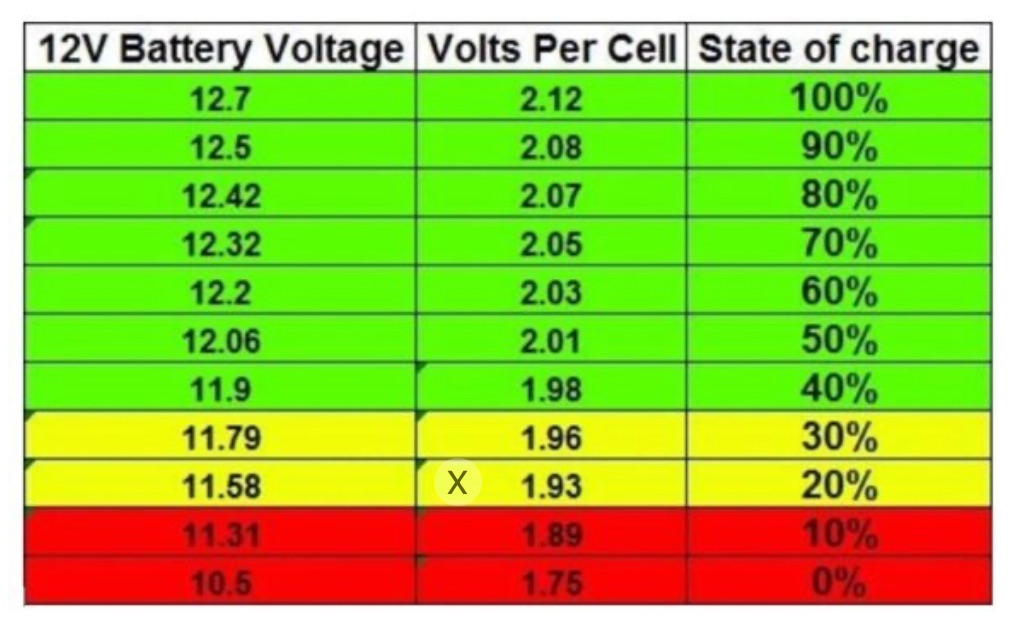
This is a lead acid battery chart – notice that a lead acid battery is classified as 50% discharged at 12.06 volts – from full to half in less than one volt!

The voltage on the batteries were 12.67 and 12.66 volts before charging, which according to a lead acid power chart has them at 90% charged and while good, is not 100%.

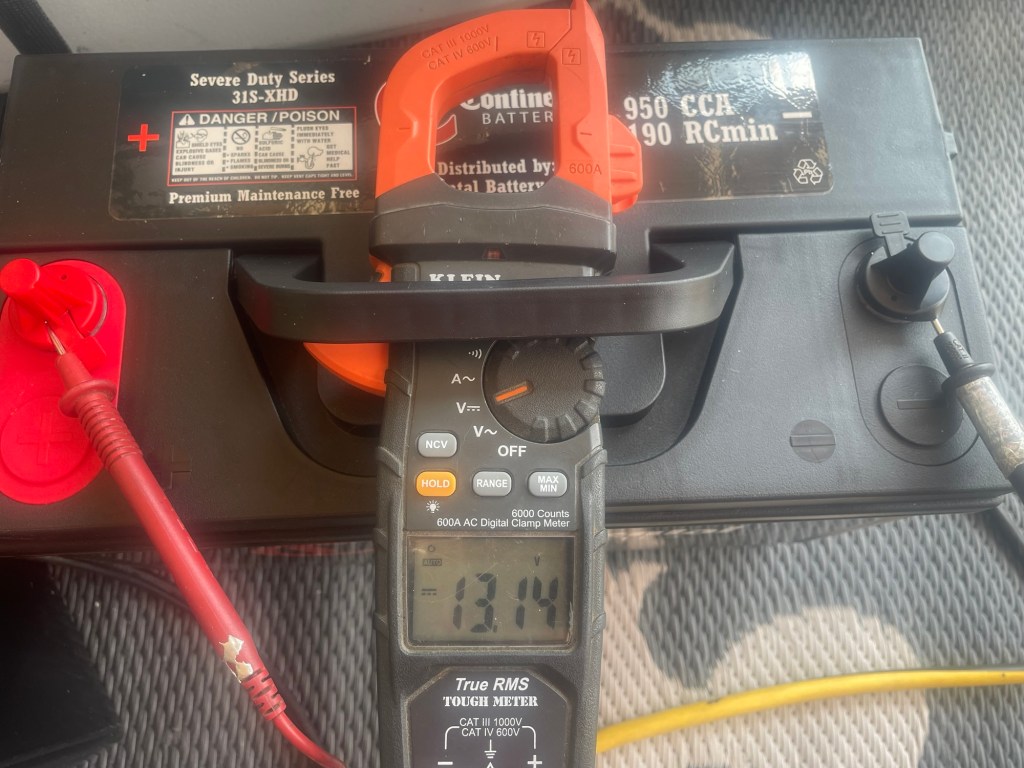
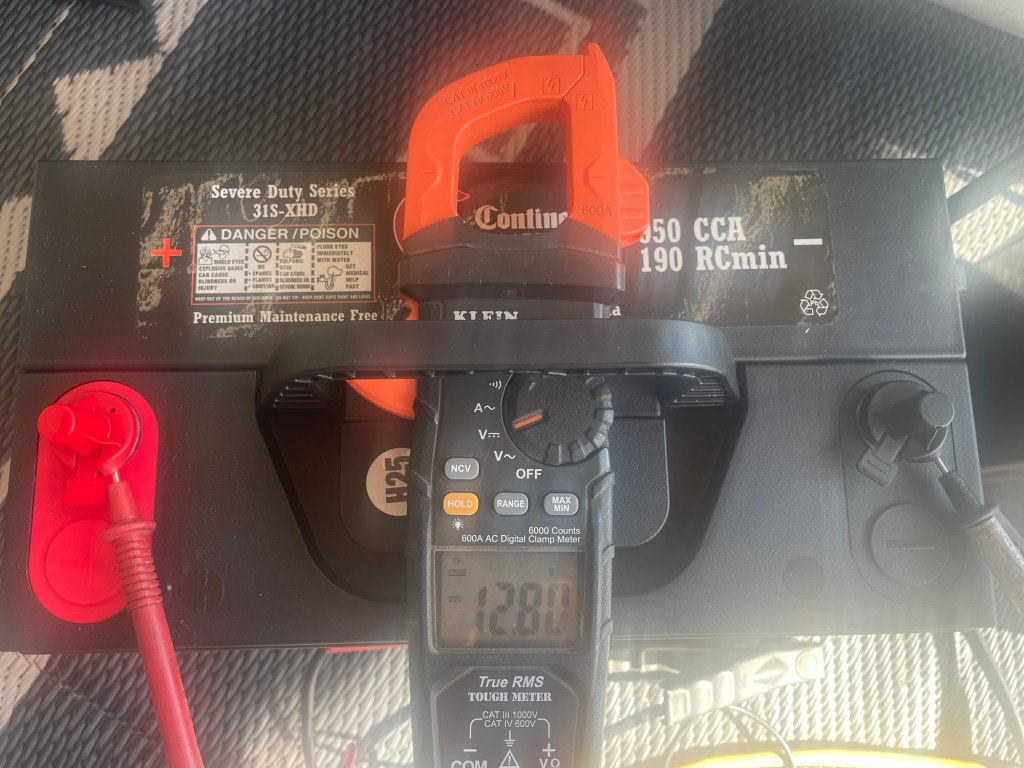
The biggest downfall of lead acid batteries is the very show charging rate, the battery shown below had a voltage reading of 12.67 volts at time of purchase, place it on my smart battery charger and it charger for five hours before the charger switched to a float charge. But now the battery has a reading of 13.14 volts which is what is revered to as a surface charge which is the voltage reading from the charger, after sitting for a couple of hours the final photo shows the fully charged voltage of 12.77, it took five hours to achieve that extra few hundreds of a volt the difference between 90% and 100%.

Purchasing big starter batteries, here is my tip for getting the best price. Ask your local trucking fleet where they purchase their batteries and the contact that supplier, for example I saved over $60 per battery, the closed competitor price wise had 2 in stock the supplier I purchased from had 2100 in stock, most truck fleet operators replace their fleet batteries well before they fail to avoid roadside service at overinflated prices.

Day 2874