🌵 Valley of the Giants: Walking Among Ancient Cardóns in Baja California

🌄 A Hidden Desert Wonder in Baja

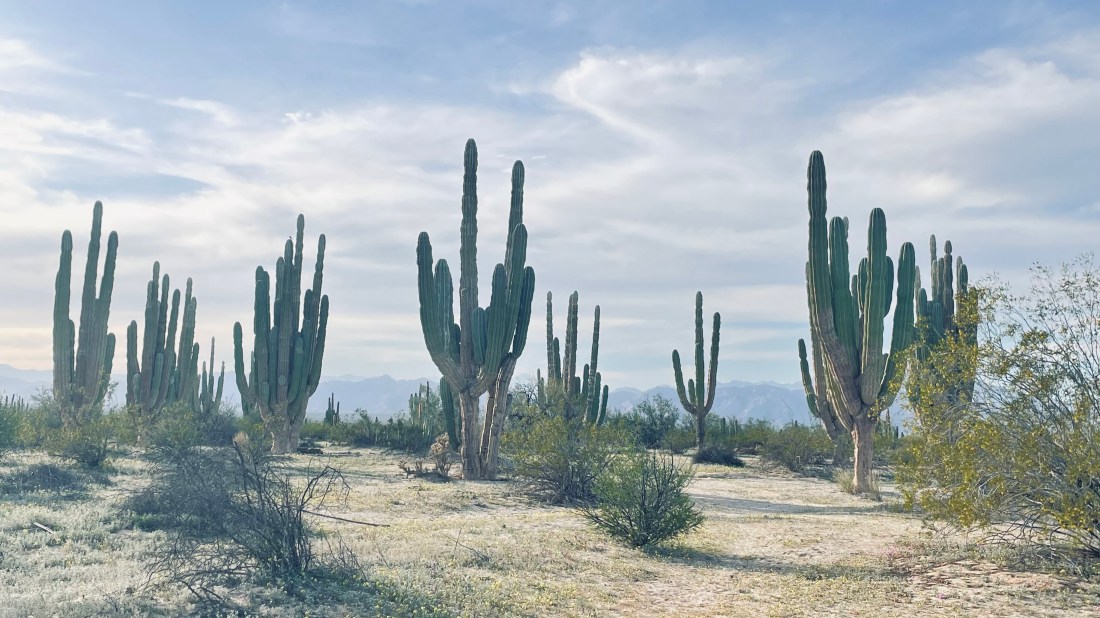
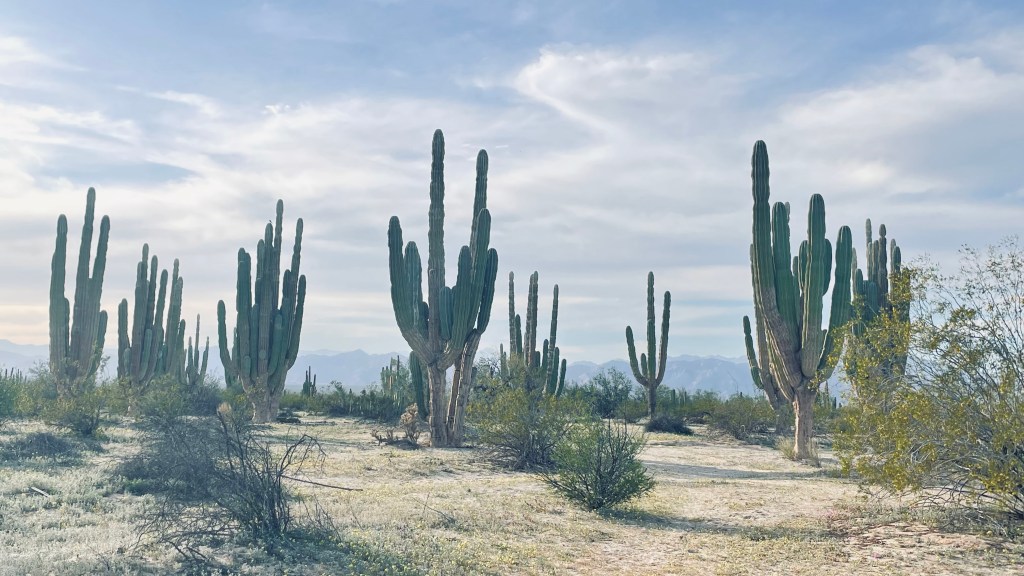
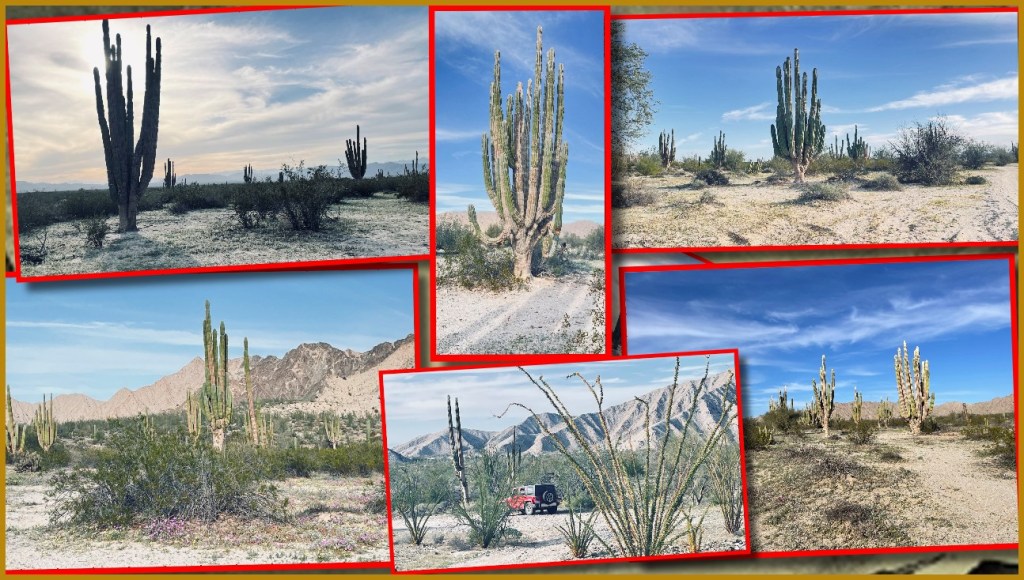
Tucked away in the rugged interior of Baja California lies a place that feels almost prehistoric — the Valley of the Giants, known locally as Valle de los Gigantes. This remote desert valley is home to some of the largest and oldest cacti in the world, towering silently over the Baja landscape.

Standing among these giants, it’s impossible not to feel small — and deeply connected to the natural history of the peninsula.

🌵 The Giants Themselves: Cardón Cactus

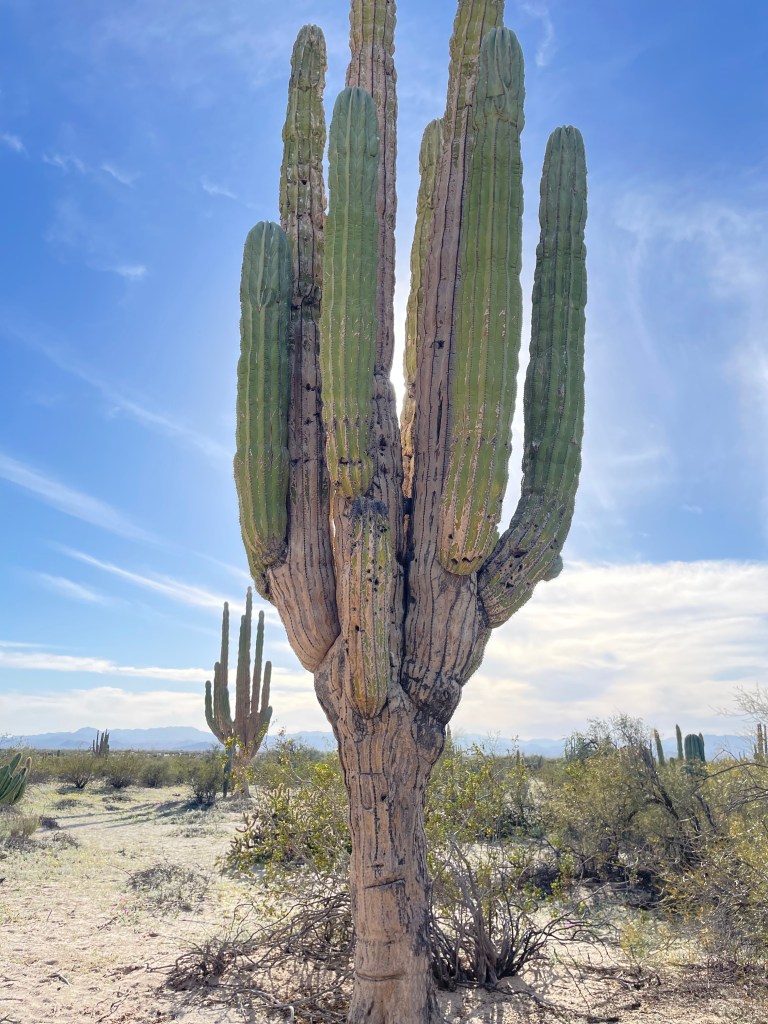
The stars of the valley are the Cardón cactus (Pachycereus pringlei), the largest cactus species on Earth.

Some key facts about these incredible plants:

🌱 Can grow over 60 feet (18 meters) tall

⏳ Often live 300–500 years

🌼 Bloom with white flowers that open at night

🦇 Rely on bats, birds, and insects for pollination

Many of the cardóns in this valley were already centuries old before the first Europeans arrived in Baja.
🏜 Where Is the Valley of the Giants?

The Valley of the Giants is located near the small community of San Sebastián in Baja California Sur, inland from the Sea of Cortez. Reaching it typically requires traveling dirt roads, which helps keep the area wild, quiet, and largely untouched.

This isolation is part of the magic — there are no crowds, no signs, and no fences. Just desert, sky, and giants.

🌞 A Living Desert Ecosystem

While the cardóns dominate the landscape, they are part of a much larger desert ecosystem.

You may also encounter:

🌺 Barrel cacti, cholla, and ocotillo

🦎 Lizards basking on rocks

🦅 Hawks and vultures circling overhead

🐇 Desert mammals moving quietly through the brush

Despite appearances, this desert is very much alive — adapted perfectly to heat, drought, and time.

🕰 A Landscape Shaped by Time

This region has been shaped over millions of years by volcanic activity, shifting tectonic plates, and erosion. The slow-growing cardón cacti record this passage of time in their scars, arms, and weathered skin.

Long before roads or vehicles, Indigenous peoples traveled through these lands, relying on desert plants for food, tools, and shelter. The valley remains a powerful reminder of Baja’s deep natural and cultural history.

🌅 Visiting the Valley of the Giants

If you plan to visit:

🚙 A high-clearance vehicle is strongly recommended

💧 Bring plenty of water — there are no services

🧭 Download offline maps or use GPS

♻️ Practice Leave No Trace — this is a fragile ecosystem

Sunrise and sunset are especially stunning, when the low light casts long shadows and the giants seem to come alive.

✨ Why the Valley of the Giants Matters

The Valley of the Giants isn’t just a scenic stop — it’s a living museum of resilience. These massive cacti have survived centuries of droughts, storms, and climate shifts.

In a fast-moving world, this place asks you to slow down, listen to the wind, and appreciate the patience of nature.

Walking among these giants isn’t about checking off a destination — it’s about perspective.

Day 3085

The Untimely Passing of NAVI, Our Garmin RV GPS

It is with a broken heart—and a slightly raised eyebrow—that I must announce that on March 6th, 2026, NAVI, our beloved Garmin RV GPS, passed away unexpectedly. This was the newest GPS I’ve ever purchased, which somehow makes the loss sting even more. I have ten‑year‑old units still operating like crusty old Marines, but the young one? Gone too soon.

I’m saddened, yes. But if I’m being honest, I’m also annoyed. And disappointed. And maybe just a little betrayed.

I’ve owned Garmin units since the days when the screen looked like a tiny cathode‑ray tube television—the old StreetPilot series with a display roughly the size of a postage stamp. From there I graduated through the nüvi era, collecting them like Pokémon, each one promising to be “the one” that would finally get me from Point A to Point B without drama.

Anyone who ever owned an early Garmin will still twitch involuntarily at the memory of the dreaded voice intoning, “Recalculating…”
And then there were the loops. Oh, the loops. The endless, hopeless, maddening loops where it would try to recalculate, fail, try again, fail again, and eventually give up entirely—usually at the worst possible moment. The only solution was the classic Garmin reboot ritual: pull over, shut it off, turn it back on, and hope the satellites were feeling generous that day.

And yet, despite all the cursing, I kept buying the next one. New features. New promises. New hope. Garmin was the toxic relationship I just couldn’t quit.

Then, about eight years ago, when we started our RV lifestyle, Garmin introduced the RV‑specific units. Finally—something designed to keep us from wedging our home under a 12‑foot bridge or being routed down a goat path masquerading as a county road. We’ve had our share of “adventures,” but I can only imagine the chaos we would’ve endured without that extra layer of protection.

So yes, it has always been a love/hate relationship. But watching RVers on YouTube navigate the country using Apple Maps or Google Maps on their phones made our Garmin feel like the best thing since sliced bread. Our RV Garmin let me enter our height, length, and weight so it could steer us clear of low clearances and questionable bridges—things Google Maps doesn’t even pretend to care about.

Which brings us back to NAVI.

NAVI was supposed to be the chosen one. The upgrade. The reliable partner. The fresh‑out‑of‑the‑box prodigy destined to guide us safely across America.

Instead, NAVI has left us far too soon, leaving behind only a blank screen, a faint smell of disappointment, and a long list of routes that will now forever remain uncalculated.


A Mock Eulogy for NAVI

Dearly beloved, we are gathered here today to mourn the loss of NAVI, who served bravely, if not always accurately, in the line of duty.

NAVI was born in a factory somewhere far away, shipped lovingly in a cardboard box, and adopted into our RV with high hopes and unrealistic expectations. NAVI promised to guide us, protect us, and keep us from becoming a YouTube cautionary tale titled “RVers Attempt Low Bridge—Instant Regret.”

NAVI tried. Truly.
But like a gifted child who peaked in kindergarten, NAVI struggled under the weight of its own potential.

It leaves behind:

  • A power cable that still works
  • A suction cup mount that never really did
  • And two RVers who now must face the terrifying prospect of choosing a replacement

May NAVI’s circuits rest cool and its firmware finally find peace.

Amen.


The Moral of the Story: Technology Is a Frenemy

If there’s a lesson in all this, it’s that technology is both our greatest helper and our most unpredictable saboteur. It promises convenience, safety, and simplicity—right up until the moment it decides to give up, glitch out, or die quietly in the middle of a perfectly good travel day.

We rely on it. We curse at it. We replace it.
And then, inevitably, we trust the next shiny device all over again.

Because in the end, technology is like a mischievous travel companion:
You can’t live without it, but you probably shouldn’t trust it with your life.

Rest in peace, NAVI.
Your successor has big shoes to fill—and hopefully a longer lifespan.


Day 3079