

Valley of Fire State Park, located just northeast of Las Vegas, is a place where geology, human history, and desert beauty converge. Famous for its blazing red sandstone formations and ancient rock art, the park is not only Nevada’s oldest state park but also one of its most visually striking natural treasures.
A Landscape Forged Over Millions of Years
The dramatic scenery of Valley of Fire began forming more than 150 million years ago during the Jurassic period. The park’s iconic red rock formations are composed primarily of Aztec Sandstone, created from vast sand dunes that once dominated the region. Over time, tectonic uplift, erosion, and mineral oxidation transformed these dunes into the towering fins, domes, and swirling rock patterns visible today.
When the sun rises or sets, the iron-rich sandstone ignites in brilliant shades of red, orange, and pink—earning the park its evocative name.
Ancient Peoples of the Valley
Long before becoming a state park, Valley of Fire was home to Native peoples for thousands of years. Archaeological evidence suggests human presence in the area dating back over 10,000 years.
Between approximately 300 BCE and 1150 CE, early cultures including the Basketmaker peoples and Ancestral Puebloans left behind a remarkable legacy of petroglyphs—symbols and figures carved into the rock surfaces. These carvings depict animals, human forms, and abstract designs, offering insight into spiritual beliefs, daily life, and desert survival.
Later, the Southern Paiute people continued to use the land for seasonal travel, hunting, and gathering. Today, these rock art sites remain some of the park’s most important and protected features.
Early Exploration and the Origin of the Name
In the early 1900s, a primitive road was built through the area as part of the Arrowhead Trail, an early automobile route connecting Los Angeles and Salt Lake City. As travelers passed through the region, they were struck by how the rocks appeared to glow like flames in the desert sun.
During the 1920s, the name “Valley of Fire” was coined after an observer remarked that the sandstone formations looked as though they were burning at sunset.
Nevada’s First State Park
In 1931, the federal government transferred land to the State of Nevada for park development. Shortly afterward, the Civilian Conservation Corps (CCC)—a New Deal program—played a major role in shaping the park.
From 1933 to 1942, CCC crews constructed:
- Roads and scenic drives
- Hiking trails
- Campgrounds
- Picnic areas
- Stone shelters and cabins
Valley of Fire officially opened to the public in 1934, and in 1935 it became Nevada’s first official state park.
Recognition and Preservation
In 1968, Valley of Fire was designated a National Natural Landmark, recognizing its outstanding geological features and scientific importance. Over the decades, the park has expanded to more than 40,000 acres, ensuring the preservation of its landscapes and archaeological sites.
Strict conservation efforts protect fragile sandstone formations and irreplaceable petroglyphs, reminding visitors to admire without disturbing.
Valley of Fire Today
Today, Valley of Fire State Park is one of Nevada’s most visited outdoor destinations. Popular activities include:
- Hiking iconic trails like Fire Wave, White Domes, and Mouse’s Tank
- Exploring petroglyph sites such as Atlatl Rock
- Photography, especially at sunrise and sunset
- Camping under desert stars
A modern visitor center now provides interpretive exhibits that explain the park’s geology, wildlife, and cultural history, helping visitors better understand the land they are exploring.
A Living Desert Legacy
Valley of Fire is more than a scenic stop—it is a living record of ancient oceans, shifting sands, indigenous cultures, and early conservation efforts. Whether you visit for a quick drive or an extended stay, the park offers a powerful reminder of the deep history written into the desert stone.
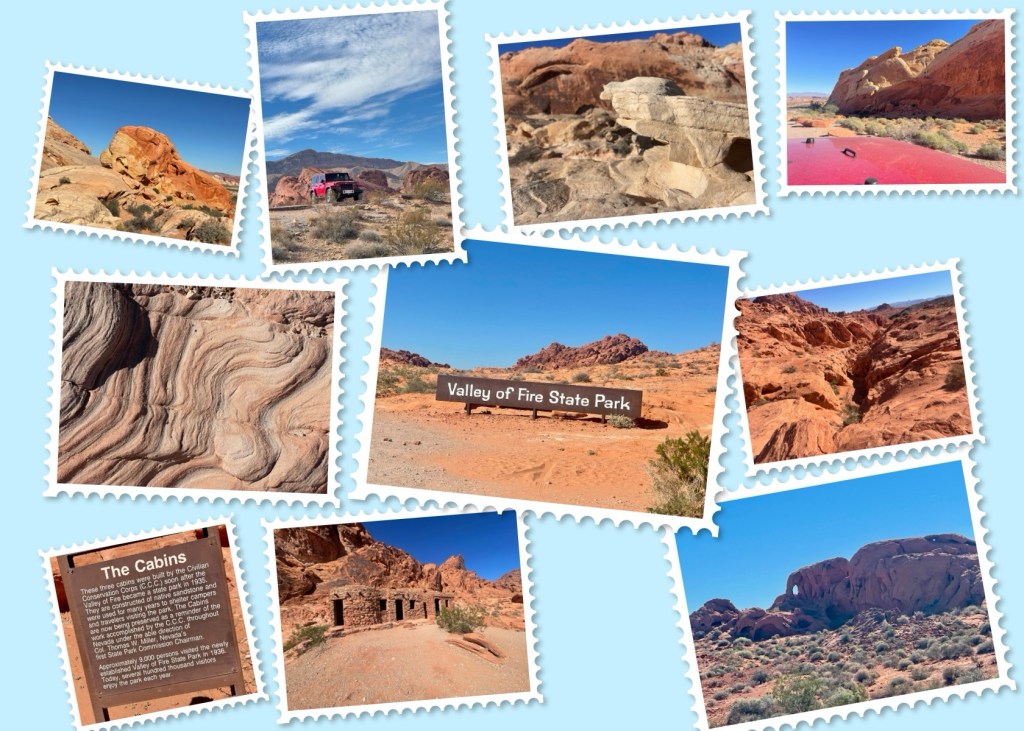
A few photos from the valley
Day 3035
Discover more from The Buchanan's Rolling Down The Road
Subscribe to get the latest posts sent to your email.
 The Buchanan's Rolling Down The Road
impressive history and beautiful landscapes
LikeLiked by 1 person